
From Confronting Customs and Traditions to Establishing a Cultural Project That Believes in Women's Power and Knowledge
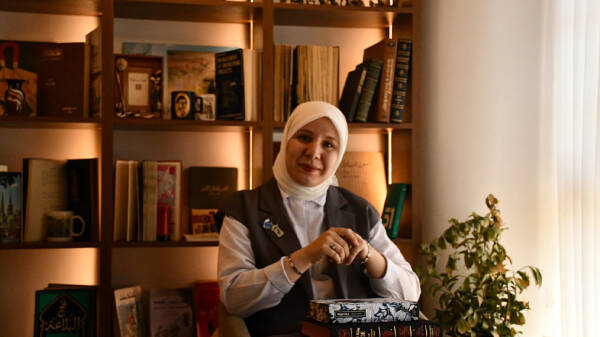
From within the constraints of society and the difficulties of Iraqi reality, Dunya Nour al-Din carved her path through knowledge, work, transforming her long-held dream of owning a library into a cultural project.
TAMANI AL-SARWI
Baghdad — In societies that impose social and cultural restrictions on women, the journey of success is not only linked to knowledge and work, but begins at the moment a woman decides to believe in herself and in her right to dream.
Dunya Nour al-Din's experience is not an ordinary success story, but a journey through which she faced multiple challenges—from societal judgments and the pressures of customs and traditions, to economic difficulties and the harsh conditions Iraq has experienced. Her path was not easy, but she chose to confront obstacles with determination, education, and work, proving that a woman's ambition is not defined by others' perceptions, but by her ability to persevere and create opportunities.
Beginnings... Between City and Countryside
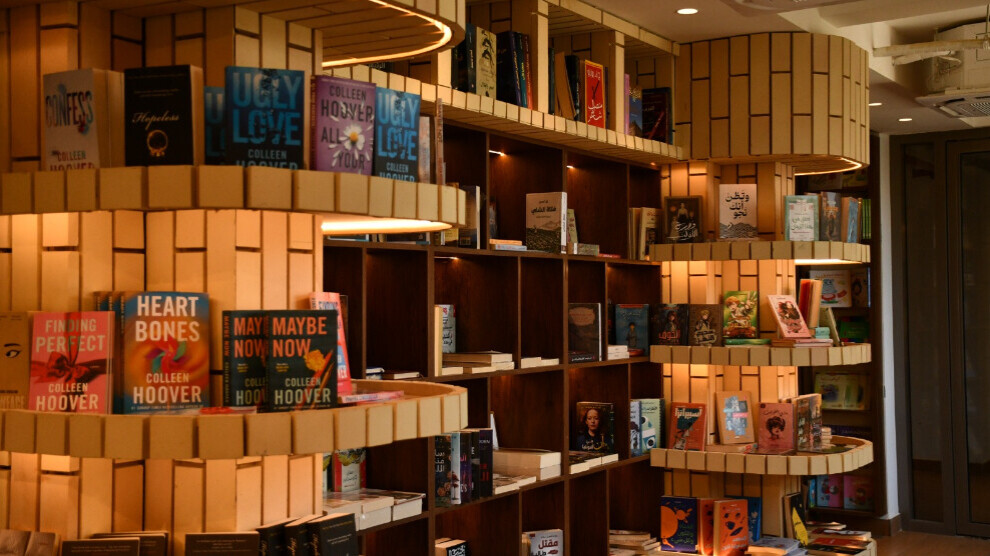
Dunya Nour al-Din, a 28-year-old Iraqi woman, transformed her personal experience into a cultural project named "Alam Kutubi" (My World of Books)—the fruit of years of striving and belief that knowledge can change a person's life.
She grew up between two completely different environments, each leaving a clear mark on shaping her personality and outlook on life. In her early childhood, until the age of five, she lived in an urban environment that gave her ample space to dream, where she heard words of encouragement that pushed her to think of a future full of possibilities.
However, her later move to a rural environment with different customs and traditions changed many details of her life. There, she began to face a more conservative social view toward girls, hearing phrases that defined a specific place and role for women—such as that a girl's place is at home, or that some choices are not suitable for her.
Education... A Path to Self-Affirmation
Dunya Nour al-Din found in education the space through which she could express her abilities and achieve her ambition, after feeling that society was placing limits on her dreams. She says: "When I felt that some of my dreams faced rejection simply because I was a girl, I made education my path to prove myself. I believed that knowledge is something no one can take away from me." She believes that that stage, despite its difficulty, contributed to building her character, teaching her discipline, responsibility, and determination to continue regardless of the challenges.
Those years were the first beginnings of a long journey in which she chose to make education and work tools for achieving her independence and building her future. She says: "I reached the preparatory stage in one of the most difficult periods Iraq experienced, when the country was living under the weight of terrorism, and ISIS's control cast a heavy shadow over the details of daily life."
She adds: "In those years, fear was no longer linked to exam results or the difficulty of curricula; fear had become part of life itself." She notes that "simply leaving the house carried a degree of anxiety, and the daily news was filled with violence, unrest, and threats. We lived a reality that made the future seem uncertain, and postponed many dreams indefinitely. Despite all that, I refused to let fear triumph over my dreams."
"I am with you... and you will achieve your dream no matter the difficulties"—these words may sound simple to the listener, but for Dunya Nour al-Din, they were an inexhaustible source of strength. She says: "Whenever I felt the road was longer than I could bear, my mother would restore my confidence. And whenever I heard someone belittling my dreams, she would remind me that a person's value is not determined by others, but by what they believe in themselves."
Two Dreams Walking Together
Dunya Nour al-Din's dream was not limited to a single path; she had long carried a dream of her own: to own a library that would be a space for books, knowledge, and connecting with others. After succeeding in her preparatory studies, she began her university journey, choosing to study English—a field that opened new horizons for her and strengthened her relationship with reading, learning, and connecting with the world. She would imagine herself in the future inside her own library, among bookshelves, reading, discussing with others, and sharing knowledge.
Although achieving this dream seemed distant at that stage, she never abandoned it, and it remained with her until it later transformed from an idea in a small notebook into a real project named "Alam Kutubi."
Upon entering university, a new phase began—one in which study was not the only focus, but was accompanied by responsibilities imposed by life circumstances. Her family's economic conditions were difficult, and the distance of the college from home made transportation and study costs an additional burden. Therefore, she decided to rely on herself and seek a source to help cover part of her needs.
She chose to work in private tutoring, benefiting from her experience and academic excellence. She says: "I spent my time between university lectures and giving lessons, then I would return to continue my studies. The phase was not easy, but it taught me responsibility and self-reliance."
The most painful question she heard from some female students was: "What is the use of studying if our fate is ultimately to stay at home because we are girls?" She understood the depth of this question because she had lived the same struggle between ambition and social restrictions. So she would affirm to them that education is not just a certificate, but a means of building character, making decisions, and having the ability to choose the life they want.
When a Woman Faces an Additional Test
After years of study and work, Dunya Nour al-Din secured a job at a company specialized in trademark registration in Iraq, beginning a new phase in her professional career. The biggest challenge she faced was not the nature or difficulty of the work, but sometimes the society's view of working women.
Nevertheless, she did not allow these judgments to limit her ambition or affect her self-confidence; she learned to focus on her work and achievements. She says: "After resigning, I found myself facing a new question: What next? I didn't have a clear plan, but I had an old dream that had accompanied me for years: the dream of creating my own library."
And so "Alam Kutubi" was established. It was not just a library; it was the culmination of years of dreams, effort, attempts, and determination. Dunya Nour al-Din explains: "I don't treat the library as just a project; I see it as my little child—something that grew with me and grew with my dreams. Every effort I put into it, I feel is an investment in a dream I've lived with for years."
Over time, she became more convinced that a woman's success is not complete only in what she achieves for herself, but in what she opens doors to for other women. Personal will is the beginning, but it also needs a supportive environment that believes in women's abilities and gives them the opportunity to express themselves and achieve their ambitions.
She believes that one woman's success does not mean another woman's loss; rather, it is a gain for everyone, because every woman who overcomes a barrier or achieves an achievement paves the way for others. Through her experience, she realized that empowering women does not start only with laws or institutions, but from within the woman herself—when she believes in her right to dream, education, work, and making decisions that shape her future.
A Message to Every Girl
In conclusion, Dunya Nour al-Din said: "My message to every girl is to believe in herself first, and not to let others determine the limits of her dreams." She added: "You may face people who say your dream is difficult, or that some fields are not suitable for you. But do not let society's view be a reason to give up your ambition. Choose the path that resembles you, and hold on to what you believe in, because the path you create yourself, despite its difficulty, will be more valuable than the path others choose for you."
This is not merely a personal biography, but a testament to the power of will, and the story of an Iraqi woman who believed that dreams are not given but seized through knowledge, work, and determination. At every station in her life, Dunya Nour al-Din proved that a woman is not required to prove her right to dream, but her right to live her life fully according to what she believes in. It is an invitation to every girl not to let fear, customs, or preconceptions determine her future, but to make knowledge and work her path to freedom and achievement.