
Engineer and Singer: Ruhiya Ahmed Blends Academia with Art to Serve Society
An academic and singer from Upper Egypt, Ruhiya Ahmed defies societal expectations, proving that artistic talent can complement academic success and serve as a space for creativity, communication, and community service.
IMAN SAMIR ALI
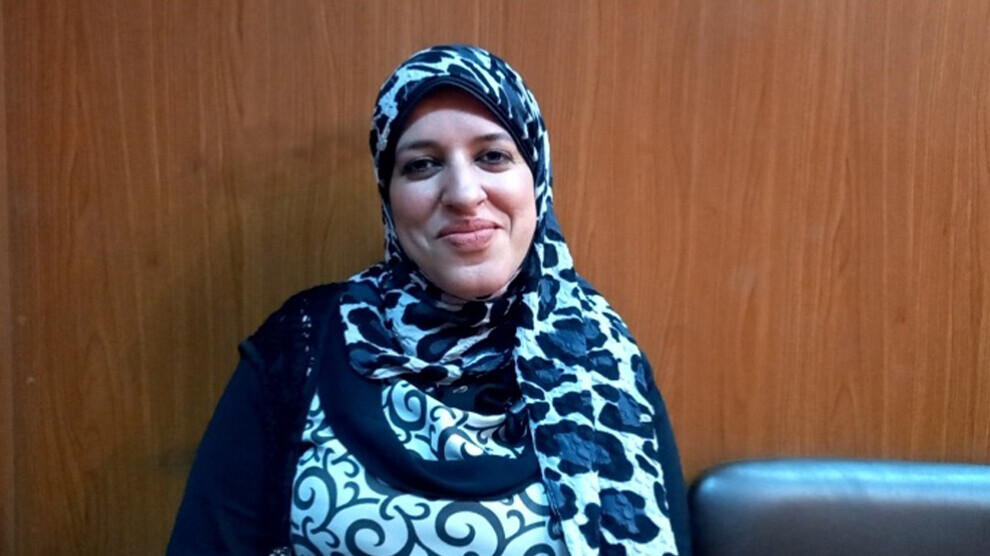
Egypt_Dr. Ruhiya Ahmed, a daughter of Upper Egypt, combines academic work with a passion for art and singing, in an experience that affirms talent can be a driver of scientific and professional success, and that art can become a space for creativity, communication, and community service—not an obstacle to academic excellence.
Ruhiya Ahmed works as an assistant professor of basic sciences at the Faculty of Engineering at Sphinx University, while also being a singer in the Asyut Arabic Music Band—an artistic journey that began in her childhood and continued despite social and practical challenges.
She says her relationship with singing began at the age of seven, when she joined the choir of the Abu Tig Culture Palace, and continued singing through high school, before turning to playing instruments due to a lack of sufficient senior singers in her area.
She Began Her Journey with Training
During high school and university, she did not distance herself from music; rather, she began training children at a number of cultural venues, including the Abu Tig Culture Palace, the Ahmed Bahaa El-Din Center in Al-Duwayr, the Al-Ghanayem Culture Palace, and the Judges Club in Asyut.
Over time, she felt that training others was not enough, and that she needed to return to training herself and reclaim her passion for singing. The turning point came when composer Ayman Helmi heard her while she was training children at the Ahmed Bahaa El-Din Center in Al-Duwayr, and encouraged her to return to singing.
She explains that her participation in the "Second Upper Egypt Cultural Forum" was another important milestone, as she watched the Arabic Music Band's rehearsals and was greatly impressed by what the band offered, so she decided to join it to develop her talent and return strongly to singing.
"Talent Gives a Person Energy for Success"
Ruhiya Ahmed believes that combining academic work and singing is not a contradiction; rather, her artistic talent has always been a contributing factor to her academic excellence. She notes that during her university studies, she ranked second in her class in the first year, and also ranked third across Assiut University in instrumental performance. She also pointed out that during high school, she participated in music competitions alongside her studies.
She affirms that her attempt at the beginning of university to stop practicing art in response to others' advice did not last, because she discovered that singing for her is not just a hobby, but an essential outlet that breaks the routine of daily life and work pressures. She says her experience has proven to her that practicing a talent does not reduce academic success, but can give a person greater energy for creativity and focus.
She did not limit herself to singing; she also transferred her passion for music to her university students, training some of them to participate in university concerts and events, ensuring that the training takes place in free time so as not to interfere with lectures or sessions.
She believes that music has helped her build a closer relationship with her students, especially since many of them come from different cities and do not easily have access to the artistic training opportunities that children in cities with culture palaces and specialized centers can find.
She also uses social media platforms, including TikTok, to post videos of concerts and training sessions, which has helped students from different faculties contact her and seek help in developing their singing talents.
She notes that the students participating in artistic activities with her are also keen on academic excellence, considering that practicing hobbies and arts can be a contributing factor to success, not a cause of its decline.
Objections and Challenges
At the beginning of her journey, Ruhiya Ahmed faced some objections to a girl singing, especially from some extended family members. However, she insisted on continuing, while ensuring that her artistic practice was within a trusted and respected institutional framework.
She says that proving herself and her commitment to participating in well-known artistic venues helped her change the view of those around her, as opposition gradually turned into encouragement and support. She affirms that her immediate family was supportive, while some objections came from relatives, but over time she was able to prove that the art she practices is a source of pride, not a subject of objection.
In the coming period, she aspires to use her voice to convey a community message, affirming her inclination toward works that carry value and meaning and elevate public taste.
She says she does not reject emotional singing, but prefers it to be presented within a musical framework, lyrics, and melodies that respect the audience. She notes that she has so far released three songs: the first is emotional, the second is "Masr Betetkallem" (Egypt Speaks), and the third is "Amira Fouadi" (Princess of My Heart). She is preparing to release a fourth song that carries artistic value and a humanitarian message.
Ruhiya Ahmed believes that art is a space for expressing emotions and releasing life's pressures, and she believes talent is a gift through which a person can transform their feelings into creative energy.
She summarizes her experience by saying that art was never a substitute for study and work, but a complement to them, giving her the opportunity to express herself, connect with her students, and serve the community through music.