
Could the "Wednesday Cinema" Initiative Be the Spark That Revives Taiz's Cinematic Glory?
Taiz's "Wednesday Cinema" rekindles cinematic passion, uniting youth in a free space to restore film's role in shaping consciousness and cultural dialogue.
RANIA ABDULLAH
Yemen — Cultural impact remains a living witness to the intellectual and artistic movement that distinguished the city of Taiz. Standing today amid the ruins of the city's cinemas brings to mind the memory of the golden age it once experienced as a hub for the arts and cultural awareness. At a time when multiple cinemas flourished in Taiz, the city recorded an exceptional phase during the 1960s, 1970s, and 1980s, before it experienced decline and gradual extinction.
At the peak of that shared prosperity between the two parts of Yemen before unification, when cinema screens brought families and intellectuals together, the total number of cinemas in Yemen reached approximately 49. The city of Aden had the largest share, followed by Sana'a, Al-Hodeidah, and Taiz. These landmarks remain an integral part of the story of a Yemeni society passionate about life and open to the values of beauty and cinema.
Wednesday Cinema: The Beginning of a Welcome Rain
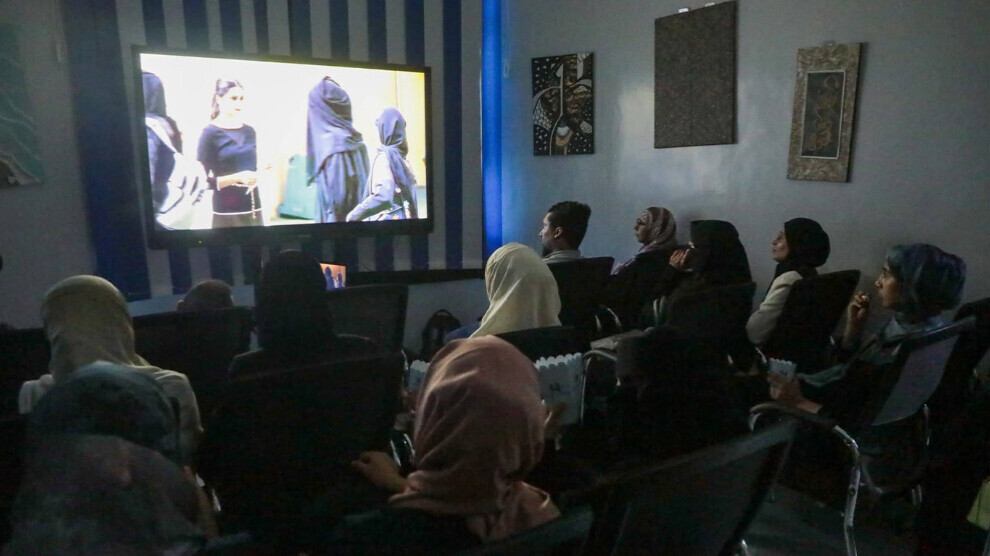
From the corridors of the great cinemas that have faded away, a small hall now hosts a unique idea: the "Wednesday Cinema" initiative, which began in February 2025 and continues regularly every Wednesday. It is the first pioneering youth experience to revive cinema culture in the city of Taiz in southwestern Yemen, after decades of forced absence. At the heart of the Press House and the "Arniada" Foundation for Cultural Development—an independent cultural space—enthusiasts gather weekly to watch films and analyze them in a cultural setting that seeks to return cinema to the public sphere and create an intellectual dialogical environment that allows ample space for criticism and intellectual and social debate.
Within the framework of monitoring this movement, our agency is following the atmosphere of these screenings on the ground, documenting through interviews with women and girls present the dimensions of this remarkable presence and its role in restoring the city's cultural space, and women's participation in making change and shaping societal consciousness through the seventh art.
Project coordinator Safiya Al-Maqtari explains that this activity aims to step away from daily pressures by creating a mini-cinema to revive the cinematic experience, saying: "Unfortunately, cinema has vanished, and we are trying to expand this project in the future."
The "Wednesday Cinema" initiative was not merely an opportunity to watch films; it is also a suitable space for analyzing and discussing those films in a cultural atmosphere for exchanging knowledge and ideas. Safiya Al-Maqtari adds: "Through the films we screen, we try to understand the contexts and cultures of different societies. The films are discussed after viewing. Through this discussion, we try to present our perspective as young people and benefit from the discussions raised about the film." She notes that the attendees mostly come from diverse backgrounds and fields such as media, photography, and directing. "Through this initiative, we are trying to create spaces rich in discussion and to promote a culture of dialogue and a culture of difference."
A Generation That Does Not Know Cinema
For her part, Zainab Al-Zuhairi, who has not experienced watching films in cinemas, believes that this initiative is an opportunity for her and for young men and women of her generation, despite its simplicity. "We have heard from our elders about cinema, but we do not know it. Wednesday Cinema allows us to experience a similar experience to the cinema we never had the chance to see or enjoy its atmosphere."
She adds: "This experience is beautiful despite its simplicity. Although I cannot attend regularly, I feel enthusiasm and benefit at the same time." She wishes for this experience to expand and for the place to become a screening hall for films, showing Arab and Yemeni films and hosting passionate young people and filmmakers. "It is unreasonable that in this era of development and diverse film production, we are still deprived of cinemas, which are an essential pillar of cultural work."
Official and Joint Efforts
In parallel with these independent youth efforts, official contours are beginning to move toward restoring the city's cultural and artistic incubators. The recent inspection visit in March by the Director-General of the Culture Office in Taiz, in cooperation with representatives of civil society organizations and the "Press House," to the closed "Cinema Saba" building—closed for many years—marked a first step toward studying the restoration and rehabilitation of old cinemas.
This official move to explore the revival of "Cinema Saba" as a public cultural space after decades of closure intersects vitally with the struggle of local initiatives and affirms the importance of combining efforts to create safe and sustainable spaces that support enlightenment movements and guarantee young people free platforms for expression and the cultivation of aesthetic awareness, so that Taiz's cultural impact may continue.