
Bisna Ediş: Protecting the Kurdish Language and Strengthening Women's Presence Are the Essence of Our Cinematic Project
Bisna Ediş: Protecting Kurdish Language and boosting women in cinema are core to her work,urging quality films and an independent Kurdish cinema institution.
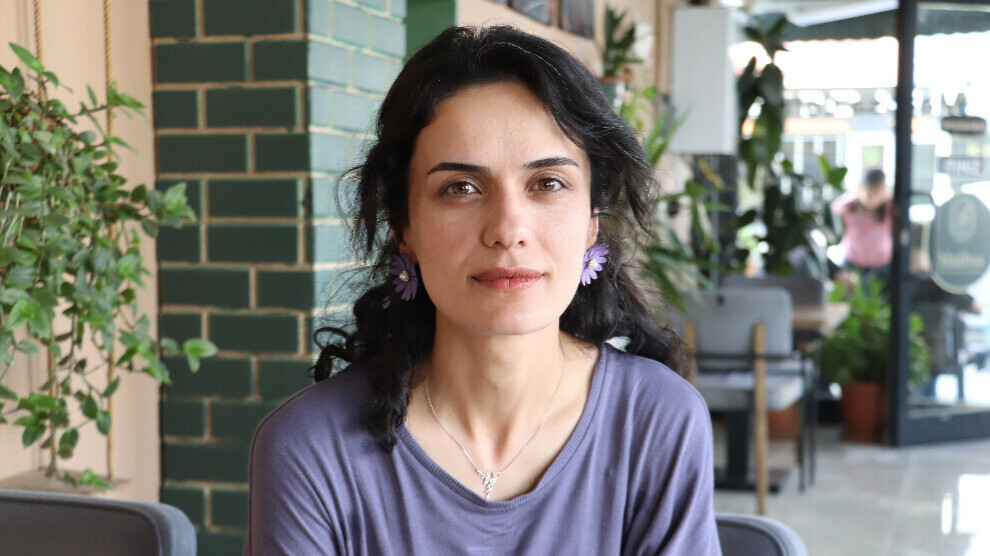
MEMEHAN HELBIN ZEDAN
Van — Over the decades, Kurdish artistic initiatives have faced restrictions, censorship, and bans that have hindered their development. Yet the determination of Kurdish artists to continue on this path has not waned, as they strive to expand the cultural space by organizing their efforts and strengthening their artistic networks.
The "Kurdish Filmmakers" initiative was established following a workshop organized in Amed (Diyarbakır) in North Kurdistan under the supervision of the "Middle East Academy for Film and Cinema," with the participation of a number of young directors seeking to build an independent Kurdish cinematic space. Among them is Bisna Ediş, 29 years old, who is considered one of the emerging figures in this field.
Bisna Ediş, a graduate of the Department of Radio, Television, and Cinema at Van Yüzüncü Yıl University in 2025, says her interest in cinema grew during her university years, as she began to move toward Kurdish filmmaking and working to develop its presence in the cultural scene.
Bisna Ediş explained that she was forced to pause her studies for a period before returning to focus on the field that gradually drew her in, noting that her interest in photography was the initial motivation for choosing radio, television, and cinema as her major, and that her relationship with cinema was initially limited to watching films with her brother, before she discovered a broader world during her university studies.
She added that cinema gives Kurds a space to tell their stories and present their vision, affirming that throughout her artistic journey she has engaged in a linguistic and gender struggle to establish her presence in this field. She believes that Kurdish cinematic work today represents one of the most important tools of cultural expression, and that its development requires the continuation of this collective effort.
Regarding the challenges of women's presence and the Kurdish language in the cinematic field, she expressed concern about the marginalization of the Kurdish language and the dominance of men in this creative field, noting that despite these concerns, she chose to engage in projects aimed at keeping Kurdish stories and narratives alive within cinema.
She indicated that she wanted to be part of this world, whether in front of or behind the camera, considering that active participation is the way to ensure the continuation of the Kurdish narrative in a cinematic space that requires conscious presence and sustained effort.
Regarding her participation in many cinematic projects during her university years, she said that a cinema group was established in Amed under the supervision of the Middle East Academy for Film and Cinema, comprising a number of Kurdish directors, and she joined them. She noted that the group includes notable names in the world of cinema, but what most caught her attention was the small number of women.
She explained the objectives of the cinematic initiative: "The discussion began with a fundamental question: What are the problems facing Kurdish cinema? Participants in a two-day meeting explored ways forward to find solutions, before reaching a decision to begin working on establishing Kurdish cinema as an independent institution."
She added: "The first step was to complete the necessary preparations within a group of about 12 members, each working to carry out the required tasks in their region," explaining that these preparations will be completed by September, after which the process of formally naming the institution will begin, as part of their effort to build an organized and sustainable Kurdish cinematic structure.
"Cinema Is an Effective Way for Women to Communicate"
Bisna Ediş presented a clear vision of the importance of Kurdish presence, particularly women, in the cinematic field, affirming that her discovery of cinema's power made her believe in the necessity of active participation in it. "Cinema is an influential means of communication between women, enabling them to convey their voices and protect their stories from extinction."
She added that many Kurdish narratives do not reach older generations, but cinema and media give these stories greater capacity to reach and influence because they touch the audience's emotions directly. Despite what she described as the fragmentation of the Kurdish language and the difficulty of thinking in it in daily life, she believes that Kurdish art is capable of overcoming these challenges and reviving the language through image and cinematic narrative.
"The Mother Tongue Is Also the Language of Art"
She affirmed that speaking Kurdish and producing art contributes to removing barriers to the language and ensuring its spread. "The Kurdish language and its dialects must have a place in cinema, while preserving their authenticity. Art is an easier way to communicate with society. If the Kurdish language is integrated into all branches of art, awareness of it will grow in society. We only know Kurdish music; we do not know Kurdish films or good documentaries. We have a well-established language, and we will make it the language of all fields of art. Then, artists will play their role."
Regarding the reality of women's presence in art, she noted that male dominance and patriarchal mentality still constitute an obstacle to women artists' participation. "The low number of women in cinema, as seen in the collective work in Amed, is not due to a lack of ability, but to the restrictions imposed on them over many years." She affirmed that the presence of distinguished women artists is not enough to close the gap, and that women must direct greater attention toward art to ensure a clearer presence in this field, noting that many stories remain untold and many words unspoken.
She affirmed that women's presence in art with their identities and stories constitutes a fundamental step toward more realistic representation. "Art by its nature carries a political dimension, and the absence of responsibility leads to works without a stance, while awareness of the loss of language and identity drives the production of art connected to Kurdish reality."
She believes that this journey begins with a fundamental question that the artist asks themselves: What will I do? The answer, in her view, determines the direction of the artistic work and its role in protecting Kurdish identity and reviving what has been eroded over the years.
"We Need Political Art"
She emphasized the necessity of producing more works in the Kurdish language, explaining that the primary audience is within homes, where parents watch foreign and Turkish series. Therefore, confronting this influence requires high-quality Kurdish documentaries, series, and animated works in terms of cinematography, sound, and acting, because the gap is significant and should not be ignored. Children and women must not remain hostages to content that does not reflect their identity, and professional presence in various media fields has become a political and cultural necessity to ensure that Kurdish works reach their natural audience. "This political discourse should not be understood merely as tears, pain, or suffering, but as a practical call to ensure that people, from now on, can watch works in their mother tongue in every field."