
An Iraqi Film Director Turns Iraq’s Memory into a Narrative Canvas and a Living Document
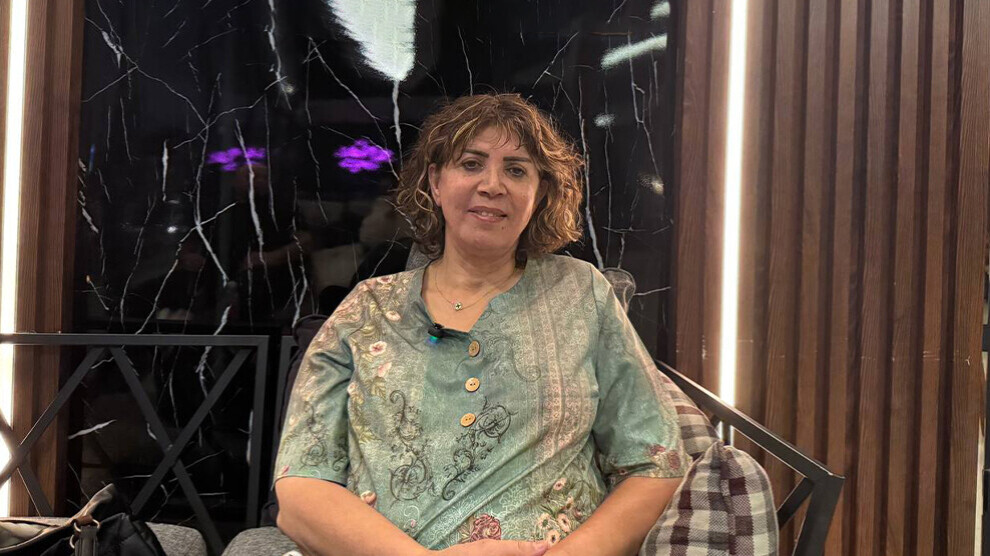
Iraqi director Iman Khudair's "Mural of Rain" won Best Screenplay at the Fimto International Short Film Festival; she also wrote and produced "We Want a Homeland" in the same political context.
RAJAA HAMID RASHID
Iraq – The documentary and narrative cinema of Iraqi director Iman Khudair is distinguished by its clear national goal of documenting collective memory and contemporary Iraqi history, transforming political issues into human canvases.
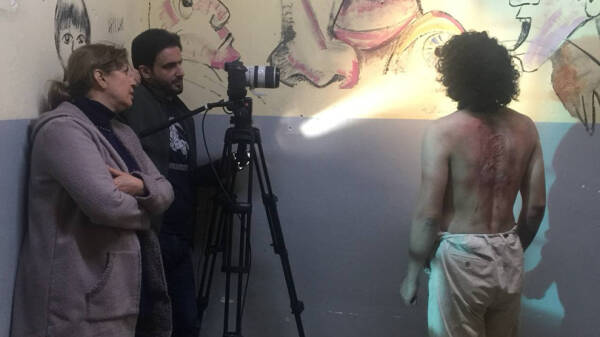
The film "Mural of Rain" by Iraqi director and screenwriter Iman Khudair won the Best Screenplay Award at the fourth edition of the "Fimto" International Short Film Festival, whose activities were held in the city of Alexandria, Egypt.
"Mural of Rain" — The Story of an Artist Who Found Himself Behind Bars
Iraqi film director Iman Khudair explained that the idea of the "Mural of Rain" screenplay was built on a true story, but she did not adhere fully to the facts, as she introduced additions and dramatic treatments to transform it into an integrated cinematic work.
She expressed her wish that films be shown in an academic manner so that people can benefit from their ideas and experiences. "I always have notebooks in which I record tales and stories, and sometimes I keep situations I observe in the street and record them in notebooks." She noted that the Foundation for Political Prisoners, which produced the film, extended an invitation to a group of directors, including herself, to work on films addressing the tales of prisoners in Iraqi prisons during the era of the former regime.
"We Want a Homeland"... Documenting the Memory of October
Iman Khudair also spoke about her film "We Want a Homeland," confirming that its experience and the way of working on it differ completely from "Mural of Rain."
She said that Iraq's history from 1921 until 2003 did not receive sufficient self-archiving by photographers and directors, due to the restrictions imposed on carrying and using cameras, as cameras were not available in markets except within the limits of simple home cameras.
She added: "The important events that Iraq went through were not self-archived; rather, it was the state that carried out the archiving, and only some events were historically documented." She noted that the October 2019 uprising constituted a different experience. "For the first time, I saw in the square an incredible density of photographers. I was present with them about five days a week throughout the seven months during which the uprising extended, and I filmed even though I do not possess financial capabilities or support."
She did not want to receive support from any party, due to "the sensitivity of the subject," but she sought help from a friend who owned a camera and was a beginner in photography, then cooperated with a number of male and female participants in the protests who used to film for her, especially in the front areas of the demonstrations.
She began working on the film in 2019, and continued throughout 2020 and 2021 trying to produce it, because she did not have the costs of editing. "Later I managed to secure a small amount and produced the film, but I did not like the editing. In 2025, I reconsidered the film and insisted on producing it a second time, and I bore new costs. I was determined even if I had to borrow money for that, because the October movement must take its right."
She pointed out that she re-edited the film for the third time, confirming that the October movement is an archiving and preservation of Iraqi memory. She explained that she was contemplating the ability of the protesters to create what she described as their republic inside Tahrir Square.
Iraqi Cinema Between the Screenplay Crisis and Funding
Iman Khudair described the reality of Iraqi cinema as miserable, criticizing the mechanisms of funding and selecting works, and considering that a limited group controls the funding process, the division of money, and the selection of projects. Some members of the committees that evaluate works and scripts have never filmed a single film, she said, considering that this mechanism represents a real problem in the film industry.
She added that the second problem lies in screenwriting, even among some academics in cinema departments, confirming that most of the films she has watched suffer from problems in the screenplay. "The backbone of cinema is the screenplay, and upon it depends the strength or weakness of the film."
As for the third problem, it is funding. She explained that even when funding is available, there are not enough bodies to support cinematic projects, while independent work requires large costs including filming, devices, equipment, editing, graphics, and music.
She believes that Iraq suffers from a real problem in screenwriting, whether in series, cinematic films, or even radio works, calling for showing films in academies, institutes, and screening halls, and opening specialized discussions about the screenplay, its writing mechanisms, and the selection of its ideas.
Iraqi film director Iman Khudair concluded her interview by emphasizing that everyone is passionate about cinema, and it is a pleasure, but at the same time it carries a lot of fatigue, and that working as a director or producer needs patience, money, and support. The production of a single film can involve official bodies, civil society organizations, news agencies, and others in supporting it. "This kind of cooperation is not sufficiently available in Iraq, and we do not yet possess this culture."