
Yemeni Women Leaders from Four Cities Call for Strengthening Women's Presence in Decision-Making
The closing conference of "Enhancing the Participation of Women Leaders in Decision-Making" was held in Taiz, Aden, Hadramout, and Marib, reviewing capacity-building achievements and discussing hate speech challenges.
RANIA ABDULLAH
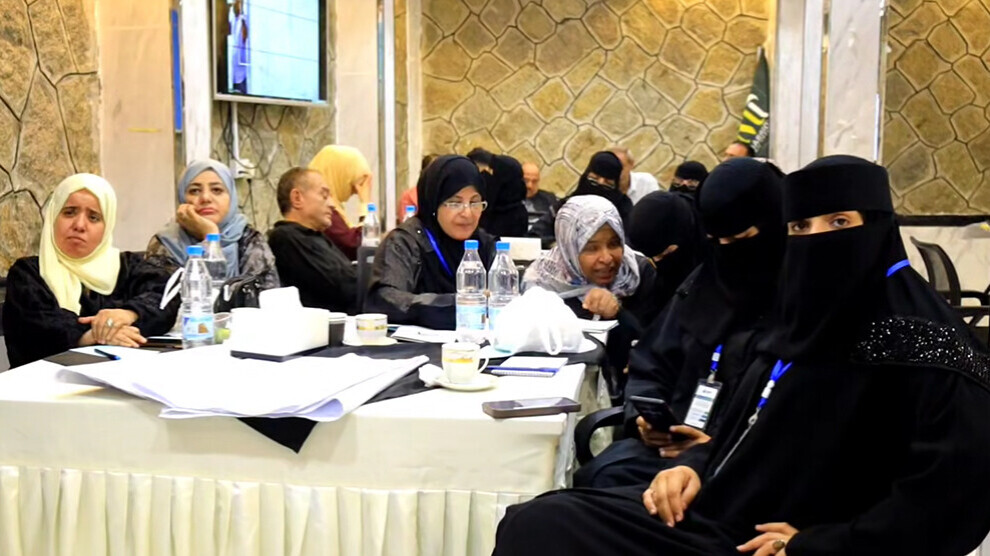
Yemen – Participants in the closing conference of the project "Enhancing the Participation of Women Leaders in Decision-Making" called for consolidating women's presence in party and civil structures, and for activating the policy papers produced during the program, in a way that ensures their effective access to leadership positions and supports peace tracks.
The closing conference of the project "Enhancing the Participation of Women Leaders from the Second Track in Peace Processes" was held in the cities of Taiz, Aden, Hadramout, and Marib, under the slogan "Access... Leadership... Decision." It was organized by the "Yemen Partners" organization with the support of the Embassy of the Kingdom of the Netherlands in Yemen, and in local coordination and implementation with four local institutions in each of the cities, with the participation of women leaders, representatives of civil society organizations, and leaders of political parties.
The conference proceedings continued over the two days of 16 and 17 September, highlighting the most prominent achievements and results the project had accomplished in building the capacities of women leaders and enhancing their active and pivotal role in decision-making centers and in supporting peace tracks in Yemen.
The conference included discussion of several main themes, most notably hate speech and incitement directed against women and its negative impact on their participation in public life, in addition to examining the causes and possible solutions, and reviewing comparative Arab experiences from Tunisia, Egypt, and Lebanon in confronting and responding to these challenges.
Proving Capabilities
On the sidelines of the conference, our agency met with a number of participating leaders to survey their views on the outcomes and current challenges. Sarah Qasim, a member of the Political Bureau of the Yemeni Islah Gathering in Taiz, explained that the launch of the program was in cooperation with the implementing local organizations after party leaders were briefed on its objectives, which support empowering second-rank women in negotiation skills.
At the conference, policy papers from the four cities were reviewed. According to Sarah Qasim, these papers are a fundamental building block for advancing women's role and intensifying their presence in decision-making positions within political parties and civil society institutions. She noted that women cannot excel in the political field except in a safe and stable environment, pointing out that despite the difficult circumstances and the current security and political atmosphere, Yemeni women have been able to prove their presence, which imposes on international and local organizations the need to place women's empowerment at the top of their priorities.
She stressed that direct coordination between the four cities (Aden, Taiz, Hadramout, and Marib) represents a pivotal step toward reforming the organizational structure of parties and promoting women to leadership positions through general conferences and transparent elections once conditions stabilize.
For her part, Atalal Rajeh, a participating leader from the General People's Congress, said that the policy papers that were worked on involved the participation of women and male leaders from parties, mass organizations, and civil society to ensure the production of implementable commitments.
Atalal Rajeh believes that the most prominent outcome of these discussions is the agreement to establish a sustainable women's network to follow up on the implementation of the policy papers. She stressed that despite the organizational challenges facing political parties and the postponement of their general conferences due to the current circumstances, there is positive interaction from several political parties to facilitate women's access to decision-making positions. "It is our responsibility as women leaders and party members to support activists and back them in the face of restrictions and risks."
Their Role in Documenting Violations
Lawyer Shinaz Al-Ak'hali, head of the Siwar Foundation for Development and Peace, explained that there is a real gap represented by women's absence from leadership and rigid structural positions (such as organizational and financial departments, and the presidencies of parties and unions), with their presence often limited to symbolic roles or confined to the "Women's Department." She pointed out that the recommendations emerging from the conference include holding direct meetings with party leaders and decision-makers at the national level, the Presidential Leadership Council, and the Prime Ministry to implement these recommendations.
According to Shinaz Al-Ak'hali, women face two main challenges. The first is security-related, represented by direct risks such as shelling and the targeting of meeting areas in Taiz city specifically, which has been witnessing random shelling for weeks. The second is social and political, embodied in marginalization and the lack of real recognition of women's role by some party and union leaders. "Yemeni women have been and still are advocates of peace and effective human partners, and their presence in the second track gives them a greater opportunity to play a mediation role to reopen roads, help displaced persons, provide psychological and humanitarian support, and monitor and document war violations."