
Workshop to Strengthen Protection of Women Defenders and Activate the Role of Media in Taiz
A Taiz workshop by the Strategic Studies Center highlighted women defenders’reality,weak media/çivil partnerships,rising violations,and urgent need for support networks and sustainable protection for feminist rights work.
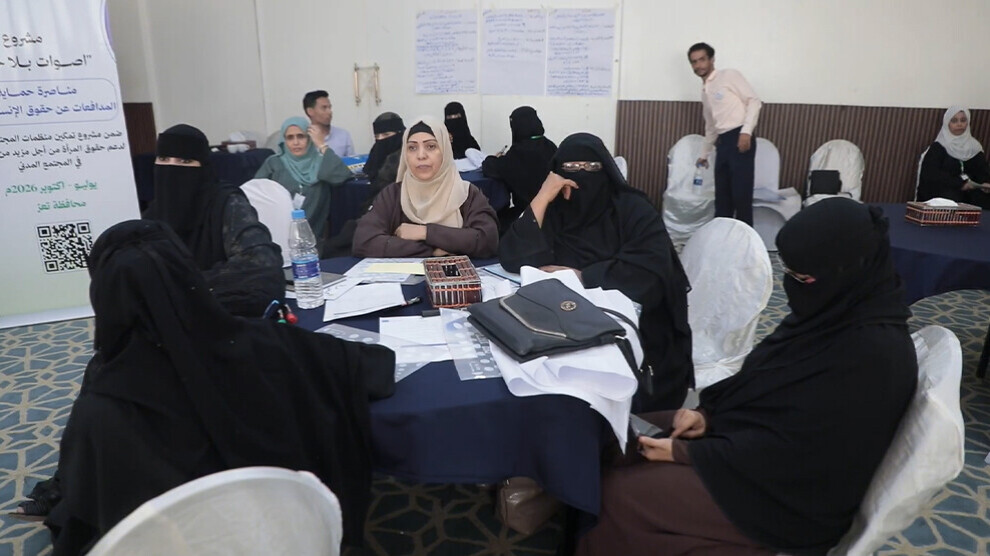
RANIA ABDULLAH
Yemen — Participants in the workshop agreed that women human rights defenders face increasing violations, and that partnerships with media and civil society remain weak, emphasizing the need for support networks and a unified vision that ensures sustainable protection for feminist rights work.
The Strategic Studies Center for Supporting Women and Children organized a workshop yesterday, Thursday, August 6, on advocacy for the protection of women human rights defenders in the city of Taiz, southwestern Yemen, as part of a project to empower civil society organizations to support women's rights for greater integration into civil society. The workshop brought together a number of activists, rights advocates, and representatives of civil society, local authority, and political parties. Working groups prepared advocacy and support messages for the protection of women human rights defenders.
Regarding the real situation of women defenders and the challenges facing feminist work, participants emphasized the importance of building genuine support and solidarity networks and activating the media's role in advocating for women's issues.
Awareness Messages
Psychologist Amira Al-Sharjabi stated that the workshop aims to prepare awareness and motivational messages directed at youth, journalists, and community leaders to urge them to advocate for women human rights defenders. "Women defenders often face disappointment—even double disappointment—whether from society or from the very groups meant to support them."
Speaking about the current partnership between media and civil society organizations, she explained that the partnership remains absent and unreal, not living up to the ultimate goal of advocating for women, due to media shortcomings constrained by certain red lines and standards. "Today we seek to motivate and engage the media to actively adopt these issues. Such workshops are concrete and tangible work that give women human rights defenders a boost of hope to continue, making them feel their voices are heard. The most prominent challenges facing activists today are the lack of safety and legal protection, and the urgent need for a unified and sustainable advocacy vision that empowers women in rights and feminist work."
The Absence of Genuine Support
Sabah Al-Sharabi, head of the National Women's Committee in Taiz, stated: "Women human rights defenders are subjected to grave violations, including exclusion, marginalization, and the absence of genuine support, in addition to a lack of serious engagement with cases of violations they face." She affirmed that currently there is no clear vision or specific and continuous coordination between media and human rights defenders. "We hope that in the coming period we can establish a joint coordination mechanism between media and civil society organizations to work hand in hand, and create an environment of continuous protection and response for genuine human rights defenders."
"The Positive Role of Media and Civil Society"
Intisar Al-Athouri, head of the Peace and Civility Forum, explained that the challenges facing rights work are summarized in the dominance of erroneous customs and traditions, and the low level of awareness of women's rights—both among society and even among some non-activist women—which requires creating a supportive rights environment for activist women and for women in general.
Regarding the current role of media, she believes it is often negative, as some destructive pens contribute to harassing defenders, marginalizing rights issues, and diverting them from their correct path. She called on national journalists and honorable pens to work side by side with activists to highlight rights and freedoms issues and support girls and women.
She emphasized the importance of raising defenders' awareness of the significance of their role, and creating a solidarity network and genuine presence that brings together various defenders from parties, civil society organizations, and independent leaders, to provide a safe working environment based on genuine partnership with all.
Protection of Women Human Rights Defenders
I'tisam Al-Maqtari, project director of "Voices Without Fear," explained that the project primarily aims to enhance social protection and safeguard human rights defenders, and to build partnerships and solidarity that ensure the sustainability of their voices. "The project was based on a field study and surveys covering categories of human rights defenders, particularly women, so we are confident in its success because it originates from the needs of the target group itself."
She indicated that during the work, all relevant parties—including the local authority, lawyers, and partners—were engaged through dialogue sessions and meetings to discuss the project's outcomes and form effective partnerships. She added that the project's next steps include launching a comprehensive awareness campaign through print, written, and audio media, in addition to organizing forums targeting youth, students, journalists, women's groups, and unions, to disseminate the messages from this workshop and ensure the sustainability of their impact.