
Women Workers and the Feminizatioin of Poverty… Women Living Under a Double Burden
Women’s employment and their precarious working conditions are among the most pressing issues facing women in Turkey this March 8, International Women’s Day.
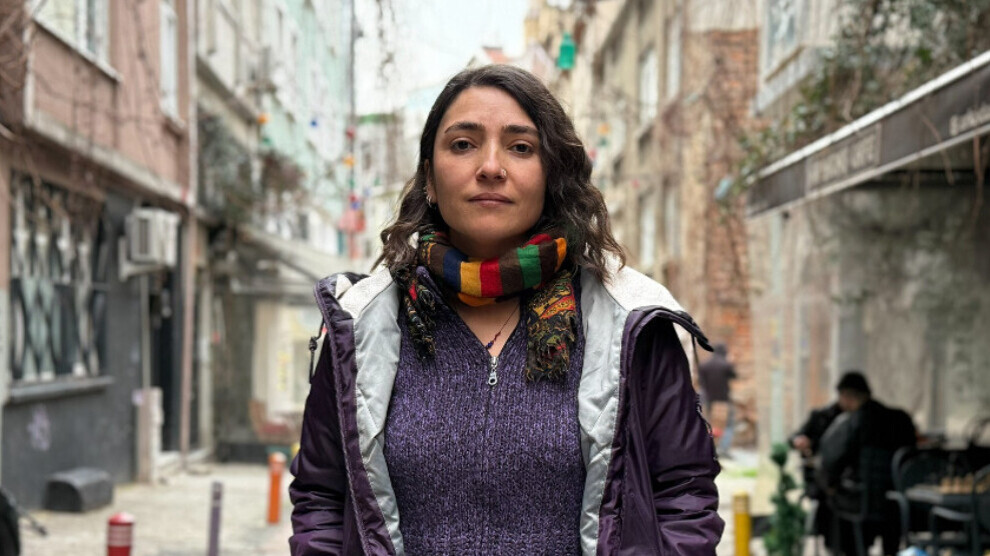
Elif Akgül
Istanbul_ As March 8, International Women’s Day approaches, the issue of women’s employment and the feminization of proverty remains a major challenge in Turkey According to date form the Turkish Statistical Institute, the employment rate for women was approximately 32–33% in 2024, while women’s labor force participation rate stood at around 36%.
The unemployment rate among women, according to the narrow definition, ranges between 11–12%, while the unemployment rate among young women exceeds 24%. According to data from DİSK-AR, the broad definition of women’s unemployment reaches 37%, and the rate of informal employment among women stands at 32.9%.
Tülay Korkutan, from the Women’s Solidarity Association and the Women’s Union affiliated with Emek Women’s Union, states that women do not receive equal pay for equal work and face bullying and harassment in the workplace.
She explained that women are directed toward flexible and precarious forms of employment, largely due to domestic care responsibilities that shape this trend. She stressed that women’s poverty is not limited to lack of income, but also includes time poverty. She added that women’s representation in labor unions remains weak and that this area needs to be strengthened through women’s struggle.
Women’s Work and the Struggle for “Equal Pay for Equal Work”
Tülay Korkutan said, “As we approach March 8, it is truly important to speak about the problems faced by working women,” adding that women are confined to unstable and flexible jobs in line with the policies of the Justice and Development Party (AKP).
She pointed out that one of the main challenges women face in the workplace is not receiving equal pay for equal work, despite performing the same tasks as men. In addition, they are subjected to psychological harassment and sexual harassment. She noted that current government policies aim to make family life and work “compatible,” but this so-called compatibility places domestic care responsibilities solely on women, pushing them to accept more fragile and less stable jobs.
She further explained that women are often compelled to work in flexible jobs because of responsibilities such as caring for children or elderly family members. Although these policies are presented as “opportunities” to increase women’s participation in the labor market, studies by institutions such as DİSK-AR and “Kadın İşçi” reveal that the apparent increase in women’s employment largely occurs within precarious and unprotected work conditions. This makes women’s participation in the labor market more symbolic than substantive.
For this reason, women increasingly work in flexible and unstable jobs. If they must care for a child or an elderly person at home, they bear this responsibility alone. Looking at the current situation—especially concerning women—there appears to be a policy framework in which women are allowed to enter the labor market, and programs are announced as “good news.” Authorities claim that the number of working women is rising; however, research by DİSK-AR and women workers’ organizations shows that employment is increasingly being pushed into flexible and insecure sectors.
Women Also Suffer from Time Poverty
The feminization of poverty is considered a multidimensional problem and is not limited to income deprivation alone. It is noted that women experience deeper poverty amid economic crises and rising living costs, as they bear the burden of both paid and unpaid labor.
This situation leads to what is Known as “time poverty” in women’s Daily lives. Women continuously experience time pressure due to domestic care responsibilities, whether or not they participate in the workforce.
Women’s proverty, or the feminization of poverty more broadly, is understood within a wider economic context, This is significant because,unless a woman is employed, she truly lacks economic freedom.However, on the other hand, she also suffers from time poverty. What does this mean? ? Tülay Korkutan explains:
“Today, whether we are wage earners or performing unpaid domestic labor, we do not have enough time in our lives. Women suffer from time poverty. There is a vast difference between the time men dedicate to housework and the time women dedicate to it, and this is the case in many parts of the world.”
She pointed out that this reality prevents women from living the lives they want and from doing what they desire. The role imposed on women—caring for the household and bearing the full responsibility of reproduction—means that the time they can devote to art, politics, or friends is far less than that of men.
However, because men are not held accountable for this imbalance, and because the system—together with capitalism and patriarchy—reinforces this situation, it continues to worsen. Therefore, as March 8 approaches, women will take to the streets to fight for their labor rights, particularly for improved working conditions, equal pay, and the struggle against workplace bullying and harassment.
Double Shifts and Precarious Work
Tülay Korkutan points out that women’s position in working life is evaluated alongside their domestic labor,and that both paid domestic work and care work are carried out under unstable conditions. She adds that women live under a “double shift system”, emphasizing that the social assignment of housework to women deepens their insecurity.
For example,domestic workers are employed in paid jobs, yet they also continue working at home. “All these roles stem from the responsibilities assigned to us,” she explains. In reality, women live under a double burden. They are concentrated in the most fragile and flexible sectors, where wages are extremely low.
If men were employed in domestic work for pay, it would likely be a fully secured profession, complete with retirement rights, insurance coverage, and legal status. However, because these jobs are considered women’s work, even paid domestic workers are employed in highly precarious conditions—without insurance, and without occupational health and safety measures.
Women’s Representation in Labor Unions
The issue of labor union organization is an important part of the broader debate on women’s work. Tülay Korkutan notes that unionization rates in Turkey are generally low, and that women’s representation within union structures is limited, with leadership positions largely occupied by men.
She stresses the need for structural reforms to increase women’s participation in labor unions, pointing to the systemic barriers women face in this field and the necessity of institutional arrangements to overcome them.
“Unfortunately, union membership rates in Turkey are very low. But when we look at the overall picture, the number of women is significantly lower,” she explains. “It is true that in several unions affiliated with DİSK, young women hold leadership positions. However, in general, women are rarely visible in union work. Of course, there are many reasons for this—we are constrained by numerous limitations. When we join a union or attempt to participate in any aspect of struggle, we must overcome these constraints in order to engage in political activity as freely as men.”
In conclusion, Korkutan, from the Women’s Solidarity Association and the Women’s Union affiliated with Emek Women’s Union, emphasized: “Men do not readily make space for us, so we must create that space ourselves. Breaking these constraints is not easy. Especially with men dominating administrative positions, the space for women becomes even narrower. Unions must adopt policies to increase women’s participation. They should certainly establish daycare centers at their headquarters to enable women to attend meetings and ease some of the restrictions placed upon them. However, this is not something that can be achieved simply by requesting it from top management or imposing it on men. Women are striving for this and fighting to make it happen.”