
Women strengthen their presence at the Marrakech Folk Arts Festival
Marrakech city: inaugurated 55th National Festival of Arts, with a notable female presence within the participating folk groups, who presented diverse performances of Moroccan heritage, highlighting of women in preserving identity.
RAJA KHAIRAT
Morocco – The National Festival of Popular Arts in Marrakech highlighted the presence of women within folk groups, showcasing their role in preserving oral traditions and strengthening cultural identity through diverse artistic performances that reflect the richness and diversity of Moroccan heritage.
Under the theme "Popular Arts: Treasures of Yesterday and Today," the Moroccan city of Marrakech hosted the 55th edition of the National Festival of Popular Arts on Thursday, July 2nd. The festival, which runs until July 6th, is considered one of the most important and prestigious festivals held in Morocco.
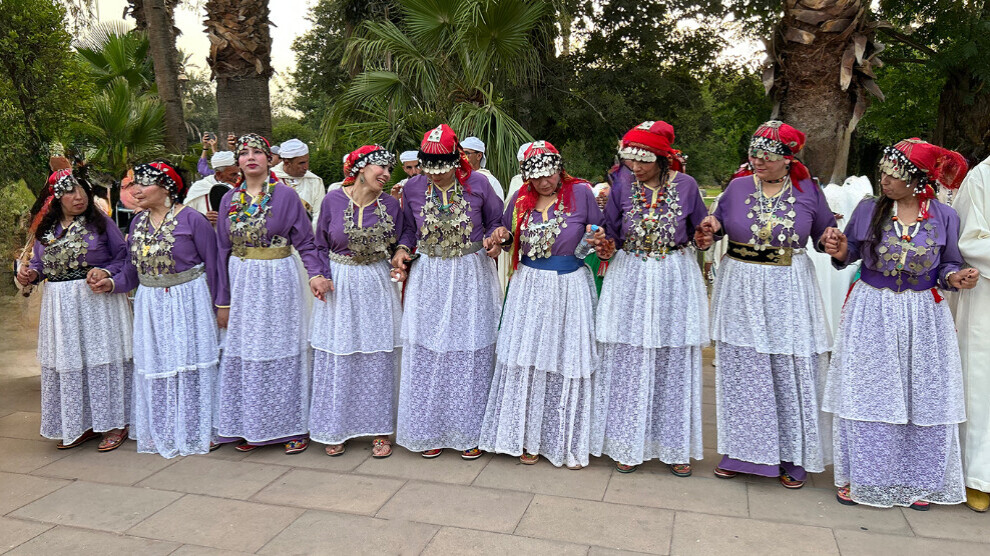
Women are notably present within the folkloric groups participating from various regions of Morocco in the festival, where artistic performances will be held in various spaces in the city of Marrakech, such as the historic El Badi Palace and the ancient Ben Youssef Madrasa. During these performances, groups such as Ahidous, Ahwach, Gnawa, Abidat Rma, Aita, and others will present their work. The women, in their traditional dress, will perform group dances and chants that express the cultural diversity that characterizes Morocco. Through these performances, the women express joy, solidarity, and the Moroccan culture with its diverse and varied influences from different regions.
The role of women in preserving heritage
Women play an important role in preserving folk arts and passing them on from generation to generation, as they raise their mountain voices and present folkloric scenes through the traditional clothes they wear and the jewelry they put on, which embodies the depth of their connection to popular culture and belonging to the Moroccan identity with its various multiple cultures.
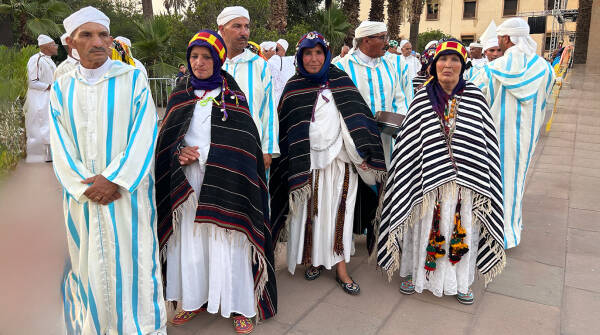
The presence of women within folk groups reflects their status in Moroccan society and contributes to preserving cultural identity and reviving intangible heritage. It also strengthens their presence in the artistic and cultural sphere at both the national and international levels.
The organizers stated that this edition, organized by the High Atlas Association in partnership with the Ministry of Culture and Communication, affirms that folk arts are not merely a relic of the past to be revived, but rather the beating heart of oral culture and vibrant musical diversity, representing a nation's civilization passed down through generations. They emphasized the importance of this annual event, which brings together various folk groups from across Morocco to present artistic performances, and that nations live and thrive through their culture and civilization.
The organizers highlighted the presence of women in popular and oral culture through their extensive participation in the artistic groups participating in the festival. Women play a pivotal role in preserving oral heritage and promoting cultural identity. Their presence also contributes to highlighting cultural diversity, supporting cultural tourism, and introducing popular heritage. In addition, their participation in events and festivals provides a real opportunity to empower them economically and enhance their role in cultural life.
It is no coincidence that the city of Marrakech is hosting this festival, as its famous square, "Jemaa el-Fna Square," has been classified as an oral heritage of humanity by UNESCO, which reinforces its position in preserving intangible oral heritage.
Celebrating the Art of Aita
Aita is a deeply rooted art form in Moroccan popular culture. No celebration or party would be complete without this distinctive Moroccan art. Therefore, the organizers of this edition of the festival have made an exceptional choice to honor one of the leading female artists of Aita, the Moroccan singer Zina Daoudia.
The art of Aita receives special attention during this edition, as women are among its most prominent figures. Many female singers have distinguished themselves in performing this musical style, which reflects national, social, and emotional issues. Among the most famous is the iconic Aita singer Fatna Bent El Houssine. The festival also features Ahidous groups, prevalent in the Middle Atlas region, where women and men perform group dances in facing rows to the rhythm of tambourines, in a scene that embodies the spirit of harmony and unity within this ancient Amazigh heritage.
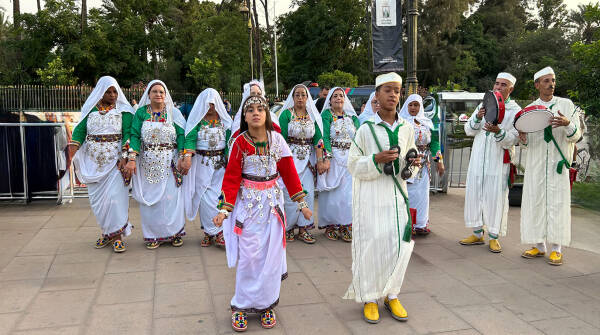
Also participating are the "Ahwach" groups, renowned in southern Morocco, particularly the Souss region. These women perform group songs and dances in their traditional dress, participating in various events and weddings, reflecting their vital presence within this Amazigh heritage. The "Dakka Marrakchia" group, originally a male art form, is also present. However, recent years have witnessed the emergence of all-female groups skilled in performing this rhythmic style, which has contributed to expanding women's participation in folk arts and showcasing their abilities in preserving cultural heritage.
Despite women's distinguished participation and strong presence in folk groups, these women still suffer from societal prejudice, where only women have the opportunity to participate.
A widow, divorcee, or single woman is not allowed to join this folk group. As for married women, they cannot participate in a social group that is specifically for health.