
Women’s Organizations Commemorate Asmaa Oumaima and Sound the Alarm Over Femicide
The murder of young woman Asmaa Oumaima, which shocked public opinion in Algeria, has once again highlighted the rising violence against women and the lack of effective protection mechanisms.
Najwa Rahem
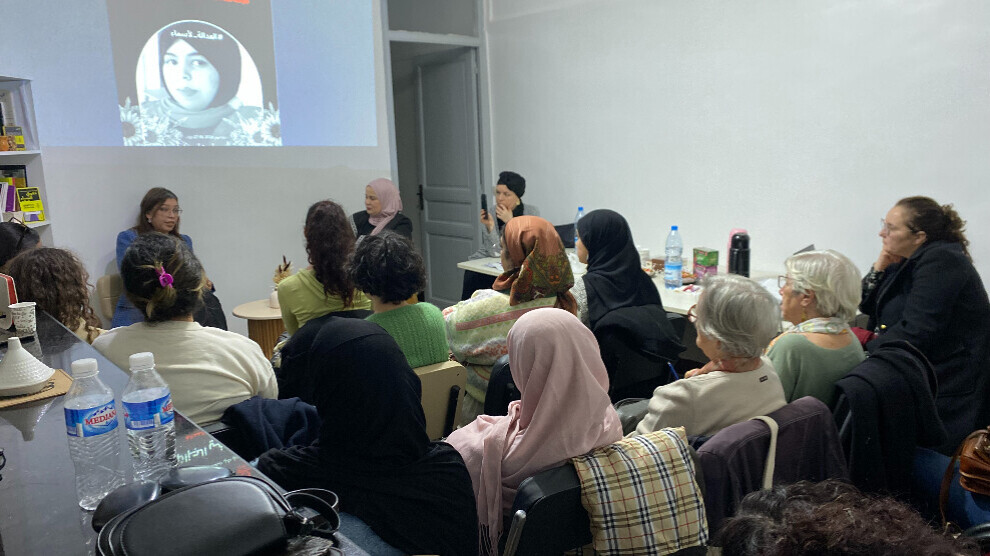
Algeria — The organization La Fondation held a session yesterday, Wednesday March 11, to commemorate the young woman Asmaa Oumaima, who was killed by her father in a crime that shocked public opinion and once again highlighted the reality of violence against women in Algeria.
The session was not merely a symbolic moment to honor the victim’s memory. It also served as a space for discussion and the exchange of testimonies and analyses regarding the phenomenon of femicide, as well as an attempt to understand the factors behind its growing prevalence.
Several women’s organizations and activists attended the meeting, which focused on reflecting on the tragedy and discussing the social and legal context in order to prevent the recurrence of such crimes. The event was held under the title “Femicide in Algeria: A Cry Against Violence and a Voice for Justice.”
Journalist and member of the “Algerian Feminicide Initiative,” Kenza Khater, delivered a presentation addressing the issue of femicide in Algeria. She reviewed a number of social and legal factors that contribute to the escalation of the phenomenon, including the absence of social protection and the lack of safety for women.
Rising Violence and Crimes
Kenza Khater questioned how many women spoke out before Asmaa, and how many girls might face the same fate afterward. She pointed out a key paradox related to the domestic space. According to recent statistics, around 71% of femicides occur inside closed spaces, which contradicts the common perception that women are usually killed by strangers. The case of Asmaa Oumaima, who was killed inside her home, clearly illustrates this reality.
She also addressed institutional shortcomings in dealing with cases of domestic violence. According to available information, Asmaa had reported severe physical abuse she was subjected to, yet the crime was not prevented—an indication of weak protection mechanisms.
Fear of Social Stigma
Kenza Khater also pointed to the social normalization of violence and the silence that often surrounds it. Many cases documented by members of the “No to Femicide” initiative show that society often hears the victims’ cries or knows about the violence they endure, yet this rarely leads to actual intervention due to silence or fear of social stigma.
She explained that femicides rarely occur suddenly. Instead, they are often the final link in a long chain of violence, beginning with threats and verbal abuse and gradually escalating to repeated physical assault. Testimonies regarding the case of Asmaa Oumaima indicate that she had been subjected to repeated physical violence by her father. Some media reports also described her as one of the “potential victims,” meaning women who show clear warning signs due to ongoing abuse.
For her part, legal expert Yaqout Benrouiqi spoke about her visit, along with several colleagues, to the victim’s home. She remains in direct contact with family members who shared details of what happened on the day of the crime. She noted that the family is experiencing a difficult psychological and social situation, both inside the home and within the neighborhood where the victim lived.
She added that Asmaa’s mother had also been subjected to violence whenever she attempted to intervene to resolve the repeated family conflicts that had persisted for years before ending in this tragedy.