
Widespread Criticism of Linking the Disparity Between Male and Female Teachers to “The School’s Prestige"
A Syrian Assembly member sparked controversy by linking the high proportion of female teachers to the prestige of educational institutions.
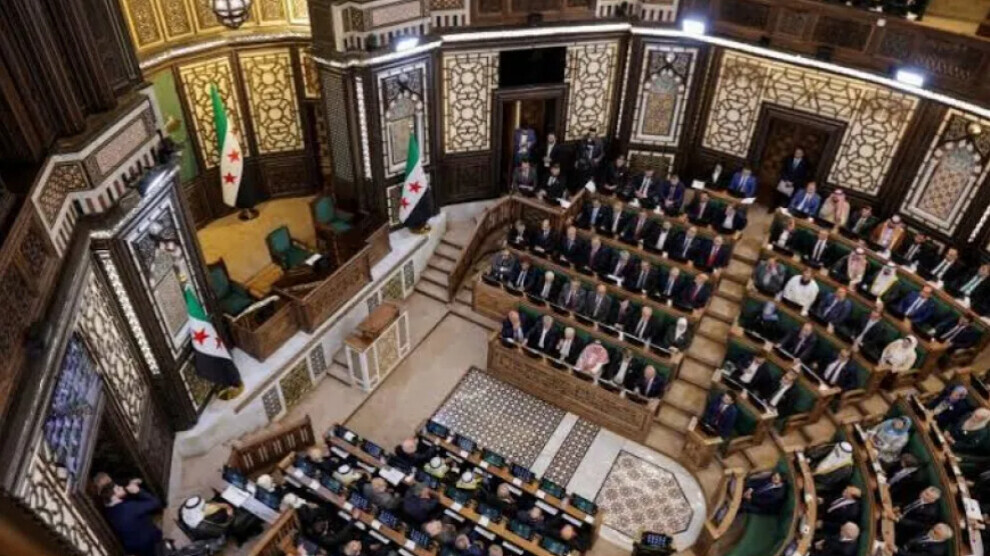
News Center — New statements in Syria about the high number of female teachers compared to male teachers have revived debate over women's role in educational institutions and society in general. While critics saw that linking women's presence in schools to "the school's prestige" and the formation of students' personalities reflects a stereotypical view of their role, these statements come amid declining representation of women in decision-making positions, raising questions about the future of their participation in public and professional life.
A member of the Syrian People's Assembly, Mohammed Ibrahim Al-Zoubi, sparked widespread controversy after speaking about the high proportion of female teachers compared to male teachers in schools, considering that this disparity affects "the school's prestige" and the formation of students' personalities. His remarks came during a hearing session for the Minister of Education, Mohammed Abdul Rahman Turko, where he criticized what he described as a lack of balance in the teaching staff.
These discussions have reopened questions about the view of women's role in educational institutions, as critics saw that linking the abundance of female teachers to declining discipline reflects a traditional conception of women's role, and ignores their firmly established professional presence in the education sector and their fundamental role in the educational process within Syrian society.
Reactions to the statements of the Syrian People's Assembly member were broad and rapid, particularly in women's circles, where many expressed fears that these proposals could entrench an additional gap between women and men within the education sector, and open the door to imposing new restrictions on women's participation in professional life.
Critics saw that linking the presence of female teachers to declining prestige or a negative influence on students' personalities reproduces a stereotypical image that diminishes women's status and educational role.
The statements became a focal point of discussion on social media platforms, where users expressed their rejection of what was proposed, and some considered that the view presented by the Assembly member ignored women's fundamental role in education.
One woman wrote on Facebook: "The one who raised you and brought you up is not male," in reference to the pivotal role of women in upbringing, while one user commented, asking: "What does a strong personality have to do with being a man?" in direct criticism of linking strength to masculinity.
Critics of the statements consider that the high proportion of women in the teaching profession should not be treated as a problem, since male and female teachers are subject to the same professional and educational standards, and their performance is evaluated according to unified criteria unrelated to gender.
They affirm that evaluating educational institutions must be based on the quality of the educational process, discipline, and the school environment, not on the gender of those working in them, considering that focusing on this aspect reproduces traditional conceptions that are inconsistent with women's firmly established professional role in the education sector.
This debate points to a broader context related to the declining presence of women in a number of official circles and decision-making positions, according to data circulating about the level of women's representation in public institutions. This decline is clearly evident within the Syrian People's Assembly, where women hold only 21 seats out of 210, reflecting the limited nature of their participation in the legislative institution compared to their social and professional presence in the labor market.
This lack of representation also extends to the executive authority, as only one woman holds a ministerial position within the interim government composed of 23 ministries—an additional indicator of the gap between women's actual participation in society and their presence in decision-making positions in Syria.