
When Pioneers of Change Were Targeted... Halanj: A Wound in the Memory of the Women's Revolution
Zahra Barkal, Habun Mulla Khalil, and Amineh Waisi—three women who wrote with their blood pages of the history of women's freedom, and were a driving force in women's journey toward building a free world and developing the struggle.
BERJAM JUDI
Kobani_ In one of the most painful milestones in the struggle of Kurdish women, the Halanj Massacre became a symbol of the conflict between the project of women’s freedom and attempts to target it. At a time when women in Rojava continued to write newe pages of their liberation history, attacks came to target female figures who had played pivotal roles in this path.
In Rojava, where the women’s revolution emerged as one of the most prominent social and political transformations in the region, women achieved remarkable steps in organization, participation, and leadership. Every woman engaged in this project became a new page in the history of women’s freedom.
However, this experience became a direct target for forces seeking to preserve traditional structures and established hegemony. As women’s role in society escalated, Rojava witnessed a series of attacks targeting activists and leaders, in an attempt to halt this path and weaken its gains.
In this context, the city of Kobani_where the spark of the women’s revolution was ignited_witnessed one the most prominent of the most prominent of these attacks. On June 23, 2020, a Turkish drone struck a civilian home in the village of Halanj, east of the city, which housed administrators of the Star Congress for women’s rights.
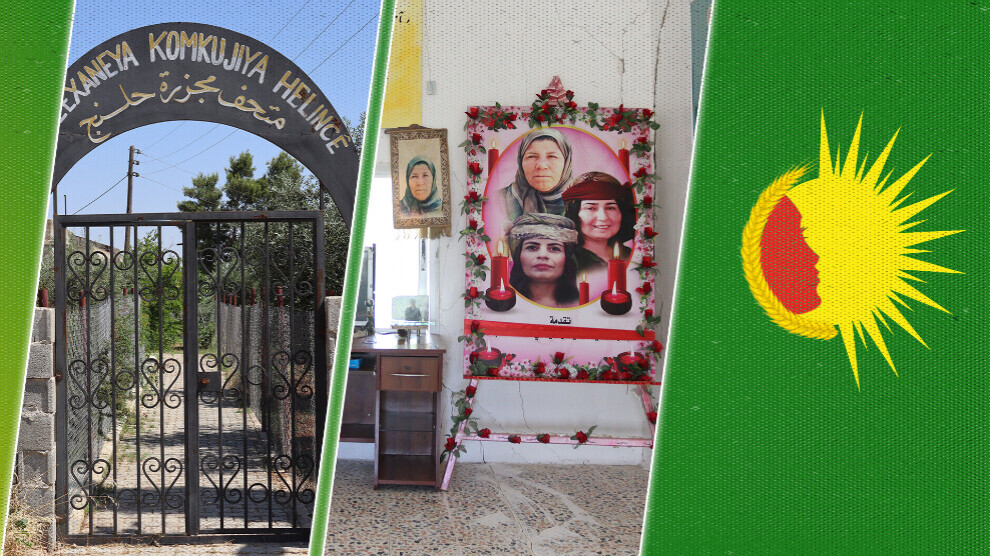
The attack resulted in the deaths of Zahra Barkal, a member of the Star Congress Coordination Body; Habun Mulla Khalil (Badriya Khalil), an administrator in the Shiran sub-district; and the homeowner, Amineh Wasisi. The attack marked a dangerous turning point, representing the shift to directly targeting women leaders through assassinations and military operations.
The three women martyred in the massacre were not merely names but figures who left a clear mark on society and the feminist struggle.
Zahra Barkal, born in Kobani in 1987, dedicated many years of her life to working for women’s freedom and contributed to numerous fields of the revolution and community organization.
Habun Mulla Khalil, whose real name was Badriya Khalil, was born in 1981 in Halanj village and spent more than two decades serving the community and Kurdish women. She continued her activism despite suffering from cancer until she passed away while fulfilling her role in the struggle.
Amineh Waisi represented a model of the struggling mother, opening her home to revolutionaries and activists and transforming it into a space of embrace and support for all those engaged in the path of struggle. Her home was completely destroyed during the attack.
After the massacre, the women of Kobani decided to transform Amineh Waisi's home into a museum carrying the memory of the place and the martyrs, to remain a witness to the sacrifices made and a message affirming the continuation of the struggle despite attempts to target it.
On the sixth anniversary of the crime, Nadia Haso, who lived the experience of work and struggle alongside the martyrs, says that women made great sacrifices so that society could live in freedom and dignity. She noted that Habun Mulla Khalil played an important role in the resistance against ISIS, while Zahra Barkal struggled against occupation, discrimination, and patriarchal mentality, and Amineh Waisi dedicated her home and her life to serving the fighters and activists.
She adds that Kurdish women have paid a heavy price for freedom, and through their sacrifices, they have contributed to writing a new history for women—a history not based on subjugation and marginalization, but on participation, will, and freedom.
She affirms the continuation of this path, stating that the history of women's enslavement was written over centuries. Today, Kurdish women are at the forefront of writing their history of freedom, drawing strength from the sacrifices of the martyrs who have become luminous pages in the struggle toward building a freer and more just world for women.