
When Freedom Becomes a Price Paid by Activists with Their Lives
Bahar Munther said the assassination of activist Yanar Mohammed aimed to silence women, but those responsible failed to realize her voice only grew stronger after her death.
Helen Ahmed
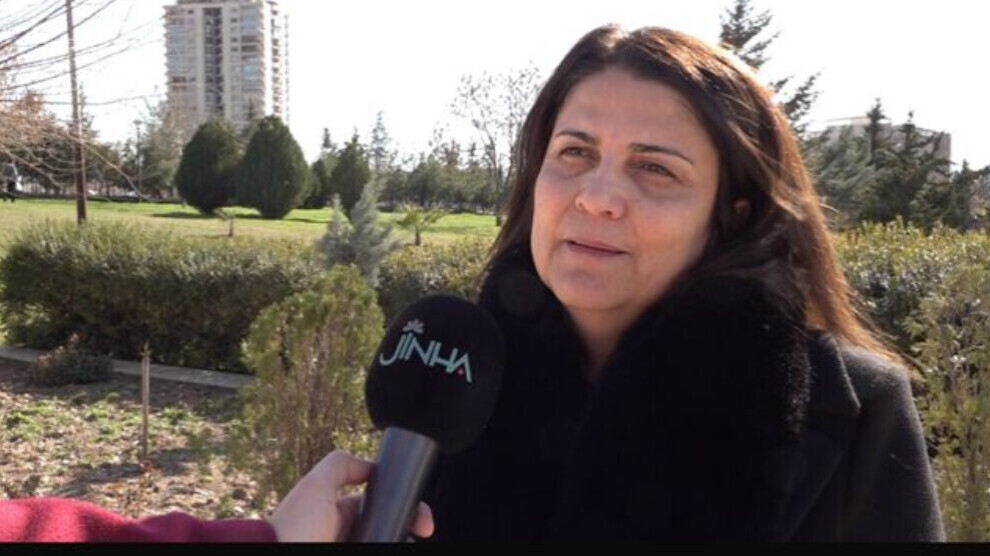
Sulaymaniyah_The director of the “March 8 Network,” Bahar Munther, stated that the assassination of activist Yanar Mohammed sends a clear message aimed at silencing women. However, she stressed that those who planned her killing failed to understand that her voice did not fade—it only became louder.
In a country where political crises intersect with conservative social structures and campaigns of repression against feminist voices are escalating, women who speak out to defend their rights have increasingly become direct targets of violence, threats, and assassination.
Early Life and Education
Yanar Mohammed was born in Baghdad in 1960 into a progressive family that believed in education and freedom. Her mother was a teacher and her father an engineer, providing her with an encouraging environment for learning and openness.
She completed her undergraduate studies in architecture at University of Baghdad in 1984 and earned her master’s degree in 1993. Later, after moving to Canada, she joined the Worker-communist Party of Iraq, which she later left in 2018. Her family had relocated to Canada in 1995.
From Defending Women to Building a Feminist Movement
In 1998, Yanar Mohammed founded the Organization of Women's Freedom in Iraq, an extension of the earlier experience of the Women’s Freedom League. One of the key factors that pushed her to champion women’s rights was the early marriage of her sister at the age of fourteen, which made the issue deeply personal as well as national.
After the 2003 invasion of Iraq, she returned to Baghdad to begin a new phase of activism. She established shelters and safe houses for women threatened by domestic violence and so-called “honor killings,” led campaigns against trafficking of girls, and trained activists to confront violence and advocate for equality. She also appeared frequently on radio and television programs to raise awareness about women’s rights.
Shelter Network and International Recognition
Yanar Mohammed created a network of women’s shelters across four Iraqi cities, providing services to more than 870 women over 16 years. Her work earned international recognition, including the Gruber Women’s Rights Prize in 2008 and the Rafto Prize in 2016.
She also met with around 30 detained women, offered them support, helped save one from execution, and prevented others from being returned to sexual trafficking networks. She later became editor-in-chief of the newspaper “Feminist Equality.”
In 2018, she was included in the BBC 100 Women list. She also continued her studies at University of Toronto, where she wrote a thesis titled “Theorizing Feminist Struggle in Post-War Iraq (2003–2018).”
A Prominent Voice in Tahrir Square
Yanar Mohammed was one of the most prominent feminist figures in Tahrir Square during the protests of 2020. As threats of arrest intensified, she was forced to return to Canada.
She strongly criticized Iraqi legislation, arguing that religious jurisprudence had been attached to family law, granting men automatic guardianship over children and allowing divorce without the woman’s consent. She also opposed easing restrictions on child marriage, which made her a direct target for extremist groups.
Assassination in Broad Daylight
At 9:00 a.m. on March 2, Yanar Mohammed was assassinated in front of her home in Baghdad by two gunmen riding a motorcycle. She had become a symbol of the Iraqi feminist movement, a courageous voice against violence and discrimination, and a leading figure in the Organization of Women’s Freedom and the alternative Worker-Communist political movement.
Commenting on the targeting of women leaders and activists, Bahar Munther said:
“Yanar worked for Yazidi women and for the most vulnerable. Women who struggle for women’s freedom are being assassinated.”
She pointed out that despite holding Canadian citizenship, Yanar chose to return to a country where women are killed and their voices suppressed, dedicating her work to issues such as trafficking, child marriage, violence, and exploitation. She also played a central role in opposing the proposed Jaafari Personal Status Law.
A Message of Intimidation That Backfired
Munther explained that Yanar had been preparing for activities related to International Women's Day, suggesting that her assassination was intended as a threat to activists.
A day before her killing, Yanar had spoken at a press conference about sensitive issues concerning the upcoming March 8 events and the situation of women in Iraq. She appeared to have been under surveillance. The attack, Munther said, was meant to intimidate activists and push them to retreat—but instead strengthened the feminist movement’s determination.
Today, Yanar Mohammed has become a symbol of International Women’s Day, with special events being organized to commemorate her memory.
A Struggle That Continues
Munther also recalled meeting Yanar for the first time in Norway in 2003. The two collaborated for more than 22 years, continuing their work even when Iraqi authorities prevented their organization from operating for several years.
“Yanar was proud of this support,” she said, noting that it contributed to her receiving the Rafto Prize.
Munther concluded:
“We have lost a woman filled with freedom and courage. We activists will continue demanding accountability for her killers. Those with backward mentalities oppose women’s freedom and their voices. They assassinate activists and journalists, but we will continue our struggle for equality and freedom. They will never silence the courageous voice of women.”