
Weather Depressions in Gaza Worsen the Suffering of the Displaced
Strong winds have flooded and uprooted the tents of displaced people in the Gaza Strip, affecting more than 250,000 individuals living in shelters amid cold conditions and severe shortages of heating supplies.
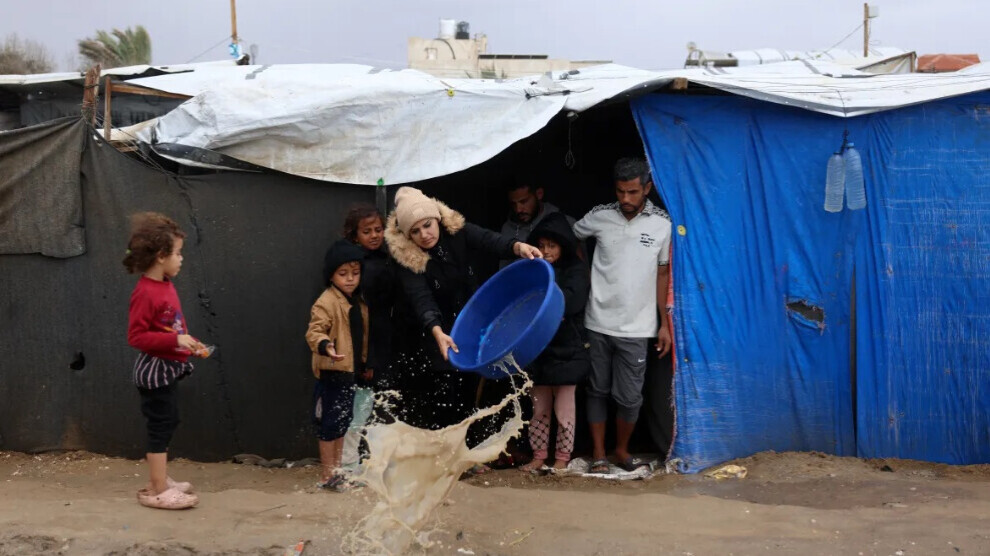
News Center – The prevailing weather conditions and the intensifying impact of a low-pressure system have worsened the suffering of displaced people in the Gaza Strip, as strong winds destroyed their tents, exposing them to the risks of flooding and disease amid severe shortages of resources and the absence of protection from cold and rain.
The Palestinian News Agency (WAFA) reported on Monday, December 29, that heavy rainfall and strong winds affecting the Gaza Strip since the beginning of the month have flooded tents sheltering displaced people in low-lying areas and uprooted others, forcing families—including children—to remain outdoors in cold weather.
WAFA explained that the weather depressions have affected more than 250,000 displaced people out of approximately 1.5 million living in tents and makeshift shelters that fail to provide even minimal protection. Thousands of displaced people are living in tents made of nylon and thin fabric, or in public squares, schools, and roads, without any means of heating or protection from rain and storms.
The agency noted that strong winds and heavy rainfall also led to the collapse of several residential buildings previously damaged by Israeli bombardment. It confirmed that the lack of fuel has exacerbated the crisis, as families have been unable to secure heating sources amid falling nighttime temperatures, with tragic consequences for children, including recorded deaths.
According to the agency, residents have been forced to seek shelter in cracked and structurally unsafe buildings due to the absence of alternatives, following the destruction of most homes and the ban on the entry of mobile homes and construction materials. WAFA reported that weather depressions since early December have resulted in the deaths of 17 citizens, including four children, while nearly 90 percent of the shelters used by displaced people after their homes were destroyed have been flooded