
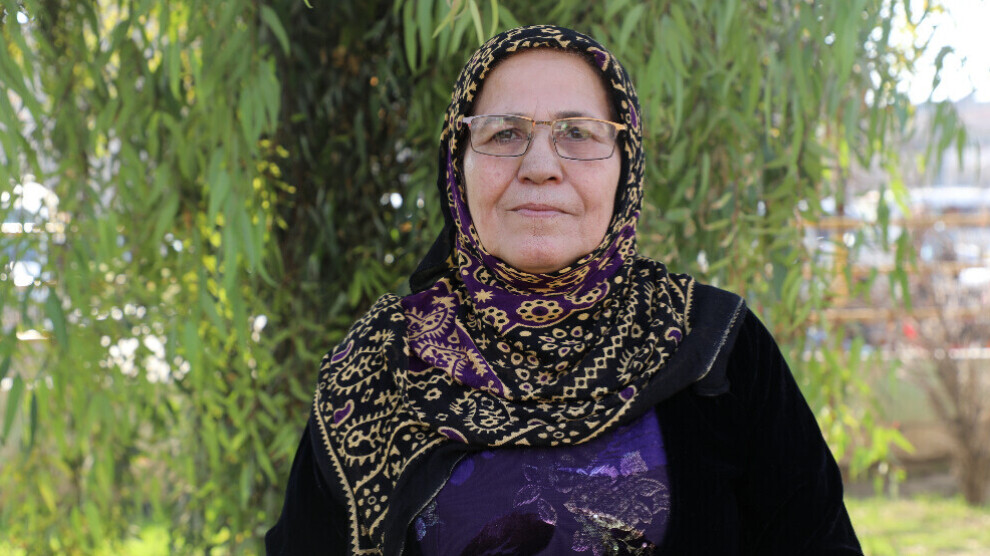
Walidah Bouti: Women's struggle extends to confronting extremist religious thought
Ahead of the International Day for the Elimination of Violence against Women, Walidah Bouti affirmed that using religion to justifty violence against women and entrench male domination deviates from religions’ essence of equality, love, and justi
RONIDA HAJI
NEWS CENTER — Violence against women is not limited to physical or psychological assault, but takes deeper and more complex forms when practiced under the cover of religion and beliefs, and is used to justify discrimination, restrict freedoms, and impose guardianship over women.
Between the essence of religions based on love, justice, and equality, and the interpretations employed by authoritarian forces to entrench male domination, the need emerges to confront all forms of violence and discrimination, and to restore the true human values of religions.
Practicing violence under the cover of religion
Commenting on this, a member of the administrative body of the Council of Religions and Beliefs, Walidah Bouti, affirmed that one of the fundamental axes of women's struggle is confronting extremist religious thought and the interpretations that have been employed throughout history to entrench male domination and subjugate women.
She explained that "throughout history, authoritarian forces and the dominant patriarchal mentality have used religion and its interpretations as a tool to control women, by interpreting religious texts in a way that serves their interests, depriving women of their basic rights, and confining their role within the family and society. These practices did not stop at imposing restrictions on women's clothing, movement, and private lives, but extended to forced marriage, child marriage, domestic violence, honor killings, and depriving women of education and community participation."
She pointed out that violence practiced under the cover of religion is not limited to physical practices, but also includes subjecting women to blame and criminalization because of their voices, appearance, and choices. "Despite international recognition of women's rights and the principle of gender equality, political and religious forces still employ narrow and one-dimensional interpretations of religious texts to enshrine man's authority and diminish women's rights."
Confronting male domination and man's authority
Walidah Bouti shed light on the importance of November 25, affirming that this occasion is not limited to combating physical violence against women, but also represents a confrontation with tyranny, male authority, and the dominant mentality that seeks to subjugate women and strip them of their will.
She explained that this mentality is also manifested in the religious sphere, which makes continuing women's struggle in this field a necessity no less important than struggle in other fields, pointing out that women have suffered throughout history from multiple forms of discrimination and suffering in the name of religions. "The essence of religions is based on equality, love, and justice, but authoritarian forces, to serve their interests and impose their vision based on domination, employ religion as a tool to entrench their authority and spread their ideas, which leads to deepening divisions and fueling crises, conflicts, and wars."
"Women struggle to restore the true values of religions"
Walidah Bouti affirmed that women are waging a continuous struggle against misinterpretations of religion and its employment to serve the interests of authoritarian forces, pointing out that religious extremism and the mentality imposed on society in the name of religion are reflected more greatly on women's lives and rights.
She added: "The foundation of building a sound society is based on ethics, peace, and solidarity, which are authentic values present in Islam and other religions. What we seek is to revive the essence of true religion, and to entrench its human values in society."
She explained that women possess the awareness, culture, and religious knowledge that enable them to contribute to developing societal awareness, enhancing their role in the fields of work and struggle, and confronting wrong interpretations of religious texts and working to correct them.
A member of the administrative body of the Council of Religions and Beliefs, Walidah Bouti, stressed at the conclusion of her talk the ability of women to lead in re-establishing the true understanding of the essence of religion, based on her belief that love, justice, peace, and acceptance of the other are human values that form the basis of women's struggle to build a society dominated by equality, dignity, and coexistence.