
Through Cultural and Artistic Activities,the Golden Crescent Movement Supports the Women’s Protection Units
The Golden Crescent Movement in Rojava continues its support for the Women’s Protection Units (YPJ) through various cultural and artistic activities, including theatrical performances, concerts, and art exhibitions.
RONIDA HAJI
Al-Hasakah_The implementation of the agreement signed on January 29 between the Syrian Democratic Forces (QSD) and the Syrian interim government remains incomplete to this day, while the issue of recognizing the Women’s Protection Units within the structure of the Syrian Ministry of Defence remains one of the unresolved files.
Despite this, women continue to organize activites and events with great determination, affirming their support and solidarity with the Women’s Protection Units. This support is not limited to moral backing: rather, it reflects a widespread conviction among women that the protection of society and women is a collective responsibility, and that the Women’s Protection Units represent one of the pillars of this protection.
In this context, the Golden Crescent Movement announced an artistic and cultural programme in support of the solidarity campaign with the Women's Protection Units (YPJ). The programme includes concerts, theatrical performances, and photo exhibitions in the cities of Al-Hasakah, Derik (Al-Malikiyah), Qamishlo (Qamishli), and Al-Darbasiyah.
These events will highlight the lives of YPJ fighters, their struggle against ISIS, as well as the achievements the Units have accomplished for women in northern and eastern Syria and for women around the world.
"The Monolithic Mentality Threatens the Future of Syria"
Speaking on the subject, Simav Abdi, a member of the administration of the Golden Crescent Movement in Al-Hasakah, affirmed that the region is going through a new phase and reorganisation, with increasing attention to the importance of recognising the Women's Protection Units within state institutions. "Recognition of the YPJ within the structure of the Ministry of Defence would ensure that this phase proceeds democratically. However, the prevailing mentality of the interim government is still not fully accepting of women's existence and role. This mentality is linked to nationalism and gender-based discrimination, and the continuation of this monolithic approach poses a great danger to the future of Syria."
Culture and Art in the Service of Women's Cause
She stated that the YPJ has become a symbol of women's identity in the region and the world, and that the current campaign aims to consolidate its status, ensure its recognition, and protect its achievements. "The support campaign will continue until it achieves its goals. We in the Golden Crescent Movement will continue to support the YPJ through culture and art. Therefore, we have prepared a programme that includes concerts, theatrical performances, and photo exhibitions in four cities."
She also noted that women's representation in the interim government remains limited, that their level of participation in decision-making positions does not meet aspirations, and that raising the level of women's struggle in this phase is an essential necessity to guarantee women's rights and their role in the future of Syria.
"Recognition Is a Serious Responsibility"
For her part, writer and director Fatima Ahmed, who works in the theatre department of the Golden Crescent Movement, announced her support for the campaign "We are all YPJ, YPJ represents us," affirming the importance of this initiative in highlighting the role of the Units and appreciating their struggle.
She said: "For fourteen years, the YPJ have made great sacrifices to protect the region and ensure its security. Through these Units, the world came to know the image of the Kurdish woman fighter. Their fighters have become a model of resistance and will in the face of ISIS."
She affirmed: "Official recognition of the YPJ is not just a demand; it is a real responsibility, because they constitute one of the fundamental pillars of the achievements of the Women's Revolution."
Theatrical Performances Embodying Resistance and Sacrifice
Fatima Ahmed explained that the Movement continues its support for the YPJ through cultural and artistic works. "They have defended society with their philosophy and their weapons. We continue this role through culture and art. Our goal is to convey the stories of resistance, sacrifice, and struggle embodied by YPJ fighters to the public through theatre."
"The Braid's Revenge": A Message of Unity for Women
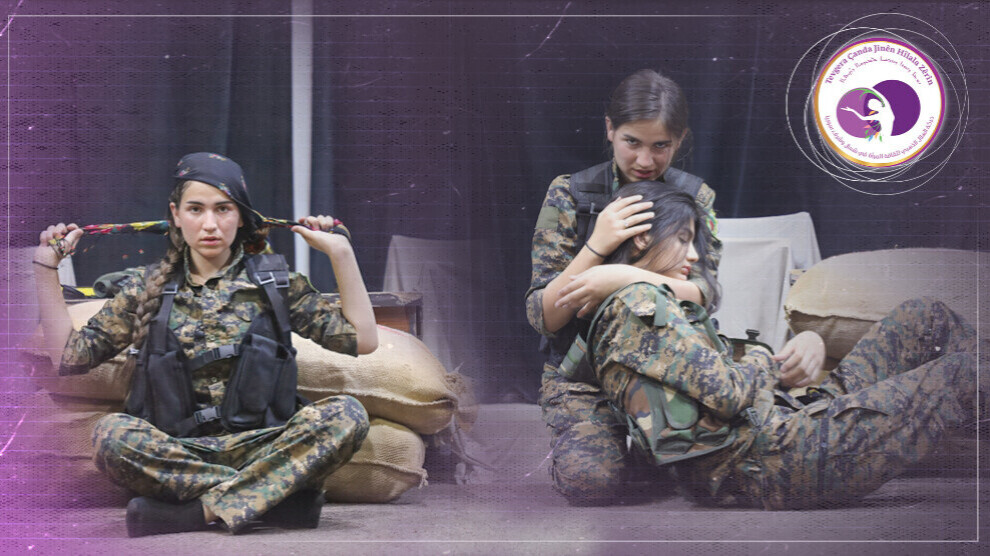
She revealed that the Movement is working on preparing two plays within the framework of the campaign. "The first play is titled 'The Braid's Revenge.' It is inspired by the story of a YPJ fighter who was captured during the attacks targeting Rojava, and her braid was cut off while she was detained. This play highlights the importance of women's unity and their common stance towards women's issues. Its core message is that women become stronger when it comes to defending their rights and freedoms."
"Pît û Ar" (Bet and Ar): A Tale of Loyalty and Sacrifice
The second play is titled "Pît û Ar" (Bet and Ar). It deals with the story of YPJ fighters in wartime conditions, shedding light on the meaning of comradeship, loyalty, sacrifice, and defence of society. On this, Fatima Ahmed explained that the play "is based on real events. Its aim is to convey the reality of the resistance and the sacrifices made by YPJ fighters through the language of art and creativity, so that these experiences reach society and future generations."