
The "Women's Fountain in Cologne": A Hidden Monument Narrating the History of Women Through the Ages
The "Women's Fountain in Cologne" tells the story of the social and historical transformations that Cologne witnessed and the role of women in them through the centuries.
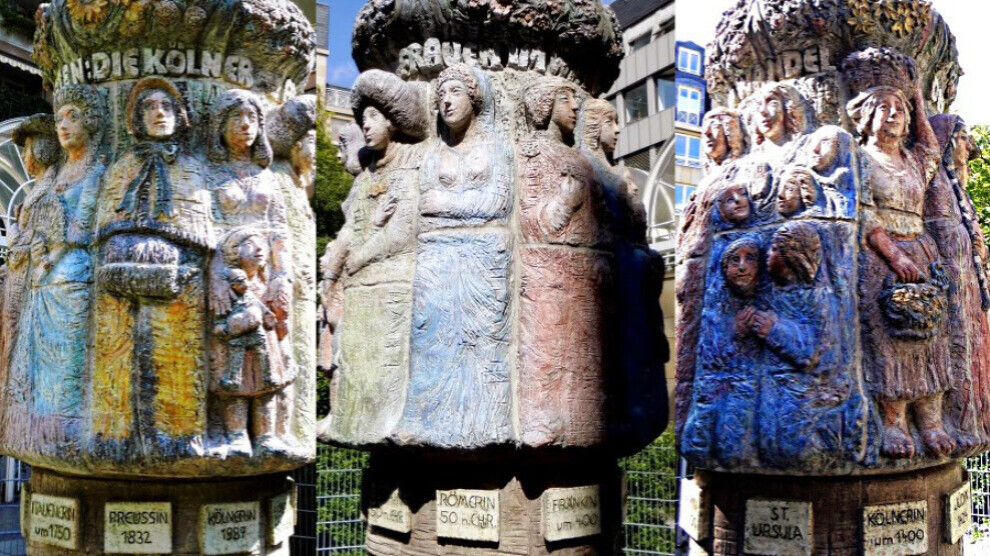
News Centre_ In a quiet alley behind the historic Farina building in the German city of Cologn, where the famous perfume museum is also located, stand the “Women’s Fountain” as one of the city’s lesser-knoen landmarks, yet it holds great historical and cultural value, featuring ten female statues representing different historical eras.
The fountain’s design aims to highlight the changing status of women in Cologne society through the ages, as each statue represents a historical period and a female figure reflecting the features of her era.
Women of the Ubii and the Romans
The oldest statue dates to the women of the Ubii tribe, one of the earliest peoples to settle in the region. According to historical accounts, the women of this tribe were believed to have blonde hair and blue eyes, which aroused the Roman’s interest in the region at that time.
Beside this statue stands a figure of a woman from the Roman era, a period that witnessed major transformations in the city’s urban structure under Roman influence.
Frankish Women and Saint Ursula
The fountain also includes a statue of a woman from the Franks, who arrived in the city in the fourth century AD. Among the prominent figures is also a statue of Saint Ursuls, shown carrying several young womem’s heads, referring to the legend that she was a protector of unmarried girls.
The medieval statue depicts a woman carrying a basket in her hands, while another statue represents Jewish women who were expelled from Cologne in 1421, serving as a reminder of periods of exclusion and social discrimination that the city witnessed.
From Trade and Immigration to the Modern Woman
The later statues highlight the history of trade and immigration in Cologne. There is a statue of a Dutch woman symbolising the growing trade relations between Cologne and the Netherlands during the seventeenth century, while another statue represents Italian women who migrated to the city in the eighteenth century.
One statue also depicts a Prussian woman, expressing the period when the city was influenced by Prussian influence during the nineteenth century. The last statue represents the modern woman as seen in 1987, the year the fountain was created.
A Fountain Without Water
Despite the symbolic and historical value of the fountain, it no longer functions in its original capacity, as water has stopped flowing from its taps. This is due to the security measures imposed during the G8 summit hosted by Cologne in 1999, when the surrounding area was closed off and the water outlets were covered with metal plates.
This monument was designed by the German artist Anneliese Langenbach, while the Farina building that houses it is known as the historic site where the world‑famous "Cologne Water" (Eau de Cologne) perfume was first produced.