
The Resistance of the Spirit of Rojava: A Test of Liberation in the Face of ISIS
An article by Tunisian journalist Zahour Al-Mashriqi
Hair is cut, bodies are thrown from the tops of buildings and mutilated, women are abducted and sold, phone calls are recorded and filmed, cats and dogs are killed simply because they are in a Kurdish area, graves are broken into and desecrated, and the sound of gunfire never ceases. Killing based on identity, ethnicity, and religion: Kurdish, Alawite, Druze, Christian…
This is what we see and hear day after day as we scroll through social media and news outlets. For a moment, it feels like we are watching a horror movie, but the screams of children and the cries of women pull us back to reality: we are facing a real, black tragedy, waged against the very people of the land, using tools that speak only one language—violence.
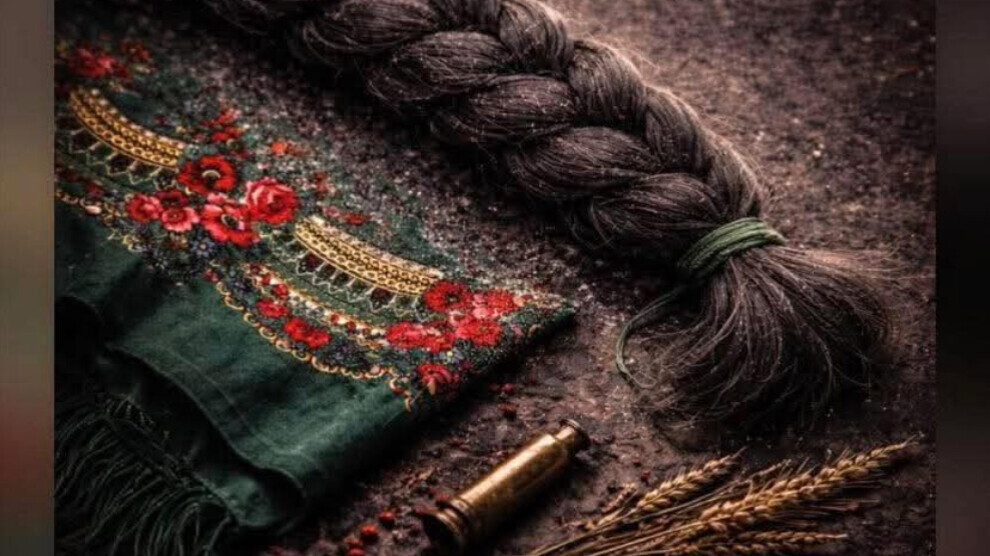
We try to escape, even briefly, but the blood of the innocent follows us wherever we go. As human beings, we choose to side with humanity, regardless of color, religion, or identity. The images suffocate us, and our suffocation deepens with the silence of the world—Arab and Western alike—which has chosen the profession of “spectator,” washing away the shame of its silence with the blood and hair of an innocent woman whose only crime was clinging to her land and dignity, and refusing to remain silent in the face of injustice and ISIS’s occupation of her home.
As a Tunisian journalist from a country that has paid dearly for terrorism in blood and assassinations, I know that extremism is not defeated by silence, nor by recycling violence under new political labels. Therefore, I cannot view the targeting of Rojava as anything but a double crime: a crime against those who confronted ISIS, and a crime against the truth itself.
From this position, neither this Kurdish woman nor this society chose resistance instead of the world; rather, for more than fifteen years, they have waged an open battle against the terrorist organization ISIS, its remnants, and its thugs. The battle east and west of the Euphrates is not the battle of the Syrian Democratic Forces alone; it is the battle of every free person who rejects extremism and terrorism. It is a battle for human existence, and for regional and international stability.
The crimes committed today against Syria’s components, and the war waged against the Kurds with the support of transitional governments, integrated militias, and regional states known for their ideological agendas, will not be forgotten. This is genocide and ethnic cleansing—how can any human being forget such betrayal?
How can those who defeated ISIS in Kobani in 2014, chased its remnants in Baghouz in 2019, and liberated thousands of abducted women from all ethnicities, including Arab women, be asked to forgive this contempt for human life, this falsification of truth, and this distortion of reality?
The project of the Democratic Autonomous Administration in Rojava was not an attempt at secession, but a political experiment that restored the meaning of coexistence, decentralization, women’s rights, co-presidency, and social justice. It impressed everyone who visited it, and other communities tried to learn from it. Yet it is an experiment that does not suit regional and international powers, because it disrupts systems of exclusion; therefore, it is being targeted and undermined through violence and terrorism.
Today, the hell of killing is creating a new wave of forced displacement. Instead of the return of the displaced to their original areas, as in Afrin, Serekaniye, and Tal Abyad, a new wave of flight is erupting out of fear of a terrorist who knows no language but “death, mutilation, and dancing on corpses.” A suffering that exhausts pens and defeats cameras, for some pains cannot be explained—they can only be felt, especially when your adversary is a rigid weapon that knows no dialogue.
Attempts to end the Rojava experience—this experience that proved the possibility of tolerance and shared coexistence—will only result in more bloodshed, wars, and division. Stability in the region will only be achieved by recognizing the social and political rights of the Kurds and enshrining them constitutionally, not through promises or temporary decrees. Including the Kurds and accepting their decentralized experience is the first gateway to reconciliation, preceded by an apology for the blood that has been shed.
Resolving the crisis requires international recognition of the violations, accountability for those involved, support for genuine political dialogue, and an explicit acknowledgment of Kurdish rights in Syria. The resistance of Rojava is not a passing event; it is a moral test for all free people