
The mother tongue plays a major role in the process of cultural and social upbringing
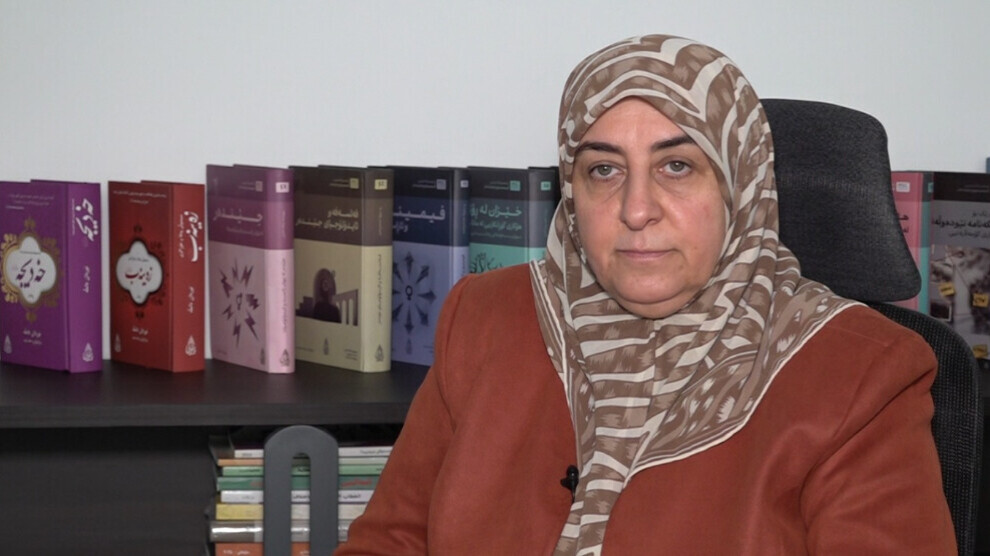
Bekhal Abu Bakr, who holds a PhD in the Department of English at the University of Sulaymaniyah, stated that “neighboring countries continuously practice genocide against the Kurdish language and the Kurdish people.”
HELEN AHMED
Sulaymaniyah – Language is of great importance all over the world; therefore, the United Nations has designated February 21 of every year as International Mother Language Day. The Kurdish language is the mother tongue of the Kurdish people; it is the language through which we exchange ideas and express our vision of the world. Language has many social functions, whether in greetings and farewells, negotiation and discussion, or in delivering political speeches and election campaigns.
“The Kurdish Language Department gives great attention to the mother tongue”
Bekhal Abu Bakr from the Department of English at the University of Sulaymaniyah said:
“I have noticed that university students are not all alike. The Kurdish Language Department pays great attention to their mother tongue. I also have additional information about my own department, which teaches in English. If you want to learn a second language, you must master your mother tongue and use it well. If you want to become a translator, you cannot translate a poem into mere actions in English. When we are not familiar with our mother tongue, we cannot learn about the cultures of other countries. Therefore, we encourage them to do so.”
She added:
“I feel extremely happy when I search on the internet for a term in Kurdish. We have international researchers who have written about the Kurdish language in English. It is wonderful to publish the culture and information of our language in other languages. It is true that every language has its own dialect, but other languages have adopted a standard variety. If the mother tongue is neglected and we are forced to teach it first, we can make English an opportunity to serve the Kurdish language. If it is separated from it, one will not be able to deeply understand their culture, will not understand our poetry, and will not know our Kurdish languages.”
She pointed out that:
“The English language represents an opportunity to strengthen the Kurdish language, and at the same time it poses a threat to it. I cannot mention all private schools and universities without statistics and research. Last year, we conducted research with two fourth-grade students in two different schools. Our survey was about the extent of their knowledge of the Kurdish language, its culture, and its dialects. We introduced them to items and foods such as crops, wheat, and nuts. Although the schools we chose were among those that pay attention to the Kurdish language, its culture, and its events, we can say that this percentage differs from one place to another, and the importance of the role of families and parents in caring for the Kurdish language becomes clear. I can say that education basically begins within the family. Children are interested in the Kurdish language, its dialects, and its names, and they must be aware of Kurdish culture.”
“The language and terminology used by the media must be known”
Then comes the role of the media, institutions, and even mosques. This process is a comprehensive issue that affects all sectors of society. Cultural policy should also be addressed by the government. Bekhal Abu Bakr says:
“Every institution has its own terminology and expressions. For this reason, we feel division. Although language is one of the factors of national unity, it creates a national feeling even if it is not present in that geographical area. It makes us feel that we belong to a nation. If we want our future generations to have this feeling, we must learn many languages, but not at the expense of our mother tongue. On the contrary, there are many common points between them.”
She noted that:
“What has been researched in English also exists in Kurdish. Fortunately, there is nothing in English that does not exist in Kurdish. The fourth strategy is marginalization: when a person learns a new language, they marginalize their mother tongue. They may suffer from an internal conflict. They are told abroad that English is important, so let us use other languages.”
In conclusion, Bekhal Abu Bakr stated that the division of the Kurds into parts of Kurdistan under the Sykes–Picot Agreement was aimed at the destruction of the Kurdish people:
“Despite the equality of rights stipulated in the Universal Declaration of Human Rights, linguistic differences should not diminish human dignity. The Sykes–Picot Agreement created discrimination between the parts of Kurdistan, its peoples, and their languages with the aim of destroying the Kurds. There are many obstacles facing our mother tongue. I hope that this year our mother tongue will become a global language and that our generations will live together in a homeland and a bright future