
The Legacy of Sakine, Fidan, and Leyla Is a Safety Valve for the Struggle for Women’s Freedom
The 2013 Massacre targeted Kurdish women to silence resistance, but the sacrifices of Sakinre Cansiz and her comrades strengthened women’s resolve, inspiring 2026 project to revive legacy across Syria.
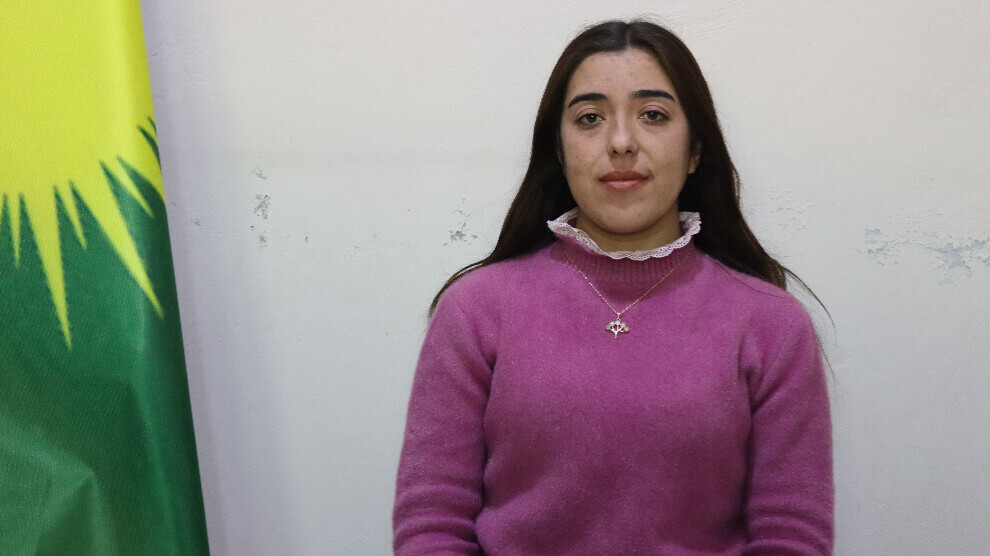
Norshan Abdi
Kobanî — The assassination of Sakine Cansız and Leyla Şaylemez, alongside Fidan Doğan, was not merely the targeting of individuals, but a clear political message. The three women were chosen because of their symbolic roles in the course of Kurdish resistance and in order to silence their voices, which expressed the aspirations of an entire people.
On January 9, 2013, the French capital Paris witnessed one of the most prominent assassinations carried out by the Turkish state’s security apparatus, during which Sakine Cansız—one of the founding members of the Kurdistan Workers’ Party (PKK) and a figure engaged in diplomatic work in France—was killed, along with Fidan Doğan, the representative of the Kurdistan National Congress in Paris, and Leyla Şaylemez, a member of the Kurdish youth movement.
Thirteen years after the Paris Massacre, the French government remains unable to fully uncover the truth. On December 23, 2022, the Turkish state repeated the same crime, assassinating Avîn Goyî, a leading figure in the Kurdish women’s movement, Kurdish artist Mir Perwer, and patriot Abdurrahman Kızıl.
On the occasion of the thirteenth anniversary of the Paris Massacre, Khenaf Khalil, a member of the Coordination of Kongra Star in the Euphrates Canton of North and East Syria, spoke about the political objectives behind the crime, stressing that it was not merely an attack on individuals but a systematic attempt to strike Kurdish resistance networks and silence society’s voice.
At the beginning of her remarks, Khenaf Khalil emphasized that investigations into the Paris Massacre, despite the passage of thirteen years, have not led to any tangible results. “The women who were targeted in that massacre were central figures in the history of the women’s movement and Kurdistan, and they played extremely important and symbolic roles,” she explained, noting that the crime was not an isolated incident but part of an international conspiracy rooted in the Turkish occupation’s insistence on repression. “Thirteen years have passed, and everyone knows who is responsible for this massacre, yet unfortunately, the investigations have not reached any truth or accountability.”
She added that Sakine Cansız, Fidan Doğan, and Leyla Şaylemez embodied vision and willpower, and that their struggle had a profound impact on the path of freedom. “When we speak about the struggle and resistance of Kurdish women, the names of these three immediately come to mind, especially Sakine Cansız, who is considered one of the most prominent founders of the PKK. Words are insufficient to describe her struggle. During the resistance in Amed Prison, her name rose as a symbol confronting the patriarchal and nationalist mentality of the state, becoming an example of the free and resisting woman—a figure that represented women’s will to liberate and endure, and that stood at the forefront of confronting all forms of annihilation. For this reason, these three women, who waged a heroic struggle, left behind a عظيماً legacy for Kurdish women, and today we continue our journey along their path.”
She believes that Kurdish women carry a shared legacy and continue its course. “It is painful to witness two similar massacres in Paris, which is clear evidence that the policy of annihilation has continued from 2013 until today and is now practiced openly and persistently.”
She affirmed that in North and East Syria, where the line of the free woman drawn by the three martyrs continues, women unite as a strong and cohesive circle around this great legacy and pursue their struggle without interruption. “Why did we wage this struggle? And why was such a heavy price paid? The answer is so that we, as women, can live with our own identity and vision, build our free system, protect our homeland and our existence, and move forward on the path of our pioneers who offered the most precious sacrifices.”
Khenaf Khalil pointed out that the impact of the Paris Massacre extended to North and East Syria. “Our achievements—represented by free, conscious, and organized women who possess an independent identity—are considered a direct threat to the hegemonic powers, especially the Turkish state. For this reason, the series of massacres that began in Paris did not stop, but continued in our regions. Dozens of women who were pioneers in organization, society, politics, the military, and education were targeted and brutally assassinated. Among these crimes were the massacre targeting the militants Dilara and Ronahî, as well as the assassination of young women activists in Kobanî, in addition to dozens of other women in North and East Syria—all according to the same approach that targets the free woman.”
She concluded with a powerful message: “The Paris Massacre and the crimes that followed were intended to block women’s path and push them away from the march of freedom and revolution. But what actually happened? The image of women became stronger, and their presence grew more powerful than ever. Today, thousands of women occupy advanced positions in the ranks of struggle. If Sakine or Zahra were martyred, their places were filled by thousands of women who continued the path.”
She stressed that this is not a movement that retreats in the face of martyrdom. “On the contrary, every sacrifice made by women fighters increases our determination and expands our resistance. Therefore, the legacy left to us by the martyrs of the Paris Massacre has become part of our identity. We hold onto it and protect it through resistance, organization, and steadfastness. In particular, our project for 2026 is to revive this legacy throughout all of Syria, as a unifying project in which all Syrian women participate.”