
The Kurdish Woman in North and East Syria… Resilience That Defies Siege and Violence
In North and East Syria, amid conflict and humanitarian crisis, Kurdish women stand resilient, enduring sieges and attacks while defending their land, dignity, and will.”
IKHLAS HAMROUNI
Tunis-The impacts of ongoing conflicts and repeated attacks in North and East Syria are not limited to civilians alone; they have directly targeted women, as they represent a fundamental pillar of cultural and social identity. In this context, the urgent need arises to shed light on their suffering and struggles through media—especially feminist media—to ensure their voices are heard globally and to break the silence surrounding oppressive practices.
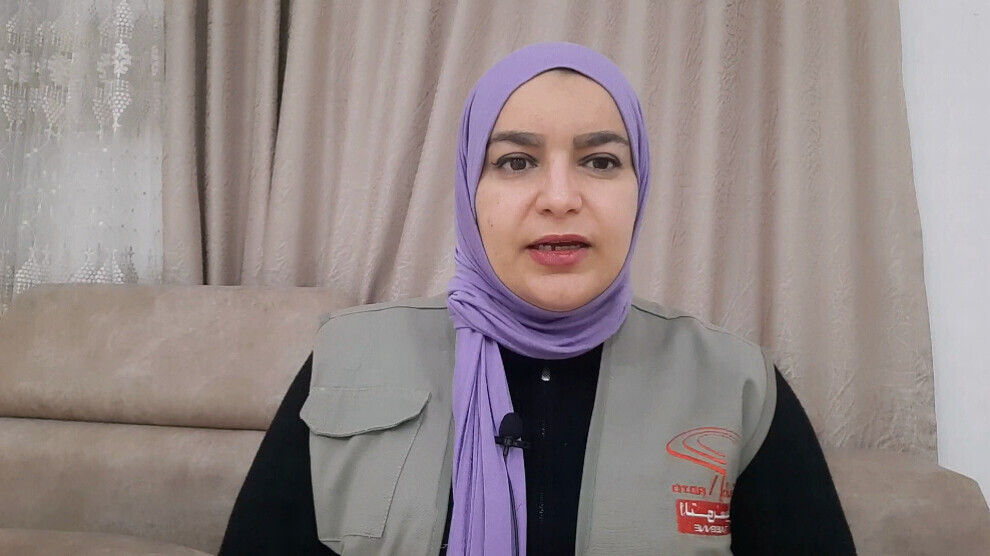
Tunisian journalist Taqwa Al-Falhi stated that what is happening today in North and East Syria, particularly regarding human rights, constitutes a crime against humanity, noting that women have become the first and primary victims of these events. “The Kurdish woman, despite her long struggle for her achievements and her constant presence as a symbol of strength and resilience, is today threatened in her life and across all dimensions,” she said.
Systematic Attempts to Weaken Her Role
Al-Falhi explained that recent attacks have placed the region before a real challenge in preserving human rights gains, especially the rights of Kurdish women who have been at the forefront since 2014—whether within organized forces or through civil resistance. They played a pivotal role in liberating areas from ISIS control and confronting its practices. Nevertheless, Kurdish women today endure extremely harsh living conditions, particularly under the siege of the city of Kobani, which has led to the deaths of children and civilians.
She emphasized that “despite these conditions, Kurdish women remain strong and resilient, determined to defend their rights and their right to life and land. What they face today constitutes a systematic attempt to weaken their struggle and erase it, amounting to crimes against humanity, without any real international defense of their rights.”
She added, “Under the siege of Kobani, civilians and children are living under severe conditions, including extreme cold, and the disruption of water, electricity, and internet networks. This demonstrates that what is happening is not merely sporadic attacks, but a deliberate plan to cut off communication between these regions and the world, erase the Kurdish movement and Kurdish women’s rights, and deprive them of the most basic necessities of life.”
A Cultural Link Across History
Taqwa Al-Falhi affirmed that what is happening today in Syria is a direct result of political conflicts and instability, yet Kurdish women continue to stand firm, confronting these challenges with unity, strength, and intelligence, in defense of their rights and historical gains. “Current attacks directly target Kurdish women through violence, siege, and rising prices, in addition to targeting civilians—women and children alike. Indirectly, they also seek to erase Kurdish identity,” she said. According to Al-Falhi, women represent the cultural link throughout history, and targeting them is an attempt to strike this vital bond that preserves Kurdish societal identity.
She referred to the incident of cutting the braid of one of the female fighters, describing it as both a physical and moral assault that reflects the psychological and emotional dimensions of violence against women. However, she noted that this incident generated widespread global solidarity—from Europe to Russia and Arab countries—causing the attempt to weaken Kurdish women to fail and backfire against its perpetrators. “This solidarity continues and will yield results far beyond symbolic gestures. It is proof of the Kurdish woman’s resilience, unity, and strength in confronting injustice.”
Solidarity as a Source of Women’s Strength
She said, “We witnessed a wide wave of feminist solidarity, as women in several cities gathered their long hair and braided it into a single plait, in a symbolic message aimed at amplifying their voices and affirming that Kurdish identity stands against all forms of violence and erasure.” She pointed out that this act, despite its cruelty, produced the opposite effect, sparking widespread international solidarity through media and social platforms, until a single braid became equivalent to thousands of unified voices of women around the world.
She added that this solidarity provided Kurdish women with additional strength and elevated their voices in confronting international actors to curb aggressive practices against Kurds, their rights, women’s rights, and human rights in general. “There is a difference between killing and dividing; killing may end the life of one woman, but attempts to divide Kurdish women reveal the enemy’s fear of their unity and resilience. This, despite the pain, is a source of pride and makes Kurdish women a constant concern for their enemies inside and outside Syria.”
Al-Falhi explained that attempts to suppress Kurdish women reveal the desire of certain powers to impose dominance and control over Kurdish identity by targeting women, as they are the enduring link that preserves culture and history across generations. Weakening and targeting women, she believes, grants these forces a greater opportunity to control Kurdish existence, culture, and strength, and to exploit this later.
She stressed that the presence of Kurdish women in public spaces and their insistence on resistance and building bridges of solidarity among women make them a real obstacle to projects aimed at controlling Kurdish women and identity. They form an impenetrable barrier to any attempt at domination and will not be easily overcome, as they are strong, combative women capable of transforming weakness into strength, drawing on historical experience and identity in the face of turmoil and conflict.
She noted that Kurdish women played a prominent role in resisting ISIS and actively participated in various historical stages, both ancient and modern. “Their resilience provokes the powers seeking control, as their presence forms a barrier to hegemonic projects. They do not submit easily; rather, they inspire women to resist and safeguard their rights and historical achievements.”
Feminist Media Is Responsible for Conveying the Truth
Al-Falhi concluded that women’s success reflects the possibility of changing the reality of life and decision-making centers, and thus poses a threat to political powers seeking to impose their dominance. Therefore, feminist media today bears the responsibility of documenting women’s stories, narrating the truth, shedding light on both strengths and vulnerabilities, monitoring violations and daily suffering, and highlighting the successes of Kurdish women. “Feminist media is responsible for conveying the truth and keeping pace with changes and the daily realities of women—especially under harsh humanitarian conditions and climate fluctuations. It must be a voice for truth, freedom, and women’s dignity, contributing to changing reality and delivering messages of solidarity and defense of women’s rights