
The Journey of Life Between Joy and Hope”… The Story of a Moroccan Writer Facing Pain and Rising Again
In a world where women face multiple challenges, the experience of a Moroccan writer sheds light on an exceptional personal journey of resilience and recovery.
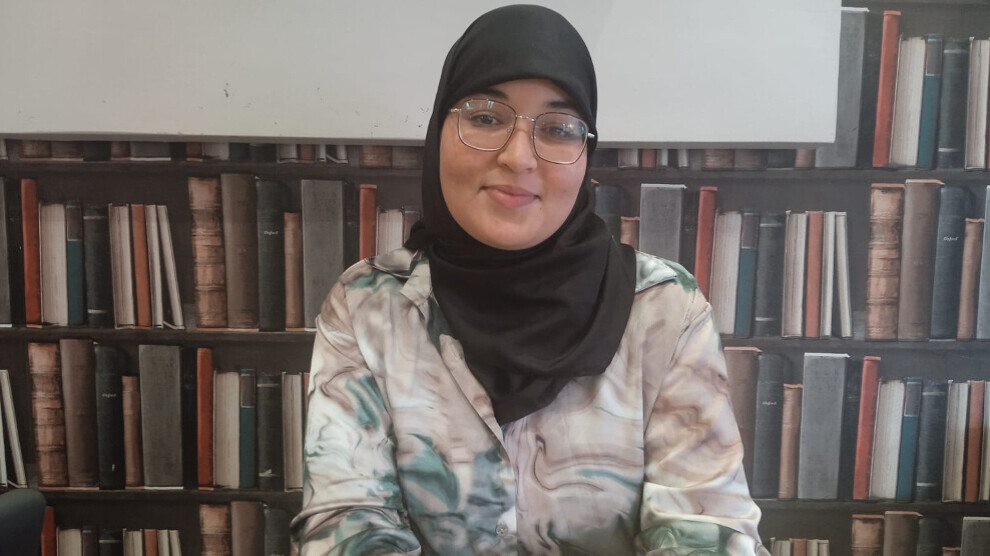
Hanan Hart
Morocco – Ibtissam Al-Wardi, a Moroccan writer and civil society activist, presents a deeply human experience through which she chose to transform a difficult period of illness into a new starting point. At one stage of her life, she suffered from a back condition that affected her ability to move and imposed a harsh lifestyle that nearly led her into isolation and boredom.
Faced with this reality, Ibtissam Al-Wardi turned to writing as a means of recovery and self-reorganization. Writing became an inner tool of resistance that gradually restored her balance. Over time, she fully regained her health and returned to living her life normally, having overcome that difficult phase.
In this context, her first book, “The Journey of Life Between Joy and Hope,” falls within the genre of self-reflective literature. It reflects a personal path marked by pain, brokenness, and failure, before reaching self-reconstruction and renewal, transcending the individual experience to convey a broader human message.
The book carries an open call not to surrender, affirming that hope remains possible as long as there is breath in a person, and that the ability to break free from pain is available to both women and men alike—when suffering turns into awareness, and experience into inner strength.
Ibtissam Al-Wardi explained that the book does not follow a traditional chronological structure, but rather opens a space for reflection on the meaning of resilience and the ability to continue amid life’s harsh transformations. She noted that she chose to publish it in digital format for personal reasons and to enable it to reach the largest possible number of readers.
Starting from a Personal Experience
She emphasized that although the text stems from a personal experience, it goes beyond it to address the reader in a simple, emotional language. She considers joy not a fleeting state, but a daily choice, and believes that hope can be built even in the darkest moments.
She added that writing represented for her a tool of healing and quiet resistance—transforming pain into knowledge and brokenness into inner strength. She pointed out that the book highlights a clear human and feminist dimension, presenting women as active agents in confronting psychological and social challenges, rather than as victims of them.
She stressed the importance of self-care, human support, and close relationships as essential elements in the path of recovery. The book is an open invitation to reconcile with oneself, to view failure as a stage of learning, and to see life as a journey full of lessons that never lacks light, no matter how intense the darkness may be.
Regarding her choice of the title “The Journey of Life Between Joy and Hope,” she said that it reflects the nature of life as she lived it—a mixture of joy and brokenness, challenges and renewal—affirming that joy was not an end in itself, but rather the result of patience and perseverance despite obstacles.
She explained that the book resonates with the emotions of many women, as she sought to transform personal pain into a shared language through which every woman can see a part of her own experience. She noted that failure is often met with greater harshness when it comes to women, despite being a necessary stage for growth.
Regarding her relationship with civil society work, Ibtissam Al-Wardi affirmed that her engagement with the experiences of other women enabled her to see resilience as a shared human denominator, and that support and solidarity can form the beginning of a new path. She pointed out that writing can be an extension of grassroots women’s work and a form of quiet resistance.
In her closing message to women going through difficult experiences, Ibtissam Al-Wardi said:
“Resilience is possible, and harsh experiences can be transformed into strength. Do not be afraid to express your stories, and never stop searching for joy and hope every day.”