
The Iraqi Women’s Association discusses work challenges and ways to advance women’s reality
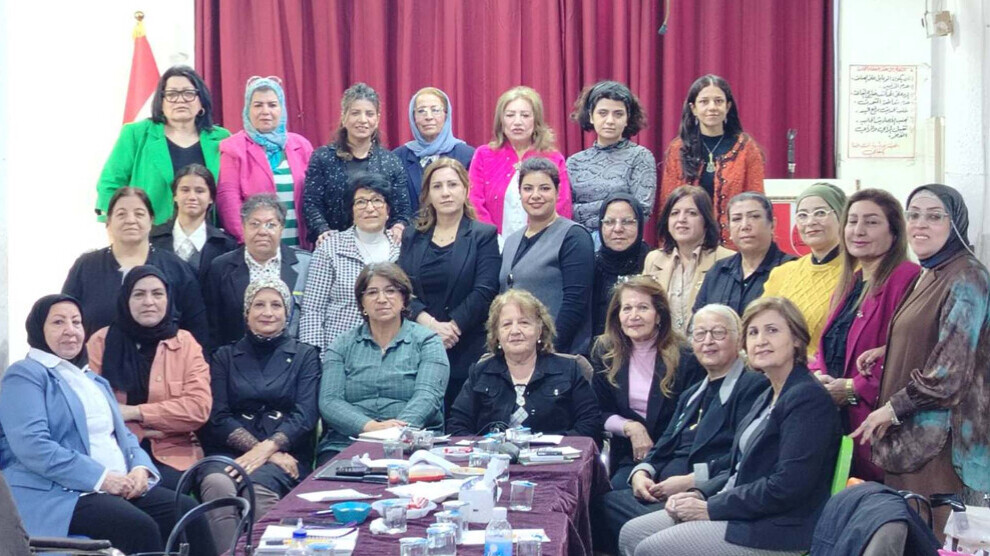
The Iraqi Women’s Association’s secretariat and Baghdad branch held an expanded organizational meeting to enhance field presence, develop institutional performance, activate activities, expand outreach to women and confront challenges.
RAJAA HAMID RASHID
BAGHDAD_Participants in the organizational meeting stressed the need to activate laws that protect women and their rights, combat domestic violence, and overcome social restrictions that limit their presence and active participation, especially in decision-making centers.
The meeting addressed a number of axes, foremost among them developing associative work and enhancing organizational performance, activating activities and expanding the circle of communication with women, in addition to discussing the obstacles and challenges facing the association's work, and presenting proposals and solutions capable of overcoming them.
"We continue our efforts to amend laws"
The secretary of the Iraqi Women's Association, Shameran Maroukl Odisho, said that the association continues its efforts to amend Iraqi laws in a way that guarantees the protection of women's rights, pointing out that it filed a complaint with the Federal Court regarding violence against women, but the case was not decided in its favor, as the court held that "a husband disciplining his wife does not fall within this concept."
She noted that the association sought, in cooperation with feminist civil society organizations, to amend some paragraphs of the Personal Status Law, especially Article (59) related to child custody, but what was achieved on the ground came in the direction of legislating new laws that it sees as unfair to women's rights.
She affirmed that work in the field of defending rights is characterized by gradualness and escalation, but it sometimes faces failures for multiple reasons, including those related to political power balances within the government. "Legislating laws is among the tasks of the House of Representatives, not the responsibilities of civil society organizations or the Iraqi street."
"The association works to defend women's rights and issues"
Speaking about the association's activity, she explained that its work extends to Baghdad and other cities as well as communication with organizations outside Iraq, and addresses various women's issues, foremost among them violence in all its forms, enhancing women's political participation, and ensuring their access to decision-making positions, given the importance of this in drawing up state policies in general and policies related to women in particular.
She affirmed that the association continuously adopts issues that affect women, and works to defend their rights and the rights of the child and the family as part of the international system concerned with combating violence, noting the intensification of efforts to legislate the anti-domestic violence law, which is in the drawers of parliament and has previously been read more than once and was submitted by the Prime Ministry and the Presidency of the Republic.
She believes that the association seeks to invest the 16 Days of Activism against Gender-Based Violence campaign to intensify its efforts and shed light on this issue, explaining that this topic represents one of the goals of the organizational meeting with the Baghdad branch, noting the continued cooperation with Yazidi organizations and organizations concerned with helping displaced women and survivors. "Addressing these issues is not the responsibility of organizations alone, but requires rapid and effective government measures and intervention by the relevant authorities."
The association's most prominent achievements
Shameran Maroukl Odisho touched on the association's most prominent achievements, despite the difficulties and failures facing the implementation of its programs, pointing to its activities in Baghdad, other cities, and countries of diaspora, and its contribution to a number of local, Arab, regional, and international networks.
She explained that the association enjoys membership in the Women's International Democratic Federation, where it succeeded in reaching the membership of its secretariat, and currently holds the position of vice-president of the federation, affirming its determination to participate in the Mexico conference scheduled to be held next December, to present reports reviewing the reality of women and children in Iraq, and the most prominent developments and achievements made in this field, while stressing at the same time the need for the Iraqi government to ratify international conventions on women's rights.
"Social restrictions limit women's participation"
Regarding the challenges facing the association's work, member of the Baghdad branch Karima Al-Saadi said that work in Baghdad faces difficulties that differ from those in popular areas, due to social conditions that limit women's participation in cultural and awareness forums and seminars, in addition to some men preventing women from attending and participating in these activities.
She added that the association is keen to involve women in various areas, especially popular ones, but this represents a major challenge to its work, pointing out that women in rural areas face many problems, but fear of society and the family prevents some of them from having enough courage to raise their issues and problems.
She affirmed that the association works through its seminars to encourage and support women to express their suffering and discuss their problems, and help them find appropriate solutions in cooperation with the association's legal committees.
"My belonging to the association is based on its history"
For her part, Alaa Qasim explained that her belonging to the Iraqi Women's Association came from a belief in its long history and its status in feminist work, as it is one of the organizations whose roots extend to the 1950s, and it continues to work to do justice to women and defend their rights with credibility and honesty.
She pointed out that among the most prominent features of the association's history is its founding by Dr. Naziha Al-Dulaimi, who contributed to efforts aimed at legislating Personal Status Law No. 188 of 1959, affirming the importance of continuing this struggling legacy in defending women's rights and enhancing their status in society.
The meeting concluded with a number of interventions and discussions that addressed the challenges and obstacles facing organizational work, with a set of proposals and solutions aimed at developing the association's performance, activating its activities, and enhancing its role in defending women's rights.