
Sweida's priority: accountability or representation after Assembly regulations?
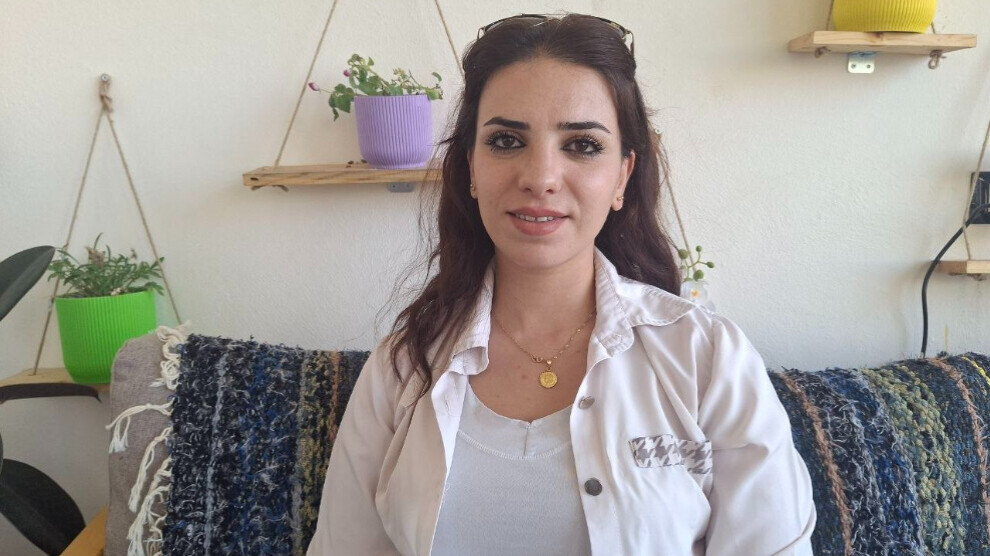
Maram Al-Qadmani: Appointing Assembly members undermines representation; Sweida's priorities now are security, justice, and guarantee over political participation.
ROSHELLE JUNIOR
As_Sweida — With the approval of the new internal regulations of the Syrian People's Assembly, which organize the term of office, parliamentary sessions, voting mechanisms, and the powers of the Assembly's Speaker, discussions have resumed regarding the upcoming legislative phase and the representation of various regions within the legislative institution. However, Sweida raises questions of a different kind—not only about the appointment of two individuals to fill two seats in the Assembly as a temporary measure, but about something far deeper. Many of Sweida's residents believe that the priority today is no longer the issue of political representation, but rather the accountability of those responsible for the violations they have suffered, the achievement of justice, and the restoration of trust before moving toward any political entitlement.
Appointment Does Not Achieve Genuine Representation
Lawyer Maram Al-Qadmani states that what has been observed in Syria following the fall of the regime is the spread of a culture of appointment—whether in the appointment of the President of the Republic or in the appointment of People's Assembly members—despite the Assembly being the highest legislative authority, which is supposed to represent the will of the people through free and democratic elections, where citizens choose their representatives to be their genuine voice within the legislative institution.
She believes that the manner in which the Assembly was formed does not achieve what Syrians had aspired to after the fall of the regime, as members were appointed, with some seats left for future elections—yet these elections have not taken place, and the Assembly has remained limited to appointed members.
She adds that the presence of two individuals from Sweida within the People's Assembly does not necessarily mean there is genuine political representation, because such representation must be based on direct popular mandate, which is not achieved in the absence of elections and the lack of societal consensus among Sweida's residents on the appointed individuals.
She explains that a People's Assembly member is supposed to serve as the link between the people's will and the government, conveying citizens' demands and their genuine voice, whereas a person who reaches the Assembly through appointment will remain more concerned with maintaining the satisfaction of the appointing authority than with independently representing the popular will.
She adds: "For the people of Sweida, who have been subjected to bloody events and grave violations on the basis of sect, they have a high threshold of rights-based, legal, and political demands that achieve the minimum level of protection. Therefore, a legitimate question arises: Who gave these individuals the right to speak on our behalf? Are they truly capable of carrying the concerns of Sweida's residents and conveying them as they are? Was the appointment mechanism neutral and inclusive of all categories and voices present in Sweida?"
Demands Have Changed After the Bloody Events
Maram Al-Qadmani explains that the demands of Sweida's residents after the fall of the regime were not different from those of other Syrians; they centered on building a democratic state, a state of institutions, achieving the principle of citizenship, political participation, dignified living, and obtaining civil and political rights. "These were the demands of Sweida's residents after the fall of the regime, and we cannot call the phase transitional—it is a 'chaotic phase.'"
However, she affirms that the bloody events witnessed in Sweida have completely changed these priorities. The discussion is no longer only about political participation; rather, Sweida's residents are now demanding first and foremost their right to life, security, justice, and accountability, considering that what happened has placed them in a phase of defending their existence before anything else.
She says that the current political debate within Sweida includes multiple proposals, including expanded decentralization, self-governance, and even the existence of factions calling for complete independence. However, all these proposals converge on one common denominator: providing genuine guarantees that protect Sweida's residents and preserve their dignity and rights.
The Crisis Goes Beyond People's Assembly Seats
Maram Al-Qadmani believes that it is not accurate to reduce Sweida's issue to the matter of representation within the People's Assembly, because the problem is no longer about having one or two deputies, or even more, but rather about what Sweida's residents have endured in terms of events and violations that have created a genuine crisis of trust with the authorities.
She adds that any political solution must begin by addressing the roots of the problem—through achieving genuine and transparent accountability for those responsible for the violations, regardless of the parties behind them, and uncovering the truth—before moving on to discussing political representation and mechanisms for Sweida's residents to participate in institutions.
She affirms that representation within the legislative institution is a right of Sweida's residents, but today it is not the most urgent issue, because the priority has become restoring security, achieving justice, delivering justice to victims, and rebuilding the trust that was lost after recent events.
Ignoring Demands Will Not Make Them Disappear
Maram Al-Qadmani concludes her remarks by affirming that ignoring the demands of Sweida's residents or sidelining them will not lead to their being forgotten, but will rather increase insistence upon them, because these demands are no longer limited to the form of administration or mechanisms of political representation, but have become linked to fundamental rights—foremost among them the right to life, security, freedom, dignity, and justice.
She emphasizes that any future political or administrative formula—whether decentralization or otherwise—must start from respect for the right of Sweida's residents to determine their own future, and must provide genuine guarantees that ensure their protection and rights, because addressing these files is the gateway to any serious discussion of political participation or representation within the People's Assembly.