
Shingal, Which Rebuilt Itself from Its Ashes, is Once Again in the Crosshairs
The forces of the 74th Firmān are pressuring Shingal today. Shingal, once their refuge, again becomes the sanctuary for its defenders.
Perîvan Enatcî
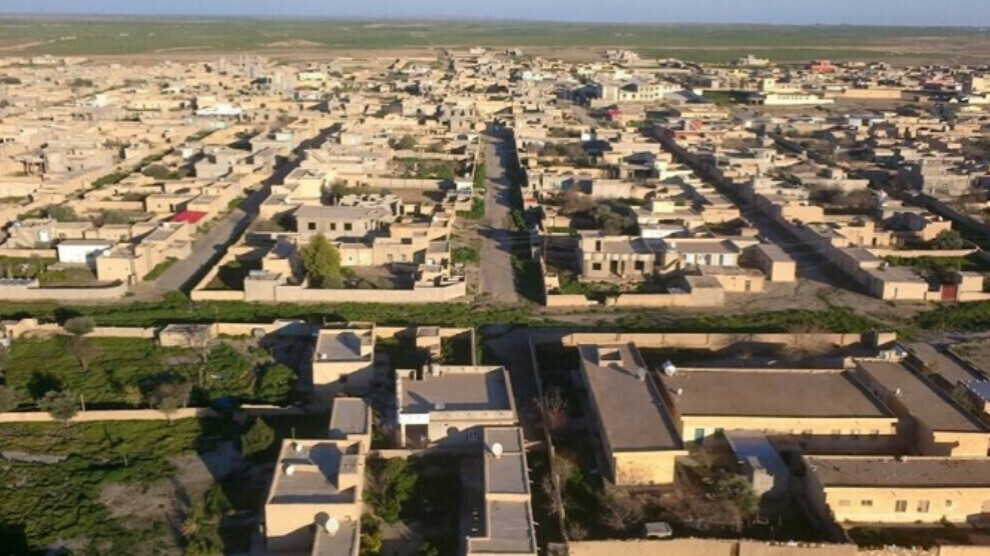
Following the bloody attacks on Rojava, which were described by Leader Abdullah Öcalan as a second international conspiracy, pressure also extended to Shingal. After statements by Turkish Foreign Minister Hakan Fidan, both the Hashd al-Shaabi and the Iraqi army began to mobilize and pressure the region. The army, which abandoned Shingal to its fate during the 74th Firmān when Yazidis were being exterminated, is now building walls and barriers. However, these barricades are erected against the children of the Yazidi community, who rebuilt their lives from scratch after the genocide. It is necessary to pause here to recall something of history.
A Memory from Shingal
I would like to begin with a personal memory. In 2017, I was with a fighter from the YJA-Star units who had come to Shingal in 2014 to defend the Yazidi community. We were walking through the streets of Khanasor, and she was sharing memories with me, with some smiles and laughter. Before we reached a group of women, a Yazidi mother dressed in white rose from her place. The fighter shook hands with her, and the mother, shyly trying to hide her hand, said, "We have not forgotten what you did for us. We know well what you gave us."
Years have passed, but that moment never leaves my memory. That mother kissed the hand of a fighter she had never known before, but she knew her uniform. In her eyes, that hand was not the hand of an ordinary person, but the hand of an idea and a force that protected a people from genocide. It was a symbol of the beginning of building their self-rule, of consolidating their existence, and of strengthening them so they would not experience another Firmān. The Firmāns of the past are no longer an inevitable fate. That mother, although I do not remember her name, her features and her eyes—carrying the fear of the Firmān and the light of hope forged by the HPG and YJA-Star fighters—remain in my memory. She was a witness to the genocide, and that hand she kissed was the hand that rescued them.
11 Years After the Firmān
Over 11 years, the Yazidis rebuilt Shingal themselves. From education to self-defense, they established their own system to prevent the recurrence of genocide. The women who lived through the harshest pains of the Firmān transformed their wounds into strength and became the forefront of Shingal's defense. Yazidi women who were liberated from ISIS took up arms, stood on the front lines, and became hope for their community so that the Firmān would never be repeated.
During these years, attacks were not limited to ISIS alone; Shingal also witnessed assaults from forces that were supposed to be its support. How many of its sons and daughters has Shingal sacrificed to the attacks of the Turkish state?
The Target is One
Today, Shingal is under new pressure. Shingal, in whose mountains thousands of fighters from the People's Defense Forces (HPG) and Free Women's Units (YJA-Star) fought—fighters who withdrew in 2018 to legitimate defense zones and continued fighting against Turkish state attacks, many losing their lives even to chemical weapons—is once again being targeted. How painful it is to hear that Yazidi women abducted by ISIS appeared years later in Ankara!
Today, a clear truth becomes even more evident: the forces that participated in the 74th Firmān are the very same forces threatening Shingal now. The target is one. But the determination of the Yazidi women and the Yazidi community, who have rebuilt themselves with the philosophy of freedom, is also clear. Mount Shingal, which embraced and protected its people during the Firmān and did not allow mercenaries to advance, will today remain the fortress of Shingal's defenders.