
Shahida Marouf: Writing as a Space for Defending Women and Identity
Kurdish women writers increasingly document community issues and highlight women’s experiences through literary and journalistic works, addressing social and cultural challenges while promoting awareness of rights, identity, and culture.
DAİRN RAHİM
Sulaymaniyah — Women’s participation in writing represents an important step in enriching the Kurdish cultural scene, as every text written by a woman opens a new door for sharing experiences, preserving history, and building a better future for coming generations.
Over the past years, women in the Kurdistan Region have succeeded in establishing their presence in the fields of literature, journalism, research, and social criticism. Despite the social restrictions and obstacles they initially faced, they have been able, through their determination and abilities, to bring women’s voices to society.
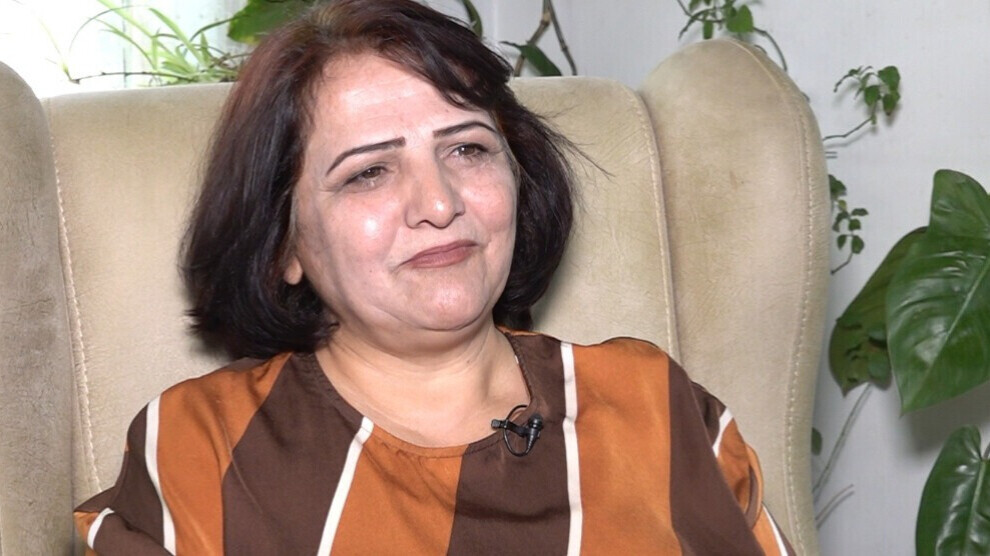
Writer Shahida Marouf, who is also a member of the administrative body of the Kurdish Women’s Platform in the Kurdistan Region, spoke about the role of women in conveying the issues of Kurdish society. She said: “Women can achieve freedom and demand their rights through writing and reading.”
She explained that “writing is the space where human beings in general, and women in particular, can pour out their inner thoughts. Writing articles, poems, and stories is an expression of internal human suffering, and women’s participation in writing is an essential step in enriching Kurdish culture, because every woman’s pen represents a new opportunity to share experiences, preserve history, and create a better future for future generations.”
She views writing as “the sacred direction” that women can turn toward, saying: “When I feel sadness or a deep emotion, I find no way except to express it through writing. Therefore, I am always grateful to my pen and to all the women who opened this path for women.”
She added: “Today, we have many distinguished female writers who have written books about women’s issues and worked in the media defending women’s rights. Personally, whether as a writer or a journalist, I have transformed what I have witnessed of killings, violence, and the burning of women into stories that I publish in newspapers and magazines, so that I can deliver the other side of women’s lives to society and show that they have suffering that can be expressed through writing.”
Regarding the impact of digital communication, she said: “I do not believe that virtual communication has affected writing itself, but the problem is that we have become a society where interest in reading is decreasing. Books and newspapers remain on sidewalks and are read by only a few, while people spend most of their time on social media.”
She explained: “When I write about an issue related to women and publish it, I ask myself: How many people will read it? Our society is declining, and the number of readers is decreasing. This is largely linked to the widespread and uncontrolled expansion of social media. Therefore, I call on the Ministry of Culture, as we have repeatedly demanded through joint platforms, to take measures that limit this chaos in the digital space, so that people return to reading books, newspapers, and magazines.”
Women’s Conditions Between Challenges and Obstacles
Shahida Marouf believes that women have a voice in different fields, but they “face challenges,” especially when they express their feelings or experiences. Society often interprets women’s writings differently and does not view them as honest expressions of their suffering, but rather connects them to “preconceived judgments.”
She explained that this challenge is not limited to women in the Middle East, as women around the world “face different forms of difficulties,” although their nature and severity vary from one place to another. Women’s conditions have improved in some ways, and they have become more present in different areas of life and work, but they are still unable to fully express their personal experiences through writing or poetry because “social restrictions remain.”
Writing and reading, she says, “change the personality of individuals and society.” Therefore, “freedom of writing remains limited.” In her opinion, women in the 1990s were more capable of expressing their ideas compared to today: “Today, expressing oneself freely has become more difficult. Female writers in the past wrote without fear, but today they are exposed to widespread attacks and criticism.”
“Through Our Writing, We Give Women a Voice”
Shahida Marouf believes that women are capable, through writing, of overcoming this stage and moving forward toward achieving their legitimate rights. However, she stresses that writing alone is not enough. When a woman is killed, people quickly ask about the reason or blame her instead of looking into the circumstances that led to her death.
“I have expressed everything related to women in my writings, but who listens to us? And who finds solutions? In one of my poems, I say:
Today I saw a woman in front of the mirror...
A woman who was killed...
And this is the first...
And this is the second...
And this is the third...
Women are being killed one after another. Is writing alone the solution? No. We also need laws that protect women, and we need to unite to find real solutions.”
She believes that many problems can be addressed through dialogue and spreading social awareness: “Many women continue to work and struggle in different fields, and everything that has been achieved is the result of many years of struggle. But despite all these sacrifices, many women’s rights are still not fully guaranteed.”
“When I Started Writing, No One Supported Me”
She said that the beginning was difficult and that she herself did not receive support when she entered the field of writing. However, what matters, she emphasizes, is that “a woman possesses a pen that expresses her abilities.”
She called on experienced female writers to embrace and encourage the new generation of women who want to enter the world of writing: “If we support them, we contribute to building a more aware society. Writing has changed society’s mindset, even partially. When I write, I try to communicate what I want to say to everyone, but the question is: Do we have aware individuals and families who support those who want to express their ideas?”
She confirmed: “Unfortunately, the number of supporters is very small. When I started writing, I found no one to support me. I also faced many criticisms, especially when I wrote about topics considered opposed to religion. I faced problems with my surroundings, and even in my media work, I was subjected to questioning.”
She considers writing “a woman’s best friend,” and believes that women should document what they see in society so that “we can better understand its pain and wounds.”
She says her writings “reflect” women’s feelings and experiences: “I started writing in the late 1980s. My writings were political in nature because I belong to a political family. Later, I turned toward poetry and emotional expression.”
The writer and poet Shahida Marouf concluded her remarks by emphasizing that writing is a remedy for worries and a means of overcoming challenges: “Women in the Kurdistan Region carry deep burdens, and therefore they turn to writing. We live in a society where women carry many responsibilities but do not receive their full rights. Women are still being killed. Therefore, I call on female writers to write, not to be afraid, and to make their writings a force capable of creating an impact and bringing change to society.