
The Armenian and Kurdish Genocide… Suppressiion of Language and Cultural Identity
On April 24th, as Armenians commemorate their genocide, the ongoing Kurdish genocide must also be noted. Kurds faced similar policies, including mass displacement after 1930s uprisings.
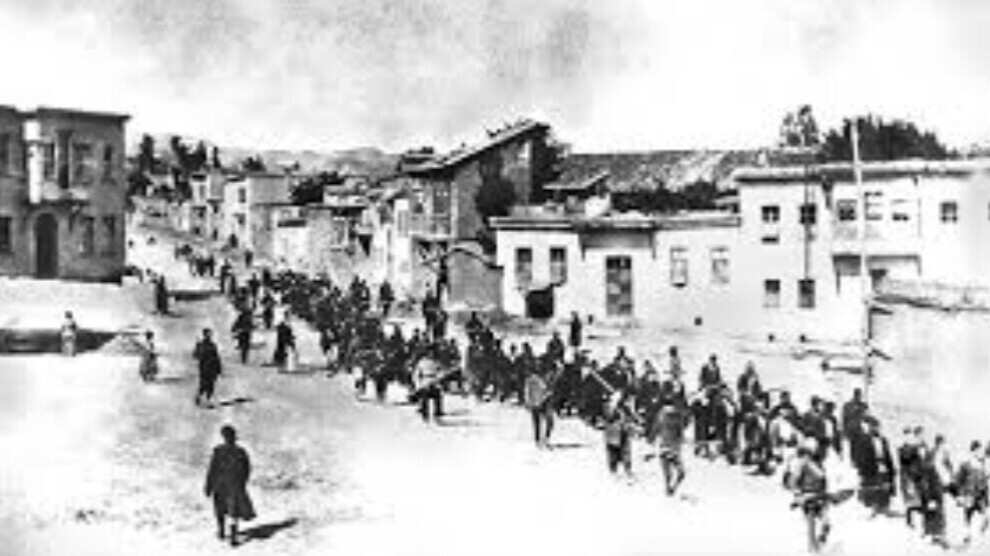
News Center _The Armenian genocide of 1915,which was part of the project to establish the Turkish nation-state, marked the beginning of a process that, in the following decades, led to the near-total elimination of the millennia-old coexistence between Armenians and Kurds in the regions of present-day eastern Anatolia, which today are inhabited by a Kurdish majority.
Armenians say the peak of the genocide was on April 24, 1915, when Ottoman soldiers killed thousands of Armenians in the desert of the Syrian city of Deir ez-Zor after forcibly deporting them there. During that genocide, between one and one and a half million people lost their lives under the rule of the Ottoman Empire. Turkey acknowledges that a large number of Armenians were killed during World War I, but claims the numbers are exaggerated.
On April 24 of each year, what further disturbs Turkey, in addition to the large events organized by Armenians on the anniversary of the genocide, is the international position—especially that of Western countries—on classifying these crimes as genocide.
The Armenian and Kurdish genocides resemble each other in the nature of state policies toward them, which were manifested in systematic marginalization, cultural erasure, and forced displacement. Minority groups were targeted with the aim of imposing national homogeneity. These policies included methods such as mass killing, land seizure, and identity suppression in both cases.
Parallels in Repression and State Tactics
Cultural Repression: Both groups suffered severe repression of language, cultural identity, and educational rights by the ruling authorities.
Forced Displacement and Deportation: Similar to the methods used against Armenians in 1915, Kurds also faced mass deportation, especially after the uprisings of the 1930s.
Large-Scale Military Operations: Both sides experienced extreme violence including mass killing and the use of military force aimed at reducing populations or fully subduing them.
Property Confiscation: Both Armenians (in 1915) and Kurds (at various later stages) saw their lands and properties seized by the state.
Why is the Kurdish Genocide Not Widely Recognized?
The absence of broad international recognition of the Kurdish genocide (especially the Anfal campaign of 1988) compared to the Armenian genocide is due to a mix of political, legal, and historical factors, not a lack of evidence of mass killing.
While the Armenian genocide has largely become part of modern human rights memory, recognition of the Kurdish genocide has faced obstacles due to ongoing geopolitical alliances and legal complexities specific to the nature of the crimes.
Main Reasons for Limited Recognition:
Geopolitical Interests: Many countries, especially in the West, maintained close diplomatic or economic ties with Iraq and Turkey during periods of intense repression against Kurds.
Categorization of Events as "Counter-Insurgency": Saddam Hussein's regime presented its campaigns against Iraqi Kurds, including Anfal, as legitimate counter-insurgency operations during the Iran-Iraq war, which created political ambiguity that hindered swift international condemnation.
Legal Debate: Although Human Rights Watch classified the Anfal campaign as genocide, some international courts and legal bodies have considered that evidence is not always sufficient to establish a binding legal definition of genocide in this context, while acknowledging that large-scale crimes occurred. Some governments, such as Britain, believe that a declaration of genocide should come from a competent court, not from parliaments or political bodies.
Focus on Saddam Hussein's Trials: Saddam Hussein's trials were often viewed as politicized, which affected the credibility of some verdicts and limited their international legal impact.