
Roken Ahmed: The March 10 Agreement Fell Victim to Turkish Intervention, and Victory Belongs to the Resisting Peoples
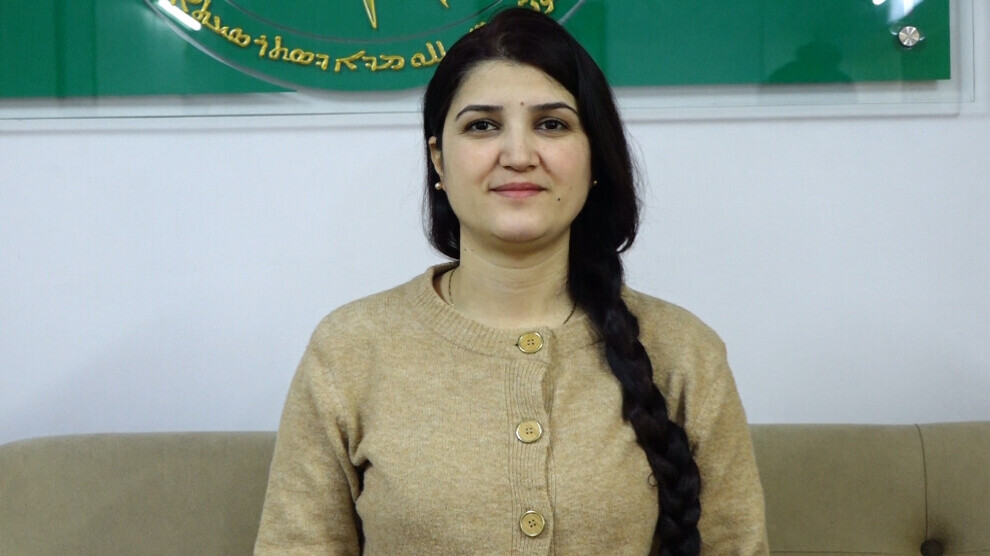
Roken Ahmed, a member of the Democratic Political Relations and Alliances Committee at the Star Congress, believes that the March 10 agreement did not enter into force due to Turkish state intervention, and that Syria is heading toward civil war.
Zeinab Issa
Qamishlo — Syria has been experiencing a state of instability since the fall of the former Syrian regime and the seizure of power by jihadists of Hayat Tahrir al-Sham (HTS). Promises of reform have not been fulfilled, and with the increase in violations and shifts in the balance of power on the ground, hate speech has escalated. Instead of political solutions, pressure has increased and the ruling authority has imposed its control.
In an assessment of the recent political situation in Syria, Roken Ahmed, a member of the Democratic Political Relations and Alliances Committee at the Star Congress, explained that the jihadists of Hayat Tahrir al-Sham are entrenching their rule through pressure and coercion rather than political solutions. “As is well known, attacks have been ongoing since January 6, and they are the result of political failure. The interim government has been in power in Syria for more than a year, yet even this year we have witnessed the extent of hate speech directed against communities and women,” she said.
She confirmed that “the so-called General Security, which lacks humanitarian standards and has an extremist mentality — whose history we all know well — is waging a civil war against Alawites and Druze. This constitutes treason. In the messages published by the Ministry of Awqaf, jihad was declared from mosques against the Syrian people, which in itself is a crime, as it paves the way for a war among peoples.”
Roken Ahmed also drew attention to the attacks launched on Kurdish neighborhoods in Aleppo and to the resistance of their residents. “Why do we describe this as a genocidal war against the Kurdish people? This was clearly manifested in the attacks on Aleppo. The two Kurdish neighborhoods resisted the mercenaries of the Turkish state and the jihadists of Hayat Tahrir al-Sham and established their own self-administration. These attacks constituted a genocidal war. Those who were killed in Sheikh Maqsoud and Ashrafieh were not soldiers; they were all civilians. In this war, Tom Barrack played a negative role in the solution.”
She believes that the March 10 agreement, which included many proposed solutions, was not implemented due to Turkish state intervention. “The efforts stipulated in the agreement to reach political solutions were not implemented, despite the efforts of the Autonomous Administration, dialogue committees, and the delegations it sent. There was no engagement by the interim government with the clauses that could have led to political solutions.”
She added that “the constitution included many files related to education, the economy, systems of self-administration, and the rights of the Kurdish people. Unfortunately, the interim government now claims that the Syrian Democratic Forces did not comply with the solution. Let us separate some issues: the agreement announced on March 10 and the temporary Syrian constitution issued on the 13th of the same month constituted, in themselves, a rejection of the agreement. Military solutions alone will not resolve the Syrian crisis; Syria is heading toward conflict.”
Roken Ahmed stressed that the decision of the interim government, if linked to Turkish intervention, would negatively affect the peace process and democratic society. “Damascus’s decision today is linked to Turkish intervention. If this decision continues, it will negatively impact the peace process and democratic society. In today’s war, aircraft bearing the Turkish flag are bombing the outskirts of Kobani, and mercenaries of the Turkish state, in cooperation with Hayat Tahrir al-Sham jihadists, are waging war against the Syrian Democratic Forces in Kobani. This will prevent reaching a solution in Turkey, and if an alliance is not formed among the Kurdish, Arab, and Turkish peoples, it will pave the way for the interests of Israel and the United States.”
She concluded by saying: “The people now realize that the interim government seeks to destroy the gains of the revolution that were built with the blood of martyrs and the efforts of the people. But the people who sacrificed so much say that today is a day of dignity and resistance, and they will not be able to destroy our gains. Defending these gains is not limited to the peoples of North and East Syria alone; it also includes the peoples of other parts of Kurdistan and Kurds in Europe. Many have come from the Kurdistan Region and its northern part to join the struggle for dignity. Today, the people say: we will not surrender, and victory belongs to the Kurdish people