
Rezan Nurdadin: Kurdish Women Are Partners in Making and Writing Kurdistan’s History
Teacher Rezan Nurdadin stresses that Kurdistan's history is incomplete without documenting Kurdish women, who were not just supporters of struggles, but active leaders in resistance, politics, education, and culture.
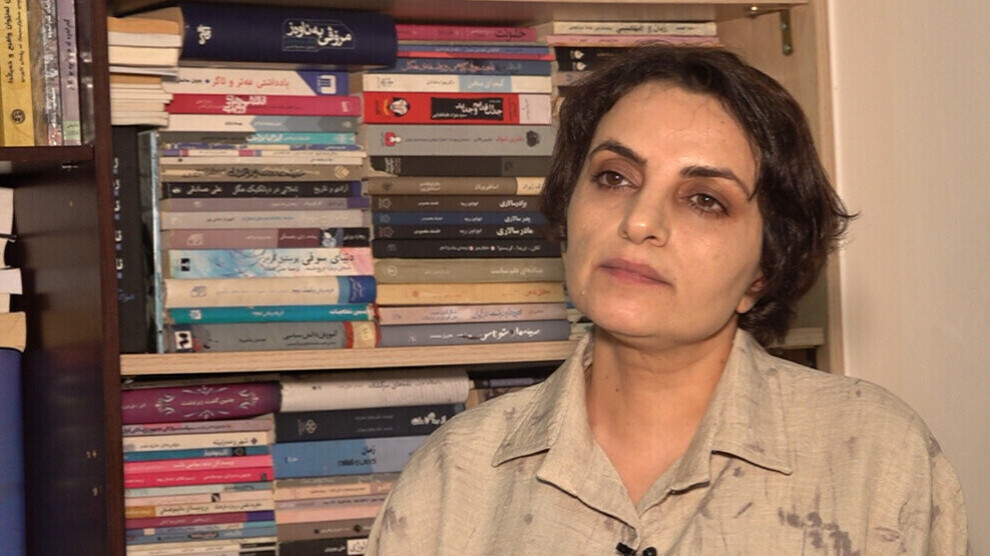
Sulaymaniyah — Teacher Rezan Nurdadin emphasizes that Kurdistan’s history remains incomplete without documenting the roles of Kurdish women. Far from being mere supporters of movements and struggles, women have taken part in leadership, resistance, politics, education, and culture.
Along with political and social transformations, the roles of Kurdish women have diversified, extending from family and social life into education, writing, media, and political engagement. Throughout history, women were not passive participants; they played vital roles in leadership, resistance, and the preservation of national identity and memory, leaving their mark on politics, literature, and the sciences.
Women Who Left Their Mark on History
Rezan Nurdadin asserts that the history of Kurdistan’s struggle is incomplete without acknowledging Kurdish women. She notes that many women supported Kurdish movements and contributed across various historical eras to leadership, literature, and social work.
She cited several prominent figures:
Qadam Khair
Mir Khanzad, who assumed leadership of the emirate after the killing of her two brothers and governed it for seven years
Mastura Ardalan, a historian and poet who ventured into writing at a time when women’s participation was severely limited
Jihan Bawi, who wrote poetry in the Hawrami dialect
She also highlighted Hapsa Khan Naqib as a role model for women’s social and educational presence. Hapsa Khan supported and established a women’s association and a school for women, encouraging them to pursue education—a step that reflected the importance of women having an independent voice and role.
Additionally, Nurdadin pointed to Adela Khanum of Halabja, who administered the city for years, demonstrated strong political leadership and foresight, and raised well-known figures such as Tahir Beg Jaff and Ahmad Mukhtar Beg Jaff.
From Support to Leadership
Nurdadin believes the role of Kurdish women went well beyond support to include direct leadership and active participation in all stages of the struggle. She mentioned:
Fatima Rash in Northern Kurdistan
Aisha Garok in Koya, Kurdistan Region
Leyla Qasim, who left a prominent mark on the national movement
These are alongside many women who took up arms, joined combat, and assumed leadership roles at different stages.
She explained that the limited representation of women in historical narratives does not mean they were absent from events. Large numbers of women participated in national and political movements, offering support and encouragement to men. However, several factors restricted the documentation of these contributions—most notably the male dominance over historical record keeping and a entrenched patriarchal culture that limited women's public presence and hindered the recognition of their achievements.
Women Strive to Write Their Own History
Nurdadin noted that Kurdish women have long participated in economic life, particularly in agricultural communities, where they contributed directly to the household and tribal economy. In the modern era, their presence expanded into politics, writing, literature, research, media, and other fields.
Today, this presence takes various forms:
In the Kurdistan Region, women have served within the ranks of the Peshmerga.
In Eastern Kurdistan, women have participated in armed struggle and assumed military responsibilities.
In Rojava, women have engaged extensively in both the military and political spheres.
Concurrently, female writers, intellectuals, researchers, journalists, and artists have helped bring women's issues and struggles to the forefront of literature, media, and academic research.
Nurdadin concludes that Kurdish women face overlapping pressures—ranging from national discrimination and patriarchal mindsets to economic hardship. Nevertheless, women today are working to move beyond the narrative of victimhood, build an independent identity, and actively shape their present and future.
They no longer want to be mere figures whose history is told by others; they are determined to be active agents in making and writing their own history.