
Release of Journalist Shatha Al-Haj Mubarak
The Court of Appeal in Tunisia has released journalist Shatha Al-Haj Mubarak after reducing her sentence from five years to two with a suspended sentence, following imprisonment, serious health issues, and solidarity protests demanding her release.
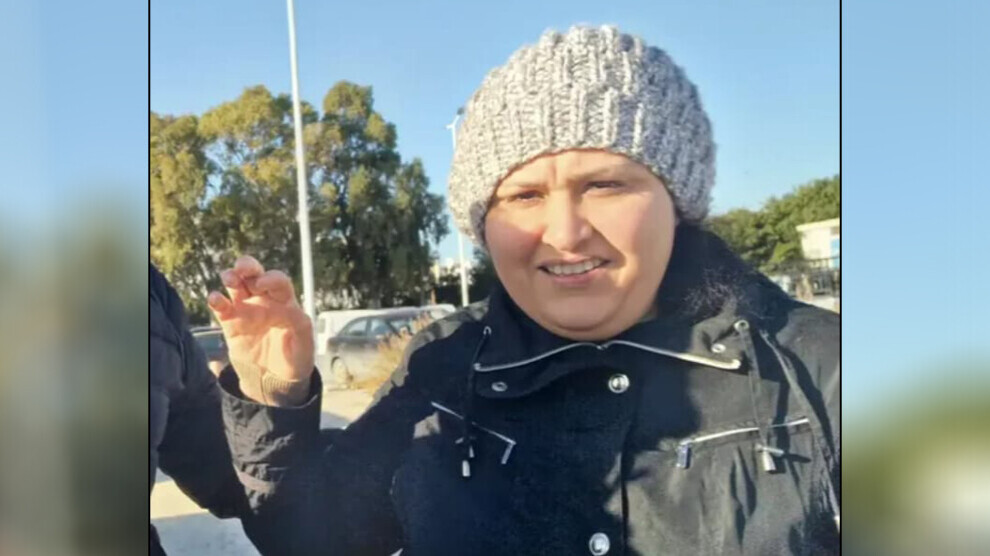
News Center – Jihan Al-Lawati, a member of the Tunisian National Journalists Syndicate, confirmed in a post following the release of journalist Shatha Haj Mbarek that she faced serious charges despite her journalistic work, noting that she suffered severe medical neglect and assaults in prison.
The Criminal Chamber of the Tunis Court of Appeal issued a ruling ordering the release of journalist Shatha Haj Mbarek, who was being prosecuted in the "Anstalingo" case, while upholding the initial sentences for the other defendants. The court reduced Shatha Mbarek's sentence from five years to two, suspending its execution, which allowed for her release on Wednesday, January 14.
The court dropped the charge against her of "attempting to change the form of the state and inciting the population to attack one another and create chaos, murder, and looting within Tunisian territory," upholding only the conviction for the crime of "attacking the external security of the state," while modifying the sentence to two years.
Earlier, a group of associations and organizations expressed their concern regarding the deteriorating health of Shatha al-Hajj Mubarak, who has been detained since 2023. They emphasized that her condition requires urgent medical intervention, along with continuous medical monitoring in humane and safe conditions.
During her detention, our agency covered solidarity vigils in which journalists and activists participated, demanding Shatha Mubarak's release, consideration of her health condition, and the release of "those unjustly imprisoned for years." These vigils followed an urgent appeal from her family, revealing that she was suffering from two malignant tumors in her abdomen and chest as a result of what they described as medical negligence.
In an exclusive interview with NuJINHA, Rashida al-Hajj Mubarak, Shatha's mother, confirmed that her daughter was physically assaulted inside the al-Masa'din Civil Prison by a fellow inmate detained in a public rights case. This resulted in a serious hand injury that has gone untreated for over a year. She stressed that this medical negligence has exacerbated her daughter's health problems and worsened her condition. In a post, Jihan Louati, a member of the Tunisian National Journalists Syndicate, wrote, "Our colleague, journalist Shatha Haj Mubarak, is finally free after years of suffering in prison, which she endured as part of what is known as the 'Installingo case.' Her ordeal began in 2021, when she faced serious charges such as 'conspiring against state security' and 'insulting the president of the republic,' despite her work being purely journalistic, at a digital content production company. She was sentenced to five years in prison in 2025 and subjected to severe medical neglect, assaults within the prison, and repeated hunger strikes to demand her right to treatment."
In her post, she indicated that the most painful experience was discovering she had two malignant tumors (one in her abdomen and the other in her breast) as a result of the fatal delay in diagnosis and treatment while in prison. She also suffered from other illnesses such as diabetes, hearing problems, and glaucoma. She added that her family, especially her mother, made urgent and heartfelt appeals to save her life, holding the authorities responsible for the negligence, which she described as "torture and a crime."
She affirmed that now, after all this pain, bitterness, and illness that plagued her behind bars, Shatha Mubarak is finally free and returning to her mother's long-awaited embrace. This moment represents a painful liberation, but it is also a victory for willpower, resilience, and every voice that called for justice and freedom.
It is worth noting that the “Anstalingo” case is one of the most prominent political and media cases in Tunisia since 2021, as it relates to a digital content production company accused of conspiring against state security, money laundering and abuse via virtual communication. The investigations included dozens of politicians and journalists, and the case sparked widespread controversy about the independence of the judiciary and the political nature of the trials.