
Psychologist: Cognitive Distortion Behind Society’s Normalization of Violence
Many women deny the violence they endure,remaining silent due to soicl pressure or lacking the psychologiacl tools needed to confront and openly reject abuse.
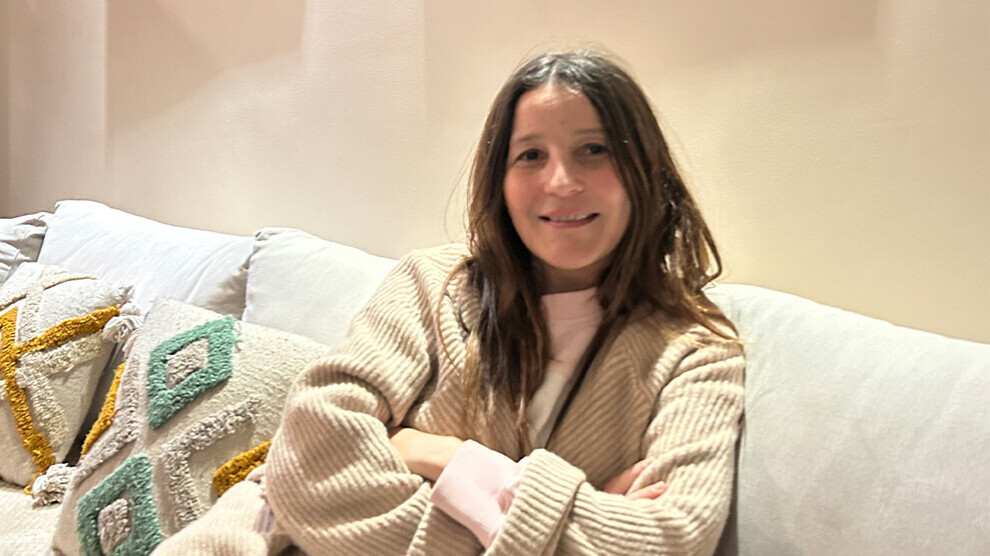
Rajae Khairat
Morocco – A woman who accepts or normalizes violence bears significant responsibility toward herself first and her children second. What she experiences does not pass without leaving scars—within her and within the lives of her children, who grow up carrying psychological burdens that inevitably affect their lives and future partners.
Moroccan human rights activist and psychologist Sophia Al-Rajouani believes that remaining in a marriage characterized by violence and abuse exposes women to psychological changes and imbalances that weaken their personality and suppress their needs and identity. As a result, they become unable to create a safe living environment or see themselves as deserving of better. Consequently, the woman becomes trapped in denial of the entire situation, which may expose her to extreme levels of violence that can sometimes cost her life.
Cognitive Distortion
The psychologist explained that a woman who survives violence yet accepts and lives with it without expressing objection or rejection is certainly experiencing “psychological vulnerability.” This stems from social pressure and prior exposure to misguided conditioning that led her to believe she must preserve her social image and family stability at the expense of her psychological or physical safety.
She affirmed that such a woman believes defending her rights, speaking about the violence she faces, or even discussing what happens inside her home is socially “disliked” and unacceptable, as it may lead to accusations of “exposing family secrets,” something deemed impermissible in her social environment. Additionally, families often urge her to remain patient and endure, as a form of normalizing violence.
She stated: “As women, we endure difficult circumstances. We may endure if a husband loses his source of income or suffers from illness. But we do not endure harm and abuse. Patience, ethically and even religiously, does not mean this. When we are advised to be patient, it refers to trials beyond our control—not to enduring harm. These values and meanings themselves have been subject to cognitive distortion in abused women. Due to prolonged exposure to violence, they lose the ability to evaluate their situation. They become vulnerable to emotional manipulation and control without full awareness or the capacity to assess and overcome their condition.”
A Toxic Cycle
She describes what happens to abused women as a “toxic cycle,” in which the abused woman oscillates between feeling like a victim and experiencing guilt. This results in behavioral dysfunction driven by fear of the unknown and the possibility of being harmed again. “This has profound consequences, especially as it pushes her toward denial instead of confrontation.”
She explained that this denial can be observed in the words often repeated by abused wives when they say: “I am being patient for the sake of my children. I want to spare them psychological crises and instability.” In reality, she noted, this is an unconscious behavior, as if the woman had undergone a form of brainwashing—particularly because she lacks the awareness and education that would equip her with defensive psychological mechanisms enabling her to assess her situation, reject it, and seek to correct it through self-worth and by refusing to allow anyone to harm her.
She pointed out that continuing in a violent marriage exposes a woman to psychological changes that weaken her personality and erase her emotional needs and sense that she deserves better. As a result, she becomes “a victim of denial of the entire situation,” which may expose her to extreme levels of violence that could ultimately cost her life.
Sophia Al-Rajouani explains this further by stating that “a husband who subjects his wife to violence is a sick person. I am not justifying his violence, but he too needs psychological support and must recognize that his behavior is abnormal. The wife, however, is not responsible for reforming his behavior. She may live under the illusion of hope that he will change one day, when in fact she must first save herself and then her children, because by enduring violence she is exposing them to severe psychological harm.”
She described violence as a “complex phenomenon requiring complex solutions.” While cases differ, normalization must be rejected. If a woman remains in denial, she will eventually react in some way. An abused woman may develop severe depression or resort to unhealthy behaviors as a response to rejecting what she is subjected to.
“No to Violence” at Every Stage of Life
Regarding whether it is too late for women who have endured violence for long periods of their lives, Sophia Al-Rajouani stated: “There are women who cannot speak out about the violence they endured, especially at advanced stages of life, as they yield to pressure from their children and grandchildren, who claim it is unacceptable for a wife to leave her husband and a life that appears stable on the surface at this age, arguing that it is now too late.”
However, she emphasized that those who pressure her “forget—or choose to forget—that she is a human being and a woman with psychological needs. It is time for her to complete her life in peace, away from the violence she endured for many years.”
Such circumstances, she noted, may push the abused woman toward retaliatory behavior—at the very least, emotionally erasing her husband and living as if she were alone without physically leaving the house. Some women, she added, remain unable to forgive what they endured even after their husbands’ deaths.
She affirmed that rejecting violence is not tied to a specific age but rather to circumstances and to the people surrounding the abused woman, who are supposed to provide support and solidarity rather than normalize violence. “Every woman has the right to live in calm and peace, regardless of her age.”
The Reproduction of Violence
Regarding the impact of violence on children, Sophia Al-Rajouani explained that a mother who endures violence raises two types of children. “One type grows up normalizing violence, believing that a future wife should endure abuse because she is no better than his mother, who suffered violence without protest. He may seek revenge for his mother through other women. This also applies to girls who accept violence as something normal—or even practice it against their husbands—thus reproducing the cycle of violence.”
She added: “Another type may reject marriage entirely, believing it to be a failed institution and seeing no point in bringing children into the world only for them to endure the endless suffering they themselves experienced during childhood with their parents.”
Nevertheless, Sophia Al-Rajouani noted that there are exceptional cases of individuals who work on themselves and may intervene in different scenarios to rescue their mothers from violence. However, they often grow up with what can be described as a “savior” or “responsible” syndrome. Instead of living a balanced childhood, they strive to protect their abused mothers. Even if they overcome some psychological consequences of their childhood experiences, post-traumatic stress disorder may persist and accompany them throughout their lives.
In conclusion, Sophia Al-Rajouani called for raising children in safe environments free from violence and encouraging them to reject violence regardless of its source. “Upbringing is a process that requires patience and continuous guidance throughout all stages of development without exposing children to violence. In doing so, we create a generation that rejects violence in all its forms and sources.”