
Over 18,000 People Displaced in Western Yemen in Three Days
Escalating conflict in western Yemen has displaced 18,500 people in three days, as the IOM warns of growing humanitarian needs and supply shortages.
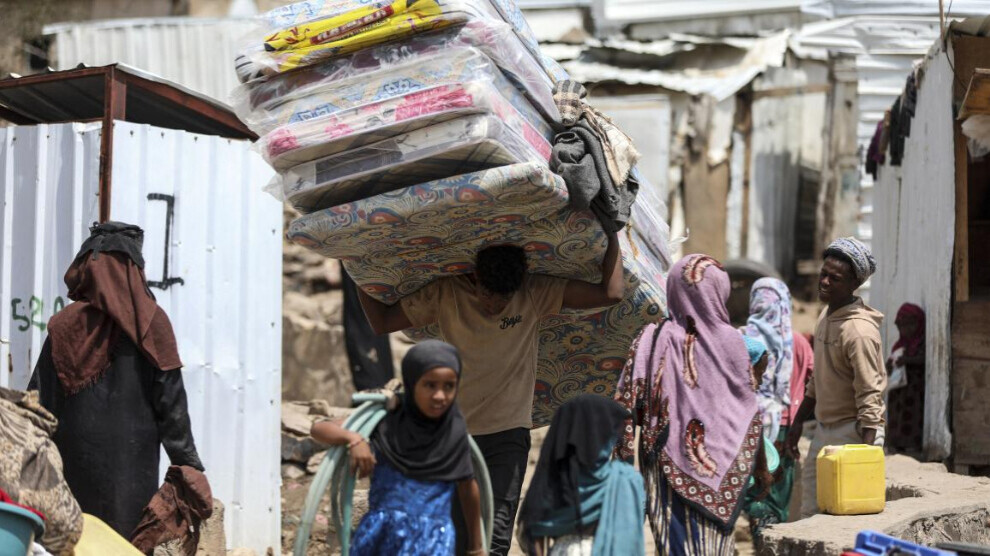
News Center_ The rapid escalation of fighting in the governorates of Taiz and Al-Hudaydah in western Yemen has forced thousands of families to leave their areas, amid UN warnings of worsening humanitarian needs and increasing pressures on host communities and displacement sites.
The international Organization for Migration announced yesterday, Tuesday, September 8, that nearly 18,500 people had been displaced in the governorates of Taiz and Al-Hudaydah within 72 hours, due to the sharp escalation of fighting along the western coast and in parts of the two governorates.
The organization said in a recent report that the displacement wave began with the escalation of hostilities on September 3, noting that the number of displaced continues to rise as families flow into host communities and displacement sites.
Wildespread displacement was recorded from affected areas in the districts of Maqhanah, Al-Ma’afir, and Jabal Habashi, while renewed fighting led to secondary displacement of families who had previously sought refuge in displacement sites in Hays district.
The organization said in a recent report that the displacement wave began with the escalation of hostilities on September 3, noting that the number of displaced continues to rise as families flow into host communities and displacement sites.
Widespread displacement was recorded from affected areas in the districts of Maqbanah, Al‑Ma'afir, and Jabal Habashi, while renewed fighting led to secondary displacement of families who had previously sought refuge in displacement sites in Hays district.
The organization reported that ongoing clashes and the disruption of communication networks in affected areas are hindering access to newly displaced families and increasing the difficulty of humanitarian response, amid declining emergency stocks of food, shelter materials, and basic household items.
Reception centers and host communities in southern Taiz and the western coast—including Al‑Mokha, Hays, Muzaw, Al‑Ma'afir, and Jabal Habashi—are facing increasing pressures due to the influx of families fleeing conflict zones.
According to the organization, displaced families urgently need food and cash assistance, emergency shelter, household items, clean drinking water, hygiene services, emergency healthcare, and mechanisms for referring the injured.
The head of the IOM mission in Yemen said that many families arrive at displacement sites without shelter or food, noting that some displaced people have been forced to leave their homes multiple times due to renewed fighting, losing whatever they had rebuilt each time.
The organization expressed concern over the difficulty of some families safely leaving frontline areas, amid ongoing fighting and deteriorating security conditions on transit routes. It called on all parties to the conflict to protect civilians, secure safe passage for families wishing to leave combat zones, and ensure unhindered humanitarian access to affected populations.
It also urged donors to expedite the replenishment of emergency stocks and provide the necessary funding for the humanitarian response, as needs exceed available resources.