
Najet Zammouri: Violations in Rojava Are a Grave Breach of the Principles of International Law and Obligations
Violence against women continues in many Syrian regions at the hands of the so-called interim government and its jihadist factions, in a clear insistence on violating all international charters and agreements that protect women’s rights.
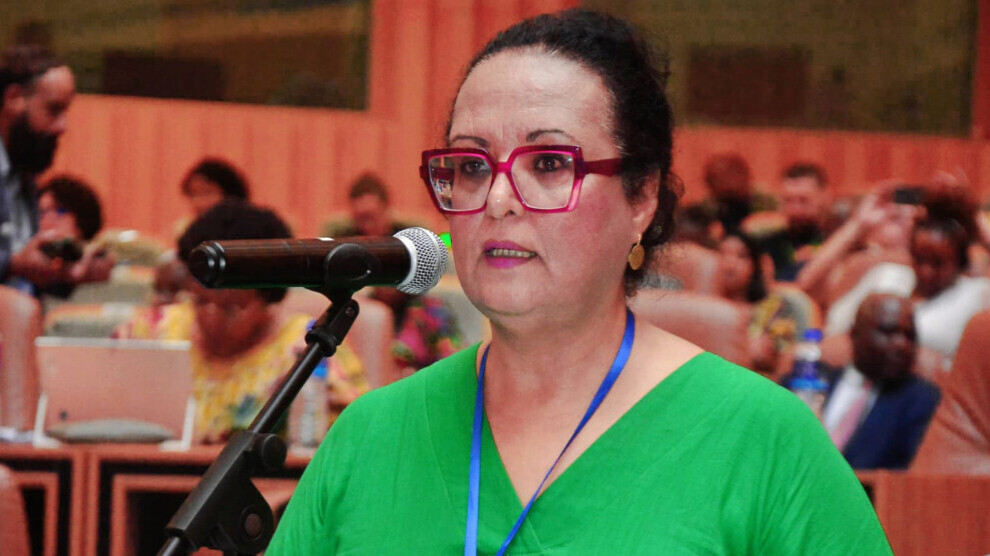
NAZIHA BOUSAIDI
Tunis – As escalation, violence, and abuse against Kurdish women persist—particularly in northern and eastern Syria—campaigns of condemnation and solidarity by feminists and human rights defenders around the world continue. They consider what is happening to be crimes no less horrific than those committed against women in many countries across the Middle East and North Africa.
In the context of solidarity and support for the women of Rojava and the violations they have been enduring for nearly a month, human rights activist and Vice President of the Tunisian League for Human Rights, Najet Zammouri, told our agency:
“In light of the regional and global situation, which is characterized by a retreat from the fundamental principles of human rights, the dominance of patriarchal capitalist ideology, and imperialist hegemony over peoples, it is essential that we support and stand in solidarity with the women of Rojava.”
She added:
“From my position as a human rights and feminist activist, I affirm that what women in this region and neighboring areas are subjected to constitutes a serious violation of the principles of international humanitarian law and of international obligations related to the protection of civilians during times of conflict—foremost among them the obligations of states under the Geneva Conventions, as well as the Women, Peace, and Security agenda as enshrined in UN Security Council Resolution 1325 and subsequent resolutions.”
She stressed that targeting women, subjecting them to various forms of gender-based violence, or excluding them from decision-making processes cannot be considered a collateral effect of war. Rather, it is a systematic violation that requires accountability and prosecution.
“Women in Rojava are living under the weight of an armed conflict in which their social existence is used as a space for domination and struggle, in a clear violation of their right to protection, safety, and dignity.”
Zammouri explained that the situation is becoming increasingly dangerous in the absence of effective mechanisms to implement UN Security Council resolutions, particularly Resolution 1325, which calls for the protection of women and girls from violence in armed conflicts and for ensuring their full and effective participation in peacebuilding and conflict prevention efforts.
She considered that ignoring the women of Rojava represents:
“A collective and profound failure in implementing international obligations, a retreat from the fundamental principles of human rights, and a violation of international law, which must be applied equally to everyone.”
The Selective Nature of International Human Rights Discourse
She pointed out that what is happening in the region:
“Reveals the selective nature of international human rights discourse, which we have begun to witness on many occasions, most notably in the massacres that took place in Gaza.”
She emphasized that principles of protection and justice are applied selectively and discriminatorily, while women in conflict zones are left without real protection or accountability for perpetrators.
Najet Zammouri, Vice President of the Tunisian League for Human Rights, concluded by stating:
“It is necessary to highlight these violations and stand with the women of Rojava. The international community, the human rights community, and the humanitarian community must also show solidarity with them and draw the attention of the broader international civil society—especially organizations that claim to defend women’s rights and human rights in general