
Mothers of Fighters: Women's Safety Cannot Be Achieved Without Recognition of the YPJ
If the Women's Protection Units are not recognized as a women's force in Syria, women's safety will not be guaranteed, and their freedom will face the danger of genocide as happened in the Syrian coast and Shengal.
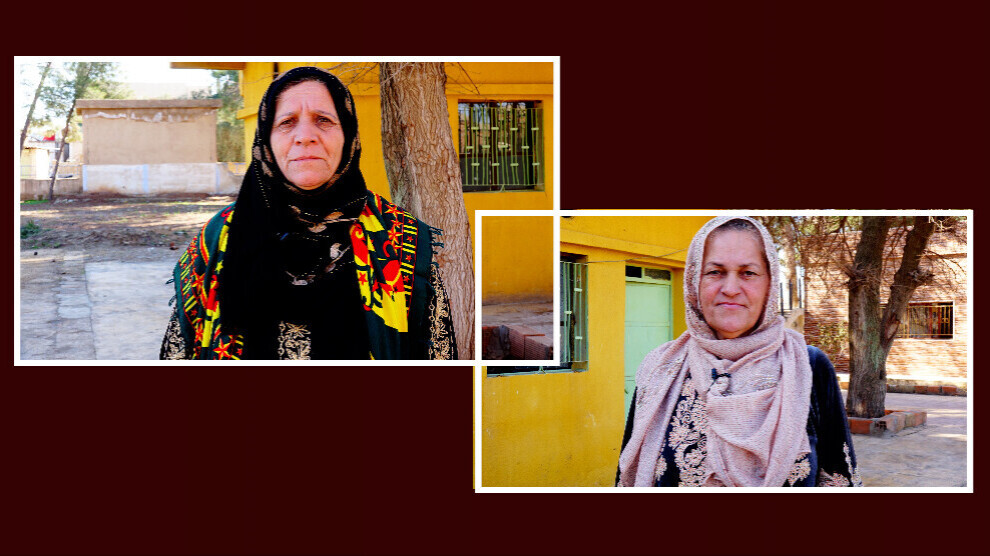
Sourgal Shikho
Tel Tamer — Mothers of fighters in the ranks of the Women's Protection Units and of martyrs in Rojava have expressed women's fears of losing the gains achieved during the years of the revolution, affirming that recognition of the YPJ is not just an organizational demand, but an essential condition for ensuring women's security and protecting their existence and rights.
Discussions continue regarding the participation of the Women's Protection Units in the integration process according to the agreement concluded between the Syrian Democratic Forces and the interim Syrian government. On this matter, mothers of fighters and martyrs in the units from the Jazira Region affirmed that "women's safety cannot be achieved without recognition of the YPJ."
Fahima Abdul Rahman, mother of martyr Arjin Joudi, said that "the Women's Protection Units cannot be excluded from the negotiations and their strength ignored."
She noted that her daughter "joined the Caravan of Immortals at the beginning of the Rojava Revolution," and that her daughters participated in the revolution and joined the women's defense units to protect the region.
She emphasized women's strength in defending their land, stating: "If the blood of our daughters who were martyred on this land is not recognized, and if the Women's Protection Units (YPJ) are not included in the negotiations, we will not accept that. For example, Shengal is in danger now—how will women defend themselves against this genocide and injustice if they have no weapons and lay them down?"
She explained that the Rojava project cannot succeed without the actual presence of women, and without safeguarding this presence through the formation of an independent women's military force. "The absence of women's representation and their lack of a force to defend them means that the struggles in our regions will not proceed on their correct path," affirming that the Women's Protection Units are an indispensable necessity and must remain an integral part of the people's ranks, not separated from women or their issues.
She also stressed the importance of the YPJ assuming its position within the brigades to be formed by the Syrian Democratic Forces, and having a role in the Syrian Ministry of Defense, provided that it is recognized as an independent brigade—as it is not limited to protecting the women of Rojava alone, but represents a shield for all women in Syria.
"Women Without Protection Will Be Without Rights"
It is unacceptable for women in Rojava to remain without protection, says Fahima Abdul Rahman, who affirms that women remaining without protection practically means depriving them of their rights. "After 14-15 years of revolution, after we gained our identity, were recognized, obtained our rights, and learned our duties, how can we return once again to being without rights? Returning to a stage where those rights are stripped away is unacceptable. The rights achieved did not come easily; they were the fruit of a long struggle and also armed defense."
She believes that today it is not permissible to strip women of their weapons or marginalize their role, questioning: "How can a fighter, after fifteen years of revolution, be asked to hand over her weapon?" She affirms that this would be an injustice and a diminishment of their sacrifices and role.
"The YPJ Must Become a Recognized Women's Force Across Syria"
Fahima Abdul Rahman recalled the scenarios that occurred in the Syrian coastal areas, saying that if the YPJ's weapons are withdrawn, the women of Rojava will face the danger of genocide, citing what happened in the Syrian coast as an example.
According to the current phase the region is going through and with the increasing attacks against women, she affirms that the women of Syria, not just Rojava, need women's forces. "It is necessary that our force, the YPJ, remains present across Syria anew, and that it protects women, not that it is marginalized."
"Why Are the Women of the World Indebted to the YPJ?"
Fahima Abdul Rahman concluded her remarks by recalling the courage of YPJ fighters in the battles against terrorist ISIS. "ISIS was afraid of the strength of the YPJ fighters. Today, the women of the world are also indebted to the YPJ fighters, because they liberated them from this terrorism. Until the last moment of our lives, we will remain supportive of them and will not accept their separation or marginalization."
For her part, Ghazal Mohammed Taher affirmed that female fighters cannot throw down their weapons. "The situation of women will be miserable if they remain without weapons, because women have learned that they cannot continue without self-defense. The weapon is part of our bodies; with it we protect our existence and our dignity, and even protect our identity. So that women do not submit again and so that they can defend their rights, they must continue their struggle and not remain without weapons."