
Mothers and Children of Afghanistan Between the siege of Poverty and the Lack of Health Resources
Poverty and the lack of health resources threaten the health of mothers and children in Afghanistan; a crisis manifested in the overcrowding of hospitals and the suffering of children with mainutrition.
BAHARAN LAHIB
KABUL_Malnutrition is one of the serious problems in Afghanistan, and it particularly affects women and children. Poverty, limited access to health services, malnutrition, alongside early marriage and frequent pregnancy, are all factors that put the health of mothers and the growth of children at risk. These conditions become more dangerous in rural areas, where many families do not have sufficient access to basic health services and food supplies.
Many women continue to perform hard work during pregnancy, and even up to the time of delivery, without obtaining adequate nutrition or rest. Some of them are also subjected to domestic violence. The combination of these factors can weaken mothers' health and negatively affect the nutritional status and growth of children.
The World Health Organization announced that five million women and children across Afghanistan suffer from acute malnutrition, and that four million of them need urgent assistance. These figures confirm the necessity of giving serious attention to the nutritional status and health of mothers and children.
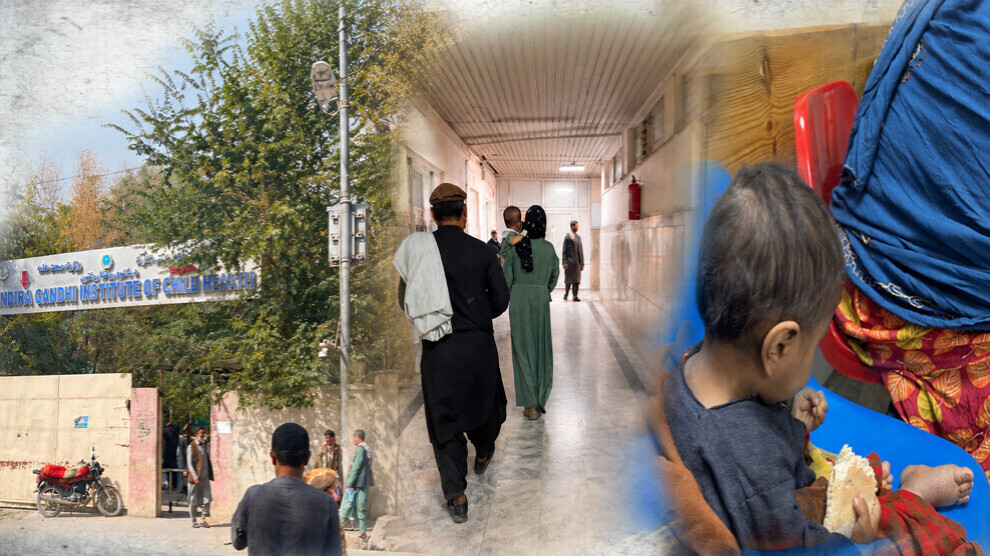
To learn about the conditions of children suffering from malnutrition, we headed to the government Children's Hospital. From the moment of entry, it was clear that some equipment was dilapidated and spaces in the treatment departments were cramped. In some hospital departments, more than one child shared a single bed, a situation reflecting overcrowding and the limited capacity of this center.
In the malnutrition department, the dilapidated rooms and narrow spaces created difficult conditions for sick children and their mothers. The mothers, alongside the family, were trying to care for the children brought to the hospital for treatment.
A Three-Year-Old Child Waiting for Treatment
In one of the hospital corridors, our agency met Safa Shaheed, who was waiting to follow up on the condition of her grandson, a child recently brought to the hospital to be admitted to the inpatient department. She said: "We have just returned from Pakistan. My grandson is about three years old, but he is not growing at all."
She noted the swelling in the child's legs, explaining that this condition was among the reasons the family headed to the hospital. Determining the causes of these symptoms requires medical examinations, but the family's concern about Safa's growth and health reflects an aspect of the difficulties facing sick children and their families.
To obtain more information about the conditions of children suffering from malnutrition and the factors contributing to the spread of this problem, we tried to conduct an interview with one of the doctors in the nutrition department, but the doctors present refused to conduct an interview.
Poverty Is One of the Causes of Child Malnutrition
After leaving the hospital, we headed to one of the private clinics near its entrance, where we conducted an interview with Dr. Khatira Safi, a pediatrics specialist, about the causes of malnutrition in children.
She stressed the importance of the mother's nutrition during pregnancy, explaining that the mother's nutritional status can affect the child's health and growth. According to what she stated, malnutrition during this period, alongside other factors, may increase the risk of problems related to child growth.
Khatira Safi counted early pregnancy, marriage below the legal age, frequent pregnancy, poverty, unemployment, and domestic violence as other factors that threaten mothers' health, and can also affect the nutritional status of children. She noted that some hospitals previously included family counseling offices, but these offices were not allowed to continue their work after the Taliban movement came to power in 2021.
She considered awareness about proper nutrition for mothers and children, healthcare during pregnancy, and spacing between births as important measures to prevent nutritional problems.
Malnutrition does not result from a lack of food alone; poverty, limited access to health services, mothers' malnutrition during pregnancy, and lack of awareness are all factors that play a role in exacerbating this problem. Confronting it requires providing food and therapeutic assistance, supporting mothers, educating families, and improving access to health services.
Likewise, effective partnership between the World Health Organization and the responsible health authorities, alongside transparent oversight of the spending and distribution of financial aid, acquires great importance to ensure that support reaches those in need, and to prevent the waste and embezzlement of resources.