
Kurdish Women's System Affirms That Democracy Is Iran's Path Out of Its Crisis
On Jin Jiyan Azadî's fourth anniversary, the Kurdish Women's System called for a new struggle phase, linking women's freedom to democracy, organization, and solidarity.
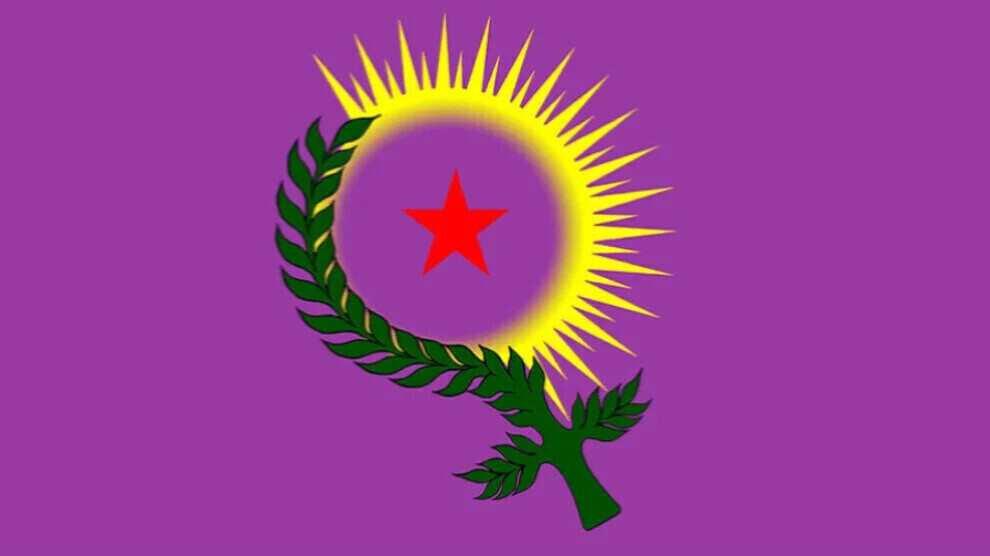
News Center — As the "Jin, Jiyan, Azadî" uprising, which erupted in Eastern Kurdistan and Iran, enters its fourth year, the Coordination of the Kurdish Women's System issued a statement today, Sunday, September 13, affirming that the Iranian regime, due to its repressive policies, has become incapable of responding to the people's demands and addressing the crises and problems sweeping the country.
Coinciding with the approach of the fourth anniversary of the "Jin, Jiyan, Azadî" uprising, the Coordination of the Kurdish Women's System (KJK) affirmed its continuation in the struggle for freedom and democracy and for holding accountable those responsible for killing and repressing women and peoples in Iran and Eastern Kurdistan.
In its statement, the Coordination recalled all the victims of the uprising, foremost among them Shiler Rasouli and Jina Amini, who became among the most prominent symbols of the uprising that erupted in the streets of Iran and Eastern Kurdistan. It also recalled Niloufar Majawar, who was killed as a result of patriarchal violence and subjected to brutal torture, affirming that these crimes reflect the continuation of organized and systematic violence against women.
The statement stressed that women will not remain silent before these crimes, noting that confronting this reality requires holding on to a free life and continuing the struggle and organization. It considered that insisting on building a free life represents, for women, one of the most important ways out of the reality of repression and tyranny.
Democracy Is a Condition for Iran's Exit from Its Crisis
The statement addressed the political and social transformations witnessed in the twenty‑first century, noting that the new rise of the Kurdish people, led by Abdullah Öcalan, was not limited to Turkey and North Kurdistan but extended its effects to other parts of Kurdistan and Europe.
It explained that introducing the principle of democracy in the region's states led to the emergence of the concept of "democratic integration" on the public discussion agenda, considering that Eastern Kurdistan and Iran represent one of the arenas that urgently need a democratic path, amid continuous crises and conflicts.
The Coordination saw in its statement that the Iranian regime, due to its authoritarian nature and repressive policies, is incapable of providing real solutions to society's problems, affirming that the country will not be able to overcome its deep crisis unless it moves toward democracy.
The statement added that the uprising that began after the killing of Jina Amini in September 2022 demonstrated the ability of Iranian peoples to search for a democratic alternative.
The statement addressed the current situation, noting that the continuation of tension and war between Iran, Israel, and the United States, in parallel with the campaigns of arrest, execution, and repression carried out by the Iranian authorities, exacerbates pressures on society, especially women.
It affirmed that accountability for the existing reality and searching for the roots of the crises constitute the starting point toward reaching real solutions, noting that the protests that erupted in Iran expressed, from their beginning, women's and peoples' rejection of policies of repression and discrimination.
It added that the Kurdish, Azerbaijani, Baloch, and Persian peoples, along with women, have suffered from various forms of repression and subjugation, and that the killing of Jina Amini formed a pivotal moment that pushed women to reject this reality and demand a free life.
According to the statement, this path gained momentum through the slogan (Jin, Jiyan, Azadî), which the Coordination linked to the philosophy and struggle of the Kurdish women's movement extending for decades, considering that the experience proved once again the importance of women's leadership and organization in the struggle for freedom and equality.
Anticipated Changes in Iran on the Basis of Democracy
The statement affirmed that a life lacking freedom and an active role for women cannot be sustainable, noting that men's participation alongside women in the protests reflects, according to its vision, the widening scope of rejection of the existing regime.
It explained that men's joining the protests was not only linked to objecting to the pressures imposed on women but also expressed their rejection of the pressures they themselves face, considering that this reflects the existence of wide social segments demanding change.
It also noted that the uprising revealed two contradictory images of men: the first linked to domination and authority, and the second expressing the desire for a free and equal life. It noted that the resistance of Jina Amini, Shiler Rasouli, and Niloufar Majawar, along with the women and youth killed during the protests in the cities of Eastern Kurdistan and Iran, represents evidence of the continuing impact of the philosophy of (Jin, Jiyan, Azadî).
The Coordination also praised the positions and resistance of Zeinab Jalalian, Bakhshan Azizi, and Risha Moradi inside Iranian prisons, considering that their positions affirm the continuation of the struggle for women's freedom despite repression and arrest.
The Coordination's statement stressed the importance of organizing women and raising their level of awareness and knowledge in order to confront the repressive regime, considering that a woman lacking organization and societal support becomes more exposed to violence and exploitation.
Through its statement, the Coordination called on women, on the fourth anniversary of the uprising, to expand the scope of organization and struggle and strengthen solidarity among themselves, affirming the importance of developing communities, organizations, academies, and educational spaces for women.
The Coordination linked women's struggle to confronting the culture of rape and sexual violence, considering that these practices constitute a global phenomenon that women and societies are subjected to in various forms.
"Aware Women Will Build a Shared and Democratic Life"
KJK noted that the culture of violence against women is expanding in an organized manner, and that repressive regimes particularly fear women's leadership and their ability to organize and build independent forms of solidarity.
It affirmed that the escalation of attacks on women is met, in contrast, by growing solidarity, unity, and coordination among them, calling for women's issues to be present on the global agenda, not only through victim numbers and statistics.
It also called on women and all segments of society to express their rejection of repression and take to the squares, affirming that the continuation of struggle can transform the cause of women's freedom into a broader project for building a shared and democratic life.
KJK concluded its statement by affirming that women, youth, and the peoples of Iran are capable, through organization, solidarity, and continuing the struggle, of pushing toward democratic change and building a future based on freedom, equality, and coexistence.