
Kurdish Women: Identity and Resilience
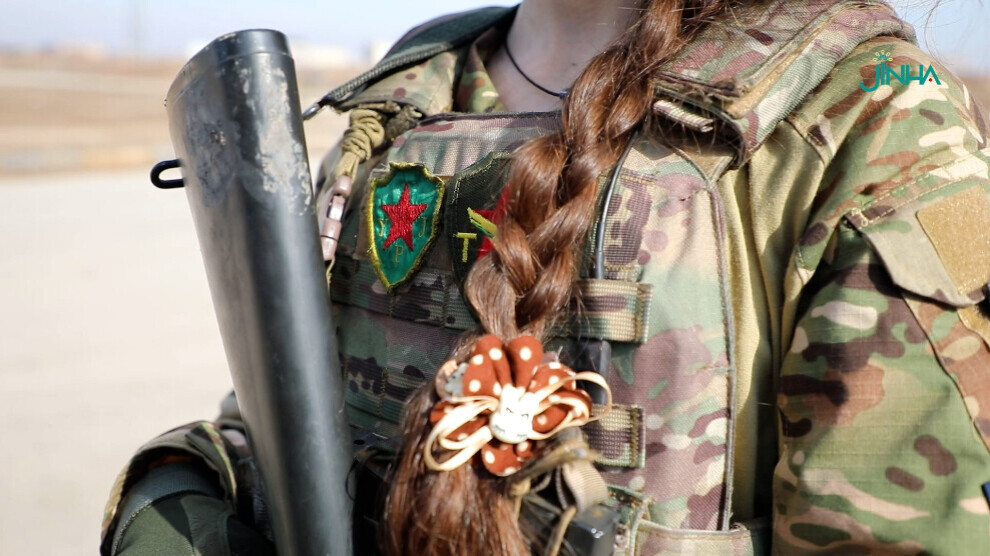
An article by Lamaan Shikho, member of the Jineolojî Academy
Since 2011, Syria has undergone profound structural transformations that have affected the very core of its political and social fabric. These changes were not merely temporary or circumstantial, but rather struck at the foundations of governance and systems of power, shaking the centralised authoritarian state that had ruled the country for decades. The state’s monopoly over political decision-making and the means of violence eroded, giving way to the rise of new non-state actors through local, regional, and international interventions. Consequently, the Syrian conflict ceased to be a purely internal struggle and became a multi-layered arena of competing spheres of influence. This reality has been reflected in models of governance, identity, coexistence, and the overall structure of local society.
Within this context, siege and starvation emerged as political and military tools to subjugate local communities, alongside the systematic targeting of specific social components—most notably the Kurds, and in particular women—who are regarded as carriers of identity and collective memory. Such practices form part of broader attempts to reshape society according to new power balances.
The city of Aleppo is one of the most significant Syrian cities in terms of political, economic, and demographic weight. The neighborhoods of Sheikh Maqsoud and Ashrafieh have acquired particular political and military symbolism due to their strategic geographic location within the city. Their elevated position allows oversight of vital routes and control over surrounding areas.
Sheikh Maqsoud is known in Kurdish as Çiyayê Seydê, meaning “Mount of Seyda,” named after a Kurdish Sufi religious scholar who settled with his family on the hill and contributed to the formation of the neighborhood’s early social structure. These characteristics made both neighborhoods recurrent targets of attacks and sieges since the outbreak of the conflict, while simultaneously turning them into strongholds of community resistance and self-organization in the face of political, military, and economic subjugation.
Kurds constitute the majority of the population in Sheikh Maqsoud and Ashrafieh, a result of Baathist fascist policies ranging from the Arab Belt project to the deliberate stifling of industrial and economic life in Kurdish cities. In response, many families were forced to settle in Aleppo in search of livelihoods and basic survival. Despite the ethnic and religious diversity, the neighborhoods became direct targets of exclusionary policies, including denial of participation in decision-making and governance, lack of dignified living opportunities, denial of language, history, and cultural symbols, and marginalization based on ethnicity and religion.
The targeting of Kurds in Syria was neither sudden nor isolated, but rather part of a broader historical and political context aimed at preventing the emergence of an independent Kurdish political identity, obstructing the development of an alternative democratic governance model, and maintaining centralized control over the region. Thus, the targeting was not solely based on ethnic difference, but was also linked to long-standing Kurdish demands for recognition, rights, and political organization.
Violations and policies of subjugation in these neighborhoods manifested on multiple levels, including siege and starvation through the imposition of a suffocating blockade and the prevention of basic necessities since 2011, as well as systematic economic and service-related pressure. This created an environment of fear and instability, exacerbating the humanitarian crisis and rendering living conditions unbearable in a clear attempt to force residents into submission or displacement. Despite this, the residents demonstrated remarkable popular resistance, maintaining social cohesion and resilience in the face of subjugation policies.
The targeting of women is not a marginal detail in the Syrian conflict, but a fundamental pillar of strategies of control. Women represent the backbone of societal continuity and the bearers of identity through language, culture, and collective memory, in addition to their central role in family cohesion and the transmission of values to future generations.
Accordingly, targeting women does not only affect the present, but strikes at the future of society as a whole by undermining its moral and organizational foundations. In the Kurdish experience, women broke traditional stereotypical roles and actively participated in organization, decision-making, and community administration. They transformed from passive recipients into active agents, and from victims into symbols of community resistance. This posed a direct threat to patriarchal and authoritarian structures, prompting the adoption of more structural policies against women, including defaming the image of the free woman, erasing identity and collective memory, and emptying the land of its original inhabitants.
When linking the political events in Afrin, Serekaniye/Ras al-Ayn, Shahba, and the ongoing pressures on Sheikh Maqsoud and Ashrafieh, it becomes evident that these are not separate events, but rather a single trajectory within a systematic policy aimed at breaking Kurdish political will, dismantling forms of self-organization, and striking the societal model in which women occupy a central position.
Afrin (2018): The Turkish military intervention under the name “Operation Olive Branch” led to the mass displacement of the indigenous population, confiscation of private property and agricultural land, arbitrary arrests and enforced disappearances, destruction of cultural and social symbols, and the renaming of villages in an attempt to sever the historical relationship between people and place. Women were abducted and taken to unknown locations.
Serekaniye (2019): Turkish military operations and affiliated factions aimed to end the Autonomous Administration experience by dismantling local society and civil institutions and imposing a militarized reality that prevents genuine community participation.
Shahba (2024): The region became a forced refuge for the people of Afrin and was subjected to economic and service-related siege, continuous pressure, indiscriminate shelling of villages and camps housing displaced persons, restrictions on movement, and prevention of return to their original areas, alongside deprivation of basic services. Thus, the region became an extension of displacement and exclusion policies. Despite this, residents maintained a form of self-administration, transforming Shahba into a symbol of civilian resilience.
Women proved their role and resistance in these regions, demonstrating that their contribution was not limited to adapting to harsh conditions, but was a central and active force in sustaining society and ensuring its survival amid various violations. Their role emerged clearly in Afrin, Serekaniye, Shahba, Sheikh Maqsoud, and Ashrafieh as key actors in political, diplomatic, and local council work, social committees, media, and daily crisis management (food, education, community solidarity), while promoting a culture of coexistence through a unified female voice.
Their role also extended to health, relief work, and community organization, and went further as women organized themselves to stand on the front lines of defense, strengthening societal morale in the darkest circumstances—despite being subjected to killing, captivity, assault, attacks on their dignity, and blackmail.
In conclusion, the targeting of women in the Syrian context in general, and the Kurdish context in particular, was not incidental, but part of a systematic strategy to dismantle society and undermine its organizational and ethical foundations. Recent events serve as clear evidence of this reality. What happened on the Syrian coast and in Suwayda, as well as what is happening in Kurdish regions, reflects fear of women organizing themselves, raising their voices for freedom and equality, and raising a generation that refuses submission and obedience.
Women in Sheikh Maqsoud, Ashrafieh, Afrin, Shahba, Serekaniye, and now in Kurdish regions threatened by war, once again redefine resistance as the protection of life, identity, and collective memory. Women’s resistance signifies strength, awareness, effectiveness, the capacity for change, and hope for building a more just future. Events bear witness that women are not merely victims, but active agents and resistors.
The Rojava Revolution stands as a clear, tangible model demonstrating how women organized themselves, prepared for any attack, and defended—and will continue to defend—their land and dignity at any cost, without fear. All these experiences confirm that any political solution in Syria will remain incomplete unless the role of women as fundamental agents of change is recognized, and that true peace begins from the grassroots of society, not from the top of the power hierarchy. Women are the nucleus of society, and the liberation of society begins with the liberation of women.