
KJK Announces a New Phase of the Women’s Revolution Under the Slogan “It Is Time for Women”
Ahead of International Women’s Day and Nowruz, the Kurdistan Women’s Communities launched a new initiative, declaring it aims to advance women’s and peoples’ freedoms and challenge violence and discrimination.
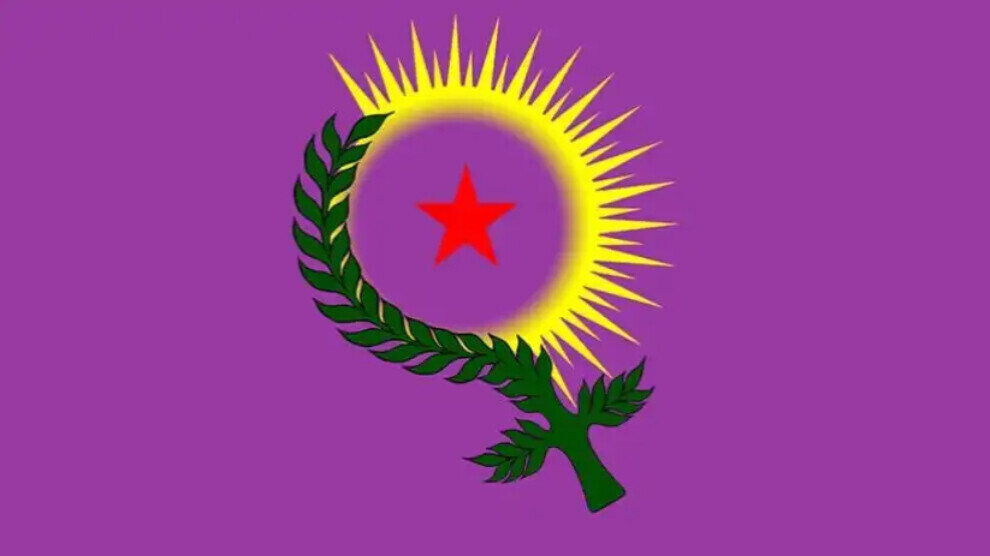
News Center – March carries a special humanitarian and cultural significance with the arrival of International Women’s Day on March 8, when attention turns to women’s achievements and ongoing struggles worldwide. At the same time, millions prepare to celebrate Nowruz on March 21 as a symbol of renewal and the beginning of a new year in cultures rooted in thousands of years of history.
The Kurdistan Women’s Communities (KJK) announced on Monday, March 2, the launch of a new initiative ahead of International Women’s Day and Nowruz under the slogan “It Is Time for Women,” stating that it comes within the framework of a new political and social phase. The statement described evaluations presented by Abdullah Ocalan on the second anniversary of the “Call for Peace and Democratic Society” as representing a “major historical and social responsibility.”
The organization said March symbolizes a turning point in the struggle for women’s liberation and in the history of peoples’ resistance, noting that March 8 represents women’s resistance, while Nowruz embodies the spark of freedom for peoples. It added that women, as active drivers of social life, will contribute to expanding this process.
The statement highlighted that the campaign “Marching Toward the Women’s Revolution with Jin Jiyan Azadî” has, over the past three years, worked to raise awareness of women’s liberation not only in Kurdistan but across the Middle East and globally. It said the process has evolved from a theoretical slogan into a worldwide resistance movement and announced that, on the occasion of March 8, the campaign has entered a new strategic phase under the slogan “It Is Time for Women.”
According to the statement, the democratic, ecological, and women’s liberationist paradigm developed by Ocalan offers an alternative to the crisis of humanity. It stressed that the women-led struggle aims to permanently establish a process of peace and democratic society. Marking the conclusion of the campaign carried out under the slogan Jin Jiyan Azadî, the organization announced the launch of a new strategic initiative intended to make the freedom of peoples and women a lasting reality.
The initiative, it said, represents a strategic step against what it described as forms of enslavement, statelessness, loss of identity, chaos, injustice, and special war policies rooted in misogyny. It was presented as a response to “systematic violence against women” attributed to patriarchal systems throughout history.
The statement outlined a vision for the coming phase based on building an “ecological, democratic, and participatory” social system grounded in women’s liberation as the foundation for sustainable transformation. It also called for ensuring the physical freedom of Ocalan and creating conditions enabling him to live and work freely and engage in democratic political activity. Resolving the Kurdish issue on the basis of peace and democratic society, it said, would offer an alternative to the global humanitarian crisis and therefore merits a women-led global struggle.
Addressing what it described as gender-biased, religious, and nationalist war policies of capitalist modernity—policies that turn women’s bodies into battlegrounds—the statement called on women to strengthen self-defense, democracy, equality, and freedom, and to organize collectively.
It added that over the past two centuries, Kurds and Kurdistan have suffered fragmentation due to assimilation policies, genocide, and international conspiracies. Amid what it called a third world war aimed at reshaping the world, Kurds have also become targets. The statement argued that overcoming these policies requires national unity, including women’s national unity, urging Kurdish women to assume historical responsibility in building such unity.
“It Is Time to Defend the Women’s Revolution”
The statement asserted that in Rojava, the Women’s Protection Units (YPJ), through self-defense strength, women’s organization, equal representation, and the co-chair system, has become a geopolitical and strategic pillar of the women’s revolution. It described the YPJ as having stood against the darkness of Islamic State and Hayat Tahrir al-Sham in Syria, Kurdistan, and the broader Middle East.
However, it warned that the women’s revolution in Rojava has not yet secured its full status and that dangers remain significant. It called for protecting Rojava, defending the women’s revolution, and safeguarding the YPJ—not only as a self-defense force for Rojava but for all women—while ensuring constitutional guarantees for gender equality and women’s equal participation in all aspects of life.
The statement linked the escalation of wars to the intensification of women’s subjugation, arguing that as women achieve liberation and break patriarchal constraints, the culture of war and violence will recede. It said the initiative’s strategy will focus on expanding the women’s peace movement and unifying struggle in defense of women and peace.
It further stated that the globalization of patriarchal domination necessitates organizing struggle on a global level, asserting that religious extremism, sexism, and nationalism have united in a war against women. It called on women worldwide to organize and build a global women’s union against what it described as brutal patriarchal domination.
“Our Initiative Also Aims to Transform Men”
The organization emphasized that the initiative also seeks to overcome the fundamental contradiction between men and women by transforming men in line with principles of democracy, freedom, and equality. It invited men striving for freedom to join the initiative in building a democratic personality and new life aligned with women’s liberation principles.
The statement concluded by asserting that the earliest historical societies founded by women were communal, democratic, ecological, and peaceful. It called for renewing that legacy today through collective organization as a free and independent system of governance capable of addressing social crises and chaos.
In its closing remarks, the Kurdistan Women’s Communities urged all women to participate in the new campaign and organizational efforts, calling for the continuation of the path initiated by Abdullah Ocalan until “victory” is achieved. It also invited democratic and liberationist institutions and women’s movements to support the campaign, linking March 8 commemorations to the spirit of Nowruz and the movement under the slogan “It Is Time for Women.”