
Schools in Iran… From an Educational Environment to Security Threats
At a time when protests are being suppressed, pressure on students has extended into schools, and classrooms have become a tool for threatening, identifying, and repressing adolescents.
Nasim Ahmadi
Kermashan – During the protests that swept across Iran in late December 2025, one of the most bitter and shocking realities was the large number of children and teenagers whose names appeared among the dead. Children—many of whom had not yet reached the age of eighteen—were shot simply for being in the street, chanting for freedom, or even passing near protest sites. This fact shows that the Iranian regime does not hesitate to sacrifice the youngest and most vulnerable members of society in order to maintain its power.
According to available reports and statistics, hundreds of children lost their lives in the recent protests due to direct gunfire from Iranian forces; among them were children under the age of five. The regime attempted to link their deaths to other protesters and erase the evidence of their direct killing. However, the violence imposed by the Islamic Republic is not limited to the streets; it remains present in different forms even more than a month after the protests.
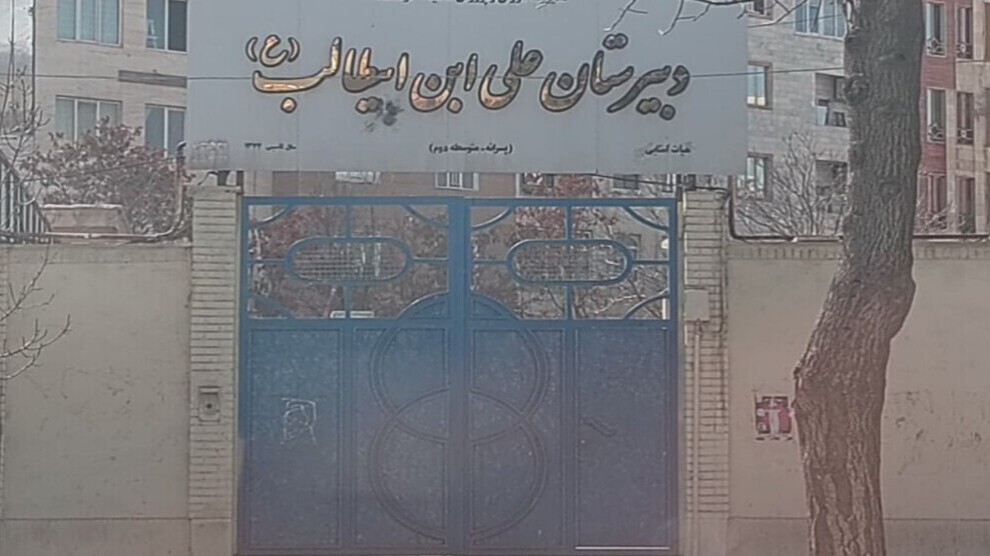
Schools, which are supposed to be among the safest places for children, have been turned into centers of pressure and intimidation. Numerous reports indicate that security forces and administrators loyal to the regime have tried to identify and suppress teenage protesters by summoning students, conducting illegal interrogations, threatening expulsion, and even forcing confessions. In reality, the desks that were meant to be places for learning and friendship have turned into torture chairs under the weight of suffocation and fear.
Humiliating inspections under the pretext of health
(F. Y.), a student at a school in the city of Kermashan, recounts what happened during the protest period:
“After collecting and checking all the students’ phones, the school principal and the deputy of the education department told us that a new circular had arrived from the Ministry of Education to identify students at risk of malaria. Under this pretext, they gathered us in a classroom and announced that we had to stand in our underwear to have our bodies examined. But we quickly realized that the real goal was something else.”
She added:
“They were not looking for mosquito bites; they were looking for bullet wounds, gunshot marks, and any signs of injury on our bodies. After the inspection, they separated some students whose bodies showed bullet marks, filed legal cases against them, and said their situation had to be investigated.”
However, the pressure on students for their possible participation in protests does not end with body searches or checking their mobile phones; school officials also tried to pressure students’ families. Nazanin J., the mother of one of the students, said:
“As parents, we have the right to intervene directly in school matters. When I and several other mothers learned about the body searches and phone inspections, we immediately went to the school and expressed our dissatisfaction and anger. But the school officials threatened us, saying we had no right to interfere in matters dictated by higher authorities, and that inspecting students’ phones or examining their bodies was for their own benefit. They claimed they knew better than parents about the problems these students might face, and that if anyone was not satisfied, they should not send their child to the school. They also threatened that if we wanted to transfer our children to another school, they would not hand over their files.”
Encouraging informants and creating divisions among students
Other students in different schools in Kermashan confirmed that they had gone through similar experiences, and in recent weeks, unusual body searches have been repeated several times in schools.
Maral B., whose sister studies in the ninth grade, said:
“My sister told me they forced all the students to undergo medical examinations under the pretext of health checks. After that, the school’s Basij official gave a long speech about the Islamic Republic and the necessity of its continuation and urged students to distance themselves from protesters. He said the rioters were evil and that students should not fall into their trap. He even stressed that if any member of their family participated in protests, they should inform the school so that the government could, as he claimed, help them in time and prevent them from falling further into the devil’s trap. In addition, students were encouraged to report to the principal if any of their friends supported the protesters. In fact, they incited everyone against each other.”
The pressure and suffocating atmosphere imposed on students in Kermashan is undoubtedly a pattern repeated in other schools as well. The regime has tried to normalize medical examinations and the identification of students under titles such as “health visits” or “health checkups,” a measure clearly targeted within the cycle of repression pursued by the Islamic Republic more than a month after the killing of protesters began in Iran.
In reality, in addition to widespread killings and arrests and the deaths of protesters under torture, the regime is working to identify anyone who might ignite protests again in the future.
A child rights activist on the escalation of pressure
Kobari B., a child rights activist in Kermashan, says:
“For the first time since 1979, students joined the ranks of opposition to the Islamic Republic on a large scale, and the government killed dozens of children in response to this presence. Nevertheless, students did not retreat and turned many schools into arenas of struggle. Female students in schools removed their hijabs as a sign of protest.”
She added:
“Students demonstrated and chanted slogans such as ‘Death to the dictator.’ In the latest uprising, previous repression failed to instill lasting fear, and this time students joined the protests with a more prominent presence. This led the government to realize that its opposition had taken root in the new generations; therefore, it significantly intensified pressure on this group. In the latest revolution, the number of students killed reached the hundreds. But the government did not stop at killing them in the streets; through systematic planning it sought to introduce the process of identification into schools. Forced body searches, inspection of personal belongings, threats against students, and incitement to spy on friends and even family members are all part of this policy. These measures reveal the dark side of the Islamic Republic’s existence: a government that oppresses even children from an early age for fear that they will become its opponents in the future.”
This level of security intervention and pressure on schools is not only a blatant violation of children’s rights; it has also stripped the school of its fundamental function—education—and turned it into a place of torture. The school, which was supposed to be a safe environment for growth, learning, and identity formation, has become a security space dominated by fear under the rule of the Islamic Republic. Under these conditions and this tense atmosphere, the regime has not only targeted the existence of children but has also taken the future of this generation hostage by interfering in their thoughts.