
Kermanshah… Testimonies Reveal Organized Massacres Against Protesters Amid a Media Blackout
As Iranian authorities conceal the crackdown through internet shutdowns and denial, testimonies from Kermanshah reveal organized killings, nighttime transfers, and gap between statistics and reality.
NASIM AHMADI
Kermanshah — More than a month has passed since the outbreak of protests in Iran and the bloody repression carried out by the authorities against demonstrators, yet the cycle of violence and massacres continues. Since the escalation of public outrage, the authorities have sought to contain the flow of news and documentation related to their crimes by cutting off the internet and restricting communications. Nevertheless, published statistics and available evidence show that horrific massacres against protesters across various cities in the country continue at an alarming pace.
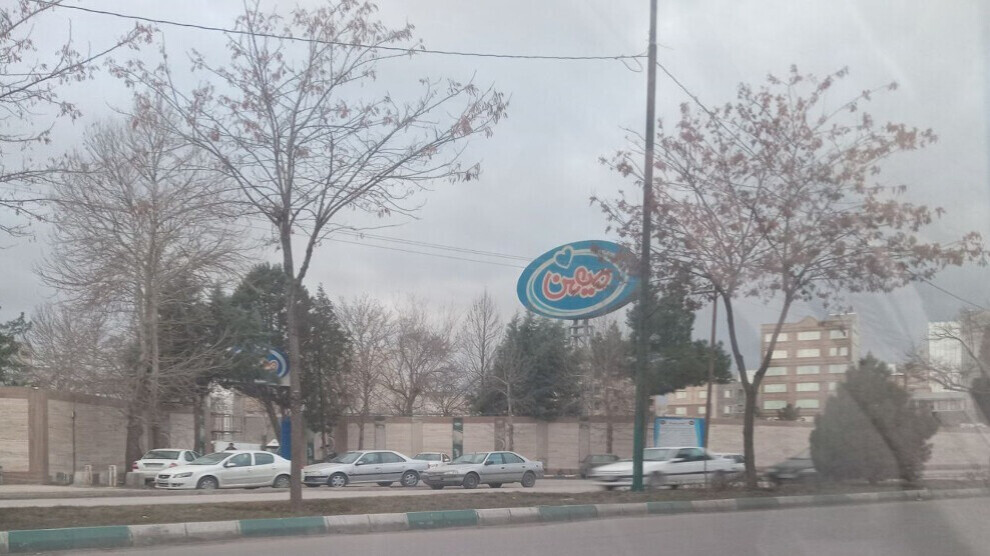
In Kermanshah, local news sources and human rights activists have managed to document the identities of many protesters who were killed, with their numbers reaching into the hundreds. At the same time, many families are still searching for the bodies of their missing loved ones. Eyewitnesses in Kermanshah reported that numerous bodies were transferred to the morgue of the Mihan Factory located on Zan Street and Taq-e Bostan Street. This clearly indicates that the number of those killed and missing as a result of the protests is far higher than official figures claim.
(Sara Q.), an eyewitness whose apartment overlooks the Mihan Factory complex, said regarding the evacuation of protesters’ bodies:
“When the protests reached their peak, the municipality cut off electricity to the streets, and Zan Garden Street became completely dark. Around 1 a.m., I noticed repeated vehicle movement around the factory complex. Gradually, I realized that what was piled up in the factory yard was not raw materials, but the bodies of people who had lost their lives in Kermanshah.”
The War of Statistics
Reports indicate that state-affiliated media sources recently estimated the death toll at between 3,000 and 5,000, while human rights organizations estimate the number of victims to be in the tens of thousands. These organizations have succeeded in documenting the identities of many of the victims. In contrast, the authorities described these figures as “false and fabricated” and announced that the president had ordered the publication of the names of all those killed—figures that will undoubtedly undergo numerous alterations in the authorities’ favor.
What Happened at the Morgue
(Samin E.), a soldier who recently completed his military service, said:
“My colleague told me he was sent with several other soldiers to Kozaran during the peak days of the protests to be stationed at a nearby morgue. He said bodies were constantly being unloaded and that he saw more than one hundred bodies in a single night—most of them young people under the age of twenty. The supervisors ordered them to separate the bodies and search everyone’s pockets to collect their phones and valuables separately.”
Killings Beyond Official Statistics
These two testimonies demonstrate that the killing of protesters in Kermanshah far exceeds official statistics, and that transferring bodies at night indicates the authorities’ relentless efforts to conceal the truth of these crimes. If these testimonies are taken as representative of what is happening in other regions of the country, then the scale of these massacres is undoubtedly far greater than currently available information suggests, and can be considered a form of genocide.
Pressure on Families
(Marjan N.), a civil activist in Kermanshah, said:
“Several weeks have passed since the protests began in Iran. During this time, in addition to protesters killed in the streets, the authorities have also killed many people under torture, and there are certainly other detainees awaiting death. The Iranian regime claims it will soon publish casualty statistics, but falsifying statistics is a common practice in the Islamic Republic. It has demanded ransom in exchange for handing over protesters’ bodies to their families, and in many cases has pressured families to declare that their killed relatives were members of the Basij forces. Therefore, the statistics the authorities claim to publish will undoubtedly be a collection of fabricated and distorted facts rewritten in their favor, aiming to portray a high percentage of the dead as Basij and military personnel. Thus, the statistics they claim to release for the sake of transparency are rife with manipulation, designed to present the recent protests in international forums as mere riots (thereby legitimizing the massacre of protesters).”
She added that the authorities’ actions—including extracting forced confessions, compelling families of the dead to accept the absence of truth, looting the belongings of killed protesters, sexually assaulting female protesters, and many other examples—demonstrate that the brutal repression exercised against the people goes beyond what can be imagined.
Beatings by Security Forces
(Mitra R.), a 38-year-old woman who was beaten by security forces, said:
“My husband and I were with several people when we noticed a plainclothes officer detaining a boy about 13 years old and torturing him with punches and kicks. I shouted, ‘Leave him alone, he’s just a child.’ At that moment, the officer approached me with several others. In a state of shock, he grabbed my hair with his fist and struck my chest several times violently. My husband, who tried to protect me, was also beaten. There were about four young men who beat me with all their strength, repeatedly shouting obscene insults, saying I had come to prostitute myself and that they would deal with me that night. After beating us, they left us covered in blood and told my husband, ‘You’re free, but we’re taking your wife.’ Finally, after we were bloodied and humiliated, they released me, and we managed to reach a safe place.”
This woman’s experience illustrates that the authorities committed far more killings than anyone could have imagined during the recent protests and tortured people in the most brutal ways, relying on laws they themselves created.
Terror as a Deliberate Tool to Dismantle Society
Analyzing what happened to this woman, Marjan N. said:
“Throughout history, suffocation and terror have been among the primary tools for suppressing the will of the people. During these protests, tens of thousands of protesters were killed, and hundreds of times more were injured. Videos showing long rows of bodies in morgues and similar scenes all stem from the regime’s strategy of imposing terror. But the authorities also rely on another tool to influence the people’s will: torturing protesters instead of imprisoning them. In this way, the regime humiliates and brutally tortures people, then allows them to return to society to plant terrified eyewitnesses and storytellers within the community, spreading even more fear—because the Iranian regime lacks the mercy to release anyone without first torturing them.”
Internet Shutdown and Covering Up the Catastrophe
These brief accounts show that an unprecedented massacre in Iran’s history has begun, while internet shutdowns have been used as a tactic by the authorities to carry out their brutal massacres in silence. It can be said that the depth of these tragedies goes far beyond what is published in the news. These massacres committed by the authorities are, in fact, a form of genocide that continues to this day, more than five weeks later.
Global Silence and the Resistance of the People
Ultimately, these protests and the ensuing repression reveal not only grave human rights violations, but also the silence of international bodies and human rights defenders in the face of what can be described as one of the most horrific forms of genocide. Despite all these obstacles, the people’s determination to confront injustice is commendable. Although the authorities attempt to silence protesters through violence and repression, the will and resolve of the people transcend the boundaries imposed by oppression. History has proven that repression cannot crush the will of a nation, and the hope of ending protests through force is nothing more than a hollow illusion.