
Kermanshah Market After the Strike... Pressures, Closures, and a Psychological War Targeting Merchants
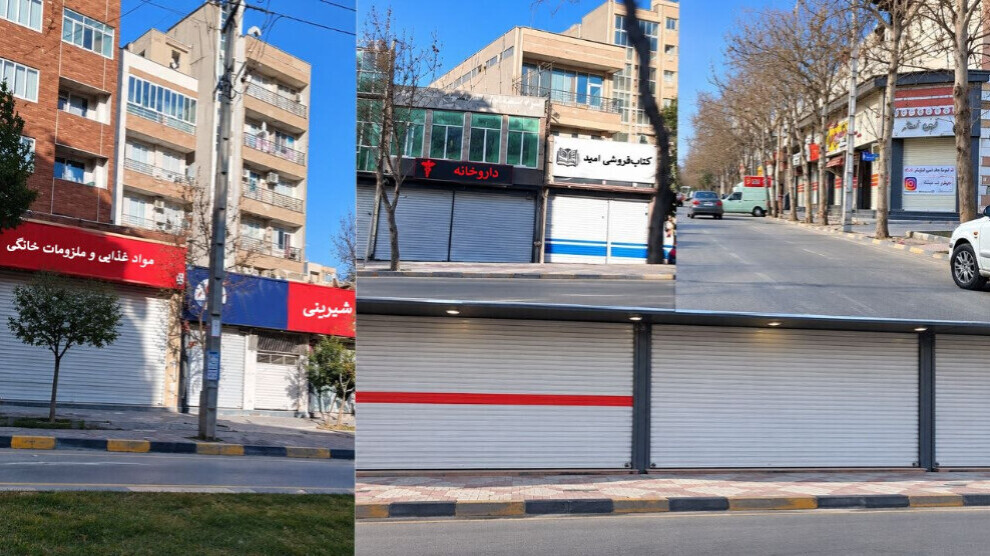
Kermanshah merchants faced warnings and fines closing their shops after joining the mid-September strike marking the uprising anniversary, accusing authorities of programmed vindicitive pressure over their protest stance.
SARA POURKHAZRI
KARMANSHAH_More than two weeks have passed since the fourth anniversary of the popular uprising in Iran and the killing of the young Kurdish woman Jina Amini by the Iranian authorities, an event that remains a deep wound in the collective memory of the peopte, and whose memory is revived every year in different forms of civil resistance.
On the anniversary of the popular uprising in Iran, which falls on the fifteenth of September, merchants and market owners issued a call for a gereral strike to revive the memory of the killing of the young woman Jina Amini and to renew their position rejecting the Islamic Republic. The call received widespread support from markets in various cities, and showed once again that the popular uprising is still present in society.
In mid-September, markets in many Kurdish areas were completely closed, and in some places partially closed. Despite the government's attempts to prevent the expanison of this movemnt, the merchants insisted on their deciosn, refuing to submit to official threats and pressures.Several calls had been issued days before the boycott, and authorities in return tried to neutralize them by pressuring union heads, threatening them with closure and canceling their commerecial licenses.
A few days after the end of the protest, local reports in Kermanshah indicated the start of a forced closure process for the shope that participated in it . In recent days, many business owners received written warnings, whose apparnt content relates to union violations, but they believe they are in fact a retalitory reaction to the mid-month strike. According to them, the presence of security forces in the market has increased remarkably since that date, as officers impose hefty fines and threaten to close shops for flimsy reasons, starting from hijab regulations to simple organizational matters.
Stamps and Fines: Pressure on Business Owners
(Thuria B,),the owner of a grocery store in Kermanshah city who participated in the strike, says: "During the past week, at least four tax officials visited my store, and without any specific explanation they contented themselves with saying that several men frequented my store and complained about my way of dress as a female seller, and claimed that I sell goods at double the price, even though most of my customers are women, and a man rarely enters the store."
For her part, journalist (Mahboubeh S.) says: "The government's attempt to close Kermanshah's shops and impose hefty fines on them during the recent strikes, under various pretexts, aims at only one goal: spreading panic among business owners, and sending a threatening message that any support for the protests will be met with severe repression."
Spreading Rumors to Undermine Trust in the Market
But pressure on merchants is not limited to fines and stamps, as some merchants say that tax officials, when they visit, level accusations against them based on complaints from their colleagues or neighboring shops, ranging between overpricing and selling at low prices, to closing roads. According to them, these accusations were in some cases directed without presenting any documents or identifying the complainant, which increased distrust among merchants.
(Suhaila R.), the owner of a cosmetics shop, says: "My shop is located on the corner of Kermanshah Street. After the strikes, security elements asked me to hand over the surveillance camera recordings. I had deliberately turned off the camera, so I said it was broken and was only for decoration. The officers immediately told me that the owners of other shops reported that I had asked them to turn off their cameras. About five days later, a number of officers closed my shop on charges of selling smuggled goods, even though all my goods are Iranian-made, and I even kept the purchase invoices."
Multi-Level Pressures
A series of recent events and stories shows that government pressure on the business sector is not limited to fines, closures, and direct threats, but is part of a broader strategy aimed at creating individual pressures and targeting collective cohesion. Through using multi-level methods, from union threats to spreading rumors and sowing doubts, the government seeks to separate the business sector from one another and turn its unity into division.
This behavior aims to prevent further strikes. The government realizes that the market, as one of the fundamental pillars of the economy and society, can become a launching point for a wide-scale uprising in times of crisis. The experience of recent years has shown that the first blow directed at the government often comes from the market, where the coordinated closure of shops is not only a strong political message but disrupts daily economic flow and increases the political cost for the government. For this reason, the recent pressures should be considered part of a preventive policy that seeks to intimidate business owners and plant doubts in them to limit the possibility of wide-scale strikes in future crises. But previous experiences have shown that these pressures did not prevent business owners from striking.