
"Jineology" Discusses the Impact of Algorithms and Beauty Standards on Women's Self-Perception
Egypt's Jineology Center seminar highlighted digital platform algorithms' danger in entrenching violence against women, distorting their visual identity, stressing self-acceptance and comprehensive societal confrontation.
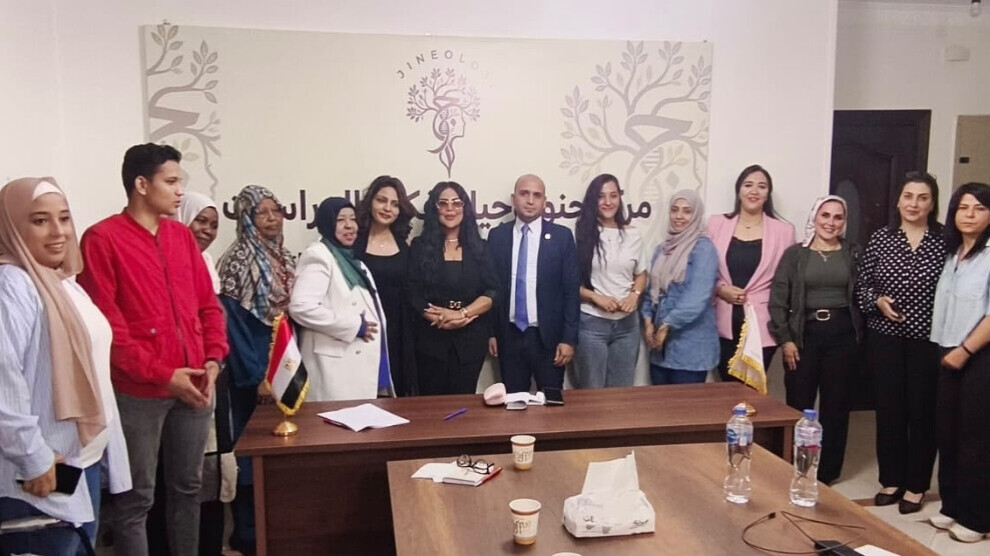
EGYPT– Participants in the seminar discussed the impact of virtual beauty standards and consumer systems in exerting acute psychological and economic pressures on women, amid calls to enhance critical awareness and not link a woman's value or social status to her external beauty alone, but to her practical and scientific capabilities and personality.
The Jineology Center for Thought and Studies in Egypt organized a seminar titled "Platform Algorithms and the Violence of Beauty Standards.. A Study in Symbolic Violence and Transformations of Women's Visual Identity," moderated by Libyan media professional Afaf Al-Farjani, with the attendance of a number of those interested in media, social, and women's issues.
The seminar discussed the impact of digital platform algorithms and beauty standards circulating through social media on women's self-image, in light of the widespread dissemination of digital beautification tools, ideal images, and content that reproduces specific models of appearance, and the psychological, social, and economic pressures associated with that.
"Self-Acceptance Begins with Reconciliation with Existence"
Dr. Dina Mohsen, president of the Jineology Center for Thought and Studies in Egypt, believes that addressing women's issues should not be limited to academic or specialized aspects, but needs a philosophical approach that explains the roots of phenomena and their human dimensions. She explained that every science has its philosophy that cannot be separated from its subject, whether it relates to media, literature, or medicine.
She linked self-acceptance to the philosophy of existence, noting that humanity's historical struggle with mortality and its desire for immortality has moved through the digital environment to a new level; it has often turned into psychological and moral violence directed against women through defamation and blackmail. She warned of the danger of this violence, which may push victims toward isolation and psychological collapse, or even thinking about suicide due to the violent pressures.
She stressed the necessity of stopping dealing with these assaults as passing electronic disputes, and confronting them as an urgent humanitarian and social issue.
"Beauty Standards Impose New Questions About Women's Image"
Libyan media professional Afaf Al-Farjani said, through her moderation of the session, that the seminar's topic is linked to women's experiences under different circumstances, whether they are housewives, workers, or academics, because it transcends the theoretical framework to the details of daily life and a woman's relationship with her self-image. She stressed the importance of opening the field to discuss and analyze the research constructively, allowing questions to be raised about the beauty standards promoted by digital platforms and their impact on women, while taking into account the positive and negative aspects of the digital environment.

"Beauty Economics Reveals New Dimensions of Platform Influence"
Nujin Youssef, executive director of the Jineology Center for Thought and Studies, confirmed that understanding the impact of digital platforms on women's image requires looking at the economic and cultural dimensions that contribute to shaping beauty standards, and not dealing with the issue as related to external appearance only.
She explained that the concept of "beauty economics" opens the field to discuss the relationship between contemporary capitalism and digital platforms, and how beauty has become linked to a consumer system that promotes products and services that benefit from the spread of specific models of appearance.
Digital Punishment and Women's Social Exclusion
The seminar examined the employment of women's image and body in advertisements to attract consumer attention. Participants explained that the repetition of content and the use of influencers contribute to shaping individuals' aspirations and choices, even if they do not directly adopt the advertising message.
The attendees also discussed the concept of "digital punishment" presented by Dr. Dina Mohsen, explaining it as a form of exclusion and social pressure that women are subjected to when their natural appearance contradicts prevailing virtual standards. They warned of the psychological and social consequences of these standards, and the pressures they impose on women to reshape their image, which may negatively affect their opportunities for acceptance and professional and social participation.
The theory of the "spiral of silence" was also raised to explain some individuals' fear of expressing opinions contrary to the prevailing view for fear of rejection or exclusion, opening the field to discuss the impact of social pressure in shaping attitudes toward appearance and beauty standards.
The Family and Societal Institutions in the Face of Digital Pressures
Discussions extended to the impact of intensive use of social media on family relations and direct interaction between individuals, with ideas proposed to enhance communication within the family, reduce screen time, and allocate times for joint activities and dialogue away from phones and digital platforms.
Participants recommended the necessity of combining the efforts of the family, educational, religious, and youth institutions to enhance women's self-confidence and acceptance of difference, focusing on their scientific and practical value instead of their external appearance.
The seminar also noted that digital "trends" that impose specific lifestyles and appearances to redefine success are a complex phenomenon in which psychological, cultural, and economic factors intertwine, and cannot be reduced to the technological aspect alone.
The seminar concluded by emphasizing the importance of awareness and critical engagement with digital content and expanding the discussion about beauty standards; ensuring support for self-acceptance and limiting exclusion and discrimination based on appearance.