
Jinda Shankali: Democratic Integration Is Not Surrender but Recognition of the Yazidi Community's Will
YJŞ leader Jinda Shankali said the agreement isn't abandoning gains or surrender, but opens Yazidis' participation in managing their affairs and defending their areas, urging displaced people to return home.
DEMSAL WELAT
SHINGAL_ The agreement announcd on 26 October 2026 between the shingal Protection Units and the Iraqi government is considered the beginning of a new phase of dialogue and coordination between the concerned parties, with the aim of achieving security and stability, entrenching coexistence and equality and ensuring the non-recurrence of the tragedies and violations to which the Yazidis were subjected.
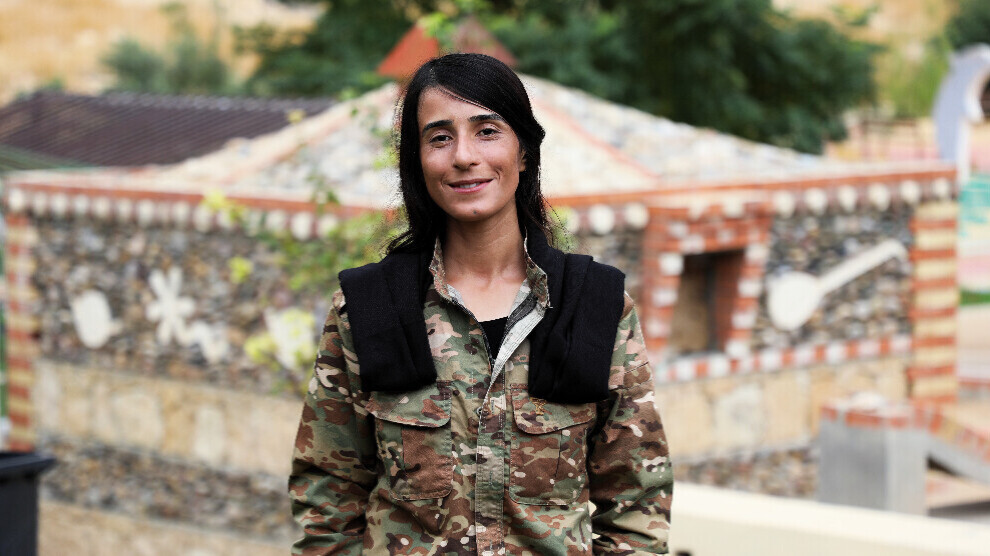
In this context, the leader in the Shingal Women's Protection Units, Jinda Shankali, spoke in a special interview with our agency about the integration process, confirming that the agreement reached with the Iraqi government on 26 October is the fruit of the sacrifices of the martyrs and the efforts made over the course of years. She noted that the achievement of this agreement came after a long path of negotiations and discussions to reach a suitable formula.
The Resilience of the Yazidi Community in the Face of Genocide
She added that the Yazidi and Iraqi communities showed great resilience during the previous phases, confirming that the Yazidis stood alongside the sons of the Iraqi people in the face of the enemy, and fought together the battles of resistance with courage, and that what has been achieved today would not have seen the light without those sacrifices and shared positions.
She stressed that the agreement carries great importance, noting the resilience of the Yazidi community in the face of the genocide campaigns (the Firmans), and its ability to preserve its existence and identity despite the suffering it went through, which requires appreciating its experiences and its role in protecting its land.
Jinda Shankali addressed the reasons for choosing the site where the statement was read, explaining: "This historic statement was issued from Mount Amud (Amûd), located near Mount Chilmira (Çilmêra), which occupies a special place and great importance for us, as it is the place from which our resistance was launched. This journey was crowned with victory, and from this site we took a practical step toward democratic integration."
She added that choosing this mountain to issue the statement carries deep connotations, as it is a sacred mountain and a mountain of martyrs, and is considered the resting place of thousands of martyrs who ascended there. Dozens of children were killed, and thousands of our people lost their lives as a result of thirst and hunger. Therefore, this mountain was the most suitable place to issue such a historic statement."
She stressed that "mountains represent everything to us; in them we discovered our free will. Everything we have achieved is the fruit of the efforts of leader Abdullah Öcalan. Thanks to the strength we drew from him and from his fighters, we were able to organize ourselves in our mountains. From this standpoint, we, the Shingal Women's Units (YJŞ) and the Shingal Resistance Units (YBŞ), made our decisions with our independent will from our mountains, and from there we took over the management of our defense. We will continue to do everything necessary to protect our people, and we will act only in what serves their interests."
"Integration Is Not Surrender, but a Political Agreement"
Addressing the nature of the integration process, she confirmed that the discussions with the Iraqi side are still ongoing, noting that important meetings were held with its leadership, which resulted in the issuance of a statement in this regard.
Jinda Shankali rejected describing the agreement as "surrender," considering that this description does not reflect the reality of what is happening, explaining that the matter relates to a political agreement and not a surrender, and that what the Yazidi community seeks is integration within the framework of the Iraqi state while preserving its will and specificity.
She confirmed that the Yazidi community today participates officially in defending its land within the framework of the Iraqi state, stressing the importance of recognizing the role of Yazidi women in this field, especially since Yazidi women participated in fighting against ISIS.
She explained that the Yazidi community needs to defend itself, and that the steps taken are based on the principle of mutual empowerment, considering the Yazidis as part of Iraq's citizens, and they have their own rights within the framework of the state.
A Call to Return
She also stressed the necessity of facilitating the return of members of the Yazidi community who are still residing in camps, especially in southern Iraq, to their original areas, confirming that Shingal has become safe, and that its people are working in cooperation with the Iraqi army to protect the region and its stability.
The leader Jinda Shankali concluded her interview by saying: "From 2014 until today, the blood of our martyrs has flowed on this land, and today we renew the pledge of loyalty to them, recalling their sacrifices and bowing in reverence to their souls. We also recall all the martyrs who struggled and were martyred in Iraq for a free land, and we extend a salute of reverence and appreciation to their mothers."