
Jin Jiyan Azadî Revolution Restores Iranian National Unity
In recent decades, demands for democracy, self-governance and social diversity have grown in Iran, opposing a centralized nation-state, with women leading the movement and asserting that their liberation is essential to the freedom of society.
Tuwar Karamshan
News Center – Democracy means the self-governance of society. For thousands of years, Iran's geography has been characterized by administrative systems based on democratic confederalism. In this system, every tribe and community participated in managing the affairs of the country through representation. No group had supremacy over another, and democratic coexistence was one of the fundamental principles of social life in this land. Democracy has no meaning except within the context of respecting social diversity and pluralism. The geographical, cultural, religious, linguistic, and national diversity and richness not only necessitate centralization but also reflect the democratic nature of this land.
Iran is the cradle of civilization and humanity, and living there while preserving its existence is an inherent right for every individual and people. There is no fundamental difference between the Iranian peoples, nor can there be. The peoples of Iran have lived side by side for centuries, without any linguistic, religious, or cultural superiority over another, and without any people being defined as the center while others are marginalized, or forced to submit to the center. Imposing a centralized, authoritarian system in such a land does not meet the needs of society, because this type of rule is in stark contradiction to its social nature.
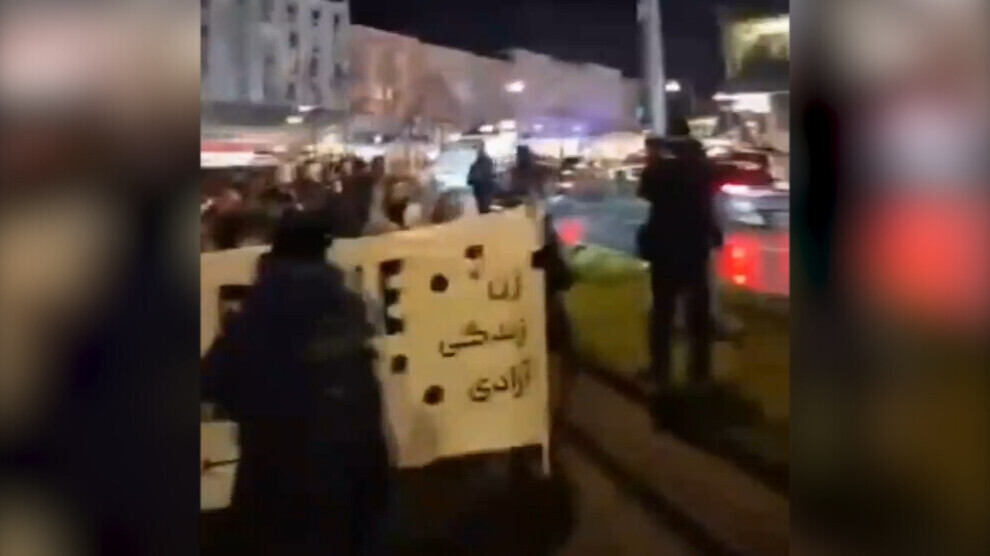
For over two thousand years, in various periods and forms, attempts have been made to govern Iranian society according to the nation-state model. However, this model has consistently failed to meet the true needs of society. Therefore, society, particularly women, has resisted this mentality and demanded change at every historical juncture. In 2022, a women's revolution, transcending borders and led by women, erupted under the slogan "Jin Jiyan Azadî" (Women Life Freedom). This slogan, originating in eastern Kurdistan, resonated in Tehran, Balochistan, and Tabriz. The unity of the Iranian people instilled deep fear in the ruling circles. Today, after this revolution has borne fruit, it has also begun in Tehran, and its effects have been felt in Ilam and Kermanshah. Despite attempts by the government and monarchist movements to portray the demands of the Kurdish people as separatist, the solidarity and unity of the Iranian people have thwarted this unethical policy and rendered it futile.
In all the uprisings and revolutions that Iran has witnessed, women have always been at the forefront of the struggle. This is due to the inherently sexist and nationalist policies of the nation-state, where the oppression and hatred of women were among its primary priorities. For this reason, women consciously became the vanguard of these uprisings and revolutions. They fully understand that the root of many social crises, including poverty, corruption, moral and cultural crises, and identity crises, lies in the subjugation and oppression of women. They believe that unless women are liberated, society will not achieve true freedom. The slogan "Jin Jiyan Azadî" is not merely a slogan; it is a reflection of this profound social reality.
Many opposition movements and governmental and non-governmental factions, both inside and outside the country, have attempted to reduce this revolution to a mere issue of freedom of dress, diverting it from its fundamental course. While the issue of women's dress in Iran is indeed a serious problem through which women's freedom of will and thought are suppressed, the presence of women in various forms of dress, including those wearing the hijab, in the uprisings of 2022 and this year demonstrates that women's issues extend far beyond the moral definitions imposed by the Islamic Republic.
The revolution that began at the end of last December is irreversible. The Islamic Republic of Iran has transformed into a machine of oppression and murder against the people, especially women, and has once again revealed its violent fascist face to the Iranian people and to global public opinion through a massacre that claimed the lives of hundreds, including children. Cutting off the internet for several days is a clear attempt to silence the voice of society demanding freedom. However, this regime will always find a pretext for killing and repression. The wealthy classes may suffer less, but other segments of society, whether present in the streets or not, have faced and will continue to face various forms of oppression, poverty, imprisonment, torture, and death. Stopping the Jin Jiyan Azadî revolution means a wider and deeper death. Meanwhile, society faces a clear choice: a free life or a gradual death. Death for freedom and honor is far more precious than living in humiliation and oppression. Therefore, we must not allow this revolution to be extinguished or to collapse.
There is no doubt that the heroic Iranian people and their courageous women, from Tehran and Karaj to Ilam and Kermanshah, and from Balochistan and Ahvaz to Tabriz and Urmia, have paid a heavy price in recent days. Now, it is incumbent upon everyone to cherish the memory of those who sacrificed their lives for freedom and to protect their suffering and sacrifices. We will stand with our people until freedom is achieved. The freedom-loving Iranian people, in recognition of the sacrifices they have made with their blood and souls, deserve to take control of their own affairs. Those who do not understand the pain and suffering of the Iranian people should not be allowed to claim to represent them from abroad. True representatives must emerge from the heart of society, and they must be aware, competent, and independent so that they can protect the people's suffering and fulfill their demands.
The mindset governing the Islamic Republic and monarchist movements is based on a model of the nation-state and a centralized army, with slogans of one religion, one language, and one flag. However, Iran's geography is rich in diversity and pluralism, making it impossible to govern through centralized administration. Ignoring this diversity will pave the way for future crises, and even uprisings and revolutions, because peoples who have long suffered marginalization will no longer tolerate a repeat of this situation. Iranian women, with the courage they have demonstrated throughout history, remain capable today, through the protection of their rights, of continuing the struggle for a free life and a popular government with a feminist perspective.
In continuing this revolution, collective cooperation and organization in committees and in a unified manner in the streets is an indispensable necessity. Caution against the influence of opportunistic elements and spies, and confronting slogans and trends that seek to incite sedition and reproduce the discourse of monarchy, is of paramount importance. In particular, vigilance must be maintained against divisive policies between the center and peripheral regions such as Balochistan and Kurdistan. Just as the women and people of the Jin Jiyan Azadî revolution demonstrated their desire to regain their freedom and rights without accepting any national, religious, or cultural discrimination, today, under the leadership of women and by continuing this slogan, these immoral policies can be neutralized. Tehran, Tabriz, Balochistan, Khuzestan, and Kurdistan will only attain their freedom together, because freedom will not be achieved by only a part of the people demanding it. There is no doubt that a free life is the right of all the peoples of Iran, and victory is near.