
“Jin Jiyan Azadî” — A Philosophy Turned Symbol of Freedom and Dignity
Women in East Kurdistan and Iran continue to courageously resist state authority, becoming symbols of struggle for freedom, equality, and unity inspired by the philosophy of “Jin Jiyan Azadî” (Woman, Life, Freedom).
Helen Ahmed
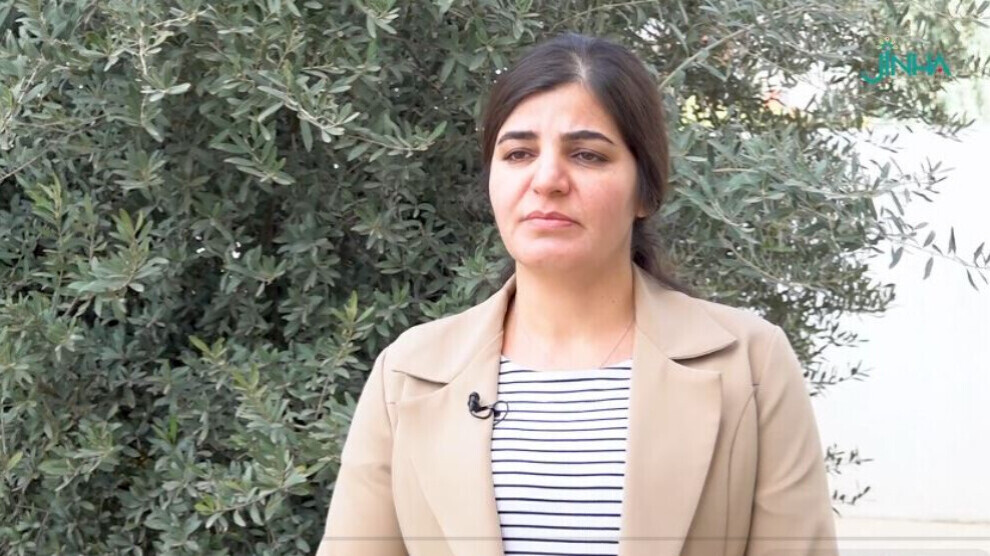
Sulaymaniyah — Kulan Fahim, a member of the council of the Kurdistan Free Life Party (PJAK), affirmed that achieving women’s rights and gains in the region is possible through the philosophy of “Jin Jiyan Azadî” and women’s unity. She stressed that March 8 should be an occasion to mobilize forces and confront patriarchal mentality across all spheres through a radical struggle that consolidates women’s presence and transformative role.
Across the world, women face systems rooted in dictatorship and domination. In East Kurdistan and Iran, women are engaged in a brave confrontation against such authority, rejecting compulsory hijab laws and becoming symbols of resistance for freedom, equality, and unity under the banner of “Jin Jiyan Azadî.”
Despite authorities using women’s struggle for freedom and expression as a pretext for arrests, women inside prisons continue their resistance with the same spirit. Their unified slogan echoes from behind bars across East Kurdistan and Iran.
Women’s resistance in East Kurdistan and Iran has secured a firm place in history. Policies enforcing compulsory hijab and other forms of pressure have intensified women’s struggle for rights. Since the era of Ruhollah Khomeini, women have waged an ongoing battle to secure their freedoms in all aspects of social life, organizing protests, demonstrations, and civic actions over decades. Today, this resistance continues with greater momentum, grounded in the philosophy of “Jin Jiyan Azadî,” now a symbol of women’s will for freedom and dignity.
“Women Have Sparked a Revolution in Intellectual and Physical Freedom, Inside and Outside Prisons”
On the eve of International Women’s Day, Kulan Fahim stated that the occasion comes amid the Iranian regime’s continued policy of restricting free women and free thought. She noted that authorities directly target women—especially Kurdish women—through arrests aimed at limiting their societal role and activism.
She explained that imprisoned women face multiple forms of physical and psychological violence intended to break their will and force them to abandon their legitimate demands. Simply holding onto one’s identity, culture, or expressing a desire for community freedom can lead to detention. Despite systematic violations in prisons, the idea of women’s freedom remains deeply rooted in East Kurdistan and Iran, and women persist in defending it steadfastly.
She added that issues of women’s freedom and leadership have become central to public discourse, and that women’s resistance to Iranian laws has drawn broad attention. Securing women’s rights, she emphasized, requires their active participation in confronting the regime.
The spread of the philosophy of “Woman, Life, Freedom” in East Kurdistan has helped transform racist and misogynistic mentalities, adopting a firm stance against authoritarian practices targeting women’s rights. As a result, women in East Kurdistan, Iran, and the broader Middle East have moved to the forefront of social and political movements, confronting dictatorial systems empowered by the liberatory meaning of “Jin Jiyan Azadî.”
“Women’s Resistance to Authority Is a Significant Stand”
Kulan Fahim highlighted the importance of women’s positions toward the regime. As March 8 approaches, she said, the perspective of the peoples of East Kurdistan and Iran toward women’s freedom carries deep significance. This day can serve as a catalyst to mobilize strength against patriarchal mentality in every field through a radical struggle.
Women’s resistance to authority is now seen as crucial. To obtain their rights, women are playing active roles in culture, art, language, and politics in East Kurdistan, continuing their struggle under the women’s banner.
She concluded by affirming that women persist in their struggle inside prisons under the slogan “Jin Jiyan Azadî.” On March 8 this year, “we will strive to highlight our achievements and rights under the women’s banner, to make this year the year of women’s freedom.”