
Italian Philosopher Calls for the Success of the Peace Process, Describing It as a Historic Step
Italian philosopher Donatella Di Cesare expressed support for the peace and democratic society process, describing recent steps toward ending the conflict as a historic opportunity to open a new chapter built on dialogue and peaceful coexistence.
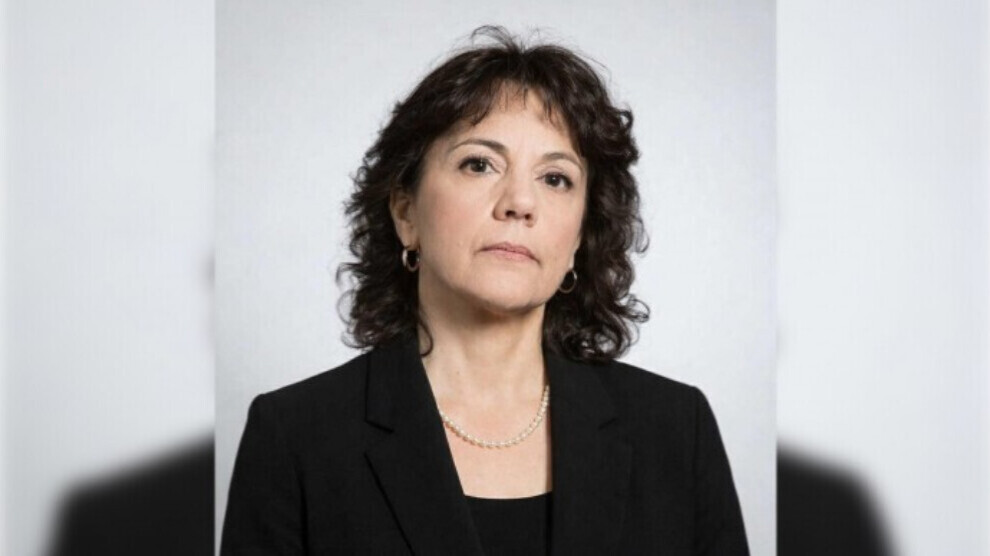
News Center— The peace and democratic society process is drawing growing attention within international intellectual and political circles, as academic and intellectual figures announce their support for the steps linked to ending the conflict and seeking political solutions.
In this context, Italian philosopher and professor of political philosophy Donatella Di Cesare affirmed her support for the peace and democratic society process, which began following the call issued by leader Abdullah Öcalan on February 27, 2025.
She considered this initiative, alongside the PKK's decision to dissolve its organizational structure, to represent a historic milestone capable of opening new horizons toward ending the conflict and establishing dialogue between the Kurdish and Turkish peoples.
Di Cesare's position came in a letter addressed to the Mezopotamya Agency, in which she welcomed the call issued by leader Öcalan and the PKK's decision to end its organizational structure, describing the decision as "difficult" and reflecting a significant degree of political courage and a genuine will to seek peaceful solutions to protracted conflicts.
Di Cesare affirmed that she has followed developments related to the Kurdish issue for many years, noting that she supports the Kurdish people's right to freely determine their own future, and considers the recent steps, coming after decades of conflict, to represent a historic shift capable of establishing a new phase based on dialogue rather than confrontation.
She stressed that the destruction of weapons should not be interpreted as surrender, but rather as a political initiative that simultaneously places responsibilities on all parties, requiring mutual steps to build trust and ensure the success of the peace process.
She expressed her conviction that the success of this path would bring significant gains for both the Kurdish and Turkish peoples, affirming that broad segments of both societies look forward to ending decades of conflict and opening a new chapter based on mutual recognition, dialogue, and peaceful coexistence.
She added that resolving internal conflicts through political means represents a model that could be drawn upon in other parts of the world, particularly amid rising military tensions and armed conflicts at the international level.
A Message to Europe
Donatella Di Cesare believes Europe has become less capable of fulfilling its historic role in promoting the values of peace and coexistence among peoples, expressing hope that the peace and democratic society process could serve as a positive example reaffirming the importance of political solutions in addressing conflicts.
She explained that the desire to live together in peace has become increasingly clear among peoples, particularly among women and young people, who look forward to a future built on dialogue and understanding rather than violence, expressing her wish that this process be crowned with success and achieve tangible results on the ground.
An Academic and Intellectual Career
Donatella Di Cesare is among the most prominent contemporary Italian philosophers, born in 1956, and has served for years as a professor of philosophy at Sapienza University in the Italian capital, Rome.
She has earned international academic standing through her research in political philosophy, ethics, hermeneutics, migration, sovereignty, antisemitism, and contemporary European thought, and is known for her studies on the works of several of the most prominent 20th-century philosophers, including Mart’in Heidegger, Hannah Arendt, and Emmanuel Levinas.
Donatella Di Cesare has published a large number of works addressing issues of migration, asylum, alienation, violence, and global politics, and has contributed through her writings and lectures to advancing discussions in contemporary political philosophy. Her works have been translated into numerous languages, and she has participated in international conferences and universities, making her one of the most prominent and influential intellectual voices in European and global academic circles.