
Ishtar Council: Organization Is the Only Way to Protect Women and Confront Rising Violence
The Ishtar Council warned of escalating violence and killings against women, affirming that organization and women's unity represent the most effective path to confronting rising violations and discrimination.
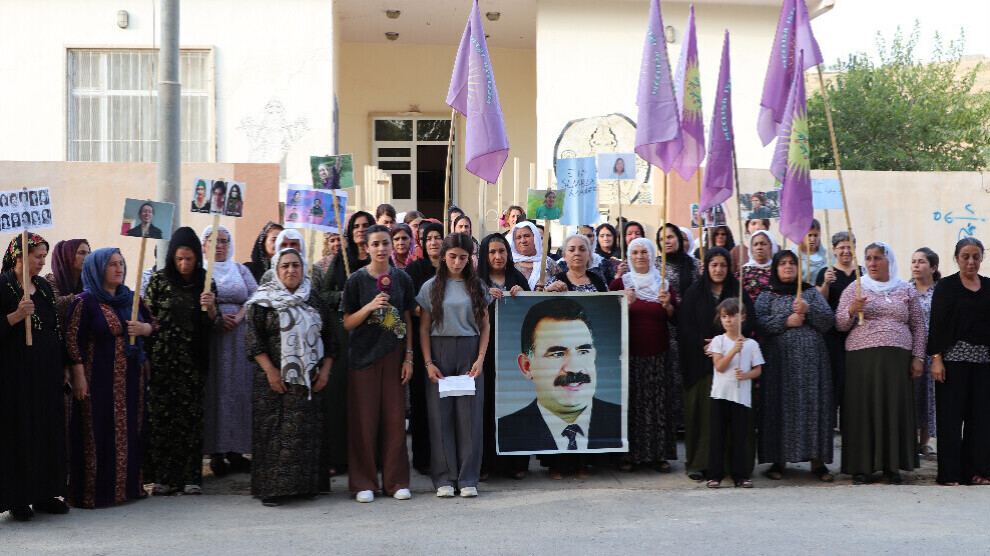
Makhmour — The Ishtar Council, at the Martyr Rustem Cudi Refugee Camp (Makhmour), affirmed that crimes of violence and killing targeting women are no longer isolated or individual incidents, but have become a reflection of the political crises, wars, and conflicts the region is experiencing.
This came in a statement issued by the council, with the participation of its members, in front of the council's headquarters in the camp today, Saturday, August 1, noting that recent months have seen a marked escalation in assaults and violations against women — whether through physical or psychological violence, or killings committed under the pretext of so-called "honor," or as a result of the dominance of the patriarchal mindset — affirming that these practices have become a deep social problem threatening women's lives and undermining their basic rights and freedoms.
The Ishtar Council affirmed that femicide rates, particularly in the Middle East region, have reached alarming levels, explaining that these crimes are directly linked to the worsening of political crises and the continuation of wars and their devastating effects on societies.
The statement added that the widening scope of armed conflicts entrenches a culture of violence within society and reinforces a patriarchal mindset that targets women, making women the first victims of the absence of security and stability, noting that the growing violence against women coincides with the emergence of initiatives and discussions related to establishing peace.
Continuing the Struggle Against Violence
The council considered that the continuation of assaults during this period is not incidental, but a direct result of policies that entrench a culture of war and violence within society.
In another part of the statement, the council held states responsible for providing an environment that allows crimes against women to continue through policies of impunity, noting that wars obstruct the achievement of justice and lend legitimacy to the use of violence, with repercussions on society's daily life.
The Ishtar Council believes that the absence of accountability and silence toward perpetrators, alongside weak laws and mechanisms to protect women, encourages perpetrators to continue committing violations without fear of punishment, affirming that addressing this phenomenon cannot be achieved through legal amendments alone, but requires a radical change in the prevailing patriarchal mindset.
The council stressed that women's freedom represents the foundation for building a free and democratic society, considering that any law that fails to guarantee this freedom loses its true value for society, noting that leader Abdullah Öcalan, amid wars and policies of occupation and genocide, proposed a path to peace based on considering women's freedom the essential pillar for addressing crises and ending various forms of injustice, affirming that the root solution to escalating violence and war lies in establishing the model of a democratic, ecological society built on women's freedom.
The Ishtar Council announced it will continue its struggle against all forms of violence and discrimination practiced against women, both within homes and in public spaces, affirming that escalating pressure will be met with escalating resistance and organization. It also stressed that women are not victims, but possess the capacity to rebuild society, and that women's organization and unity represent the greatest obstacle to the culture of war and the patriarchal mindset.
The council affirmed that the slogan "Jin Jiyan Azadî" has today become a global symbol of resistance, renewing its commitment to continuing work toward strengthening women's unity and solidarity until their goals are achieved.