Imaginaries of Collapse in Iran… Between Collective Illusions and Psycho-Political Reconstruction
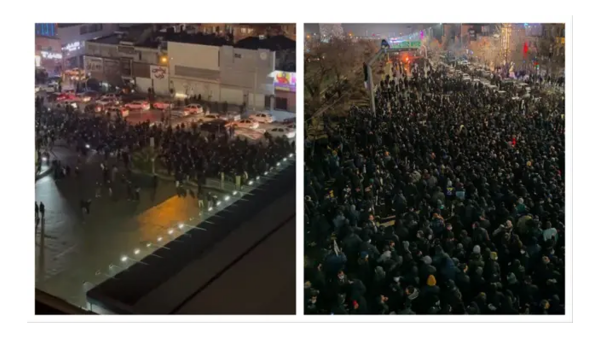
In Iran, collapse imaginaries blend hope, anger, and fear, shaping collective consciousness and social capital; history shows authoritarian change is complex, multifaceted, and long-term.
Kezi Kurdistani
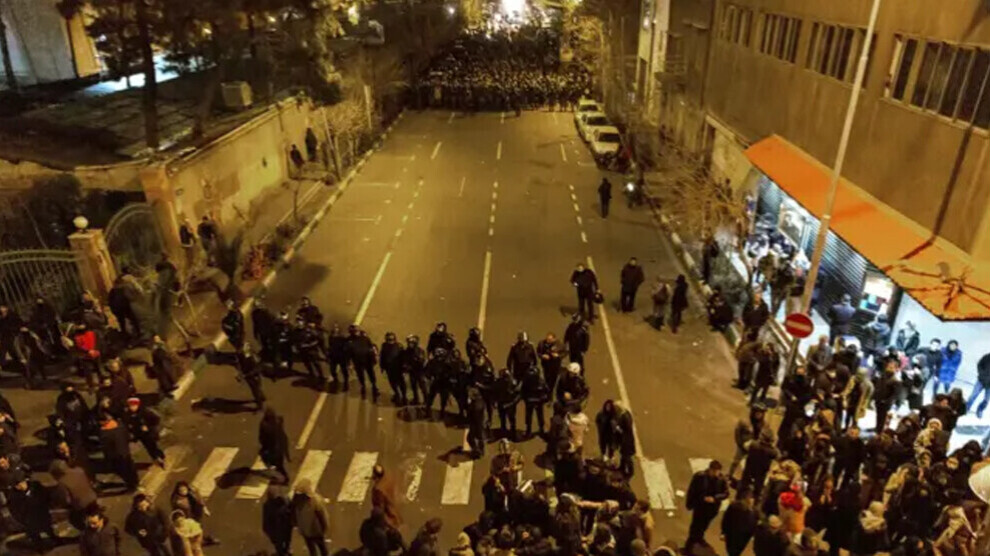
News Center – Throughout the twentieth century and the beginning of this century, the collapse of authoritarian regimes has been a recurring experience, albeit with varying intensity. From the destruction of Nazism and the fall of Hitler to the overthrow of Saddam Hussein and Muammar Gaddafi, each followed its own path and exacted a heavy cost. What these cases reveal as a pattern is not a linear or instantaneous process, but a multilayered, costly, and long-term one that simultaneously and in complex ways targets economic structures, security networks, the symbolic capital of power, and the fragmentation of elites.
The expectation of a miraculous collapse or an “overnight explosion” is often the product of the collective imagination or media discourse. From the perspective of psycho-political analysis, it can be as destructive as direct state repression. False hopes for rapid reconstruction, the absence of an alternative institutional plan, and identity confusion among different social strata all weaken social capital quickly and deepen psychological wounds.
Types of Collapse Imaginaries and Post-Collapse Scenarios
Several prominent images of collapse permeate public discourse in Iran today, each with its own narrative about the future, justice, and revenge.
The redemptive collapse (bitter or rapid):
The idea that the political system will suddenly disintegrate, with new leaders emerging or foreign intervention quickly filling the power vacuum. This image is comforting but historically rare. Even in cases where authoritarian governments were overthrown with foreign involvement, the power vacuum led to destructive violence and factional competition. This image may hinder institutional preparedness for reconstruction and, on the psychological level, carries a sense of “permanent humiliation” and an expectation of revenge, preventing reconstruction based on empathy.
The collapse accompanied by war (the violent explosion):
A scenario in which collapse coincides with civil war or regional aggression. Historical evidence shows that this comes at the cost of destroying civil structures and producing massive collective trauma. In this imaginary, freedom is achieved after a “bloody purification,” but from a psychoanalytic perspective, this logic of purification often reflects accumulated anger and a fantasy of reproducing a non-humiliated identity—one that can have long-term intergenerational effects.
Gradual collapse and reconstruction (slow democratic transition):
A constructive but long-term scenario in which institutions, laws, and social ties change gradually. This path requires the ability of social actors to endure the transitional period, develop civic capacities, and provide legal frameworks. From a psychoanalytic perspective, this path is the least likely to intensify trauma, but it requires collective resilience and symbolic capital that has been damaged during the period of repression.
Each of these images is saturated with hope, anger, revenge, and fear in Iran’s collective psychological space. From the perspective of group theory, group dynamics—such as transference mechanisms, large-group identification, and chosen memories—help explain how these images become entrenched and translated into action
The Psychoanalytic Roots of the Formation of Collapse Imaginaries
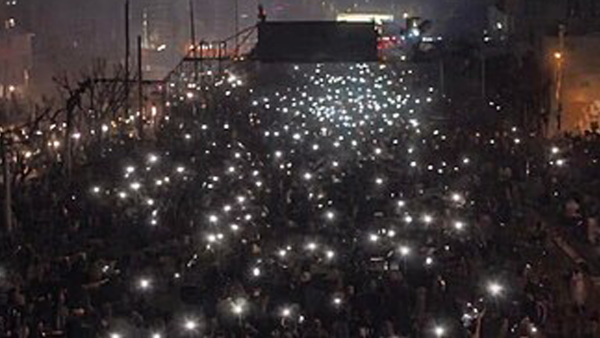
Why do these images flow into the collective consciousness? Several fundamental roots can be identified. Decades of repression, executions, exile, and the absence of social dialogue have left a set of symbolic and psychological wounds stored in the collective unconscious. This reservoir of trauma increases the capacity to produce revenge-driven or sacrificial narratives. Decolonial theories are essential tools in explaining this process, as structural violence facilitates the production of violent reactions in the collective imagination.
When legal, media, and civil institutions are destroyed or weakened, people quickly resort to simplistic illusions or hope for immediate ideal alternatives. From a psycho-political perspective, this lack of a reliable institutional horizon creates a symbolic vacuum that fuels illusions and prevents the formation of slow and realistic reconstruction processes.
Local and foreign media, political actors, and social networks actively participate in shaping expectations. Some projects have a political interest in stimulating the illusion of collapse; others deliberately inflate raw hopes to highlight specific political currents. This “manufacturing of hope” sometimes becomes a means of unifying alliances and at other times a way of weakening the opposition’s capacity.
The new generation, using digital tools, re-reads and reproduces the symbolic images of revolution, while the older generation carries memories of defeat and repression. This overlap of memories creates a complex psychological field that reduces the possibility of rational mediation and opens the way to excess.
The Conflict of Imaginaries and the Phantom War… Symbolic Struggles and Collective Consequences
The toxic climate resulting from divergent perceptions of collapse leads to sterile debates. On one side are those who preach a “rapid, liberating collapse,” and on the other those who advocate “wise caution.” From a psychoanalytic perspective, this conflict can be understood as a struggle between defense mechanisms: some resort to the illusion of total breakdown, others to revenge and purification, while groups avoid the anxiety of continuity by denying or humiliating the opponent. These mechanisms intensify identity conflicts, hatred, and impulsive politics.
The mechanism of “endless debate,” which fails to change structures, is—psycho-politically—an expression of anxiety. Instead of confronting their shortcomings and planning precisely, the population remains trapped in a cycle of imagination and accusation. This cycle not only wastes political capital but also reproduces social divisions and tensions between classes and ethnic groups, especially when the discourse of “foreign intervention” is presented as an inevitable solution. The experiences of Afghanistan, Iraq, and Libya have shown that foreign intervention can lead to the organic collapse of civil society and the creation of a violent vacuum. From a psychoanalytic perspective, this deepens the group’s lack of self-representation and creates new dependencies.
The Merchants of the Gap in Collapse Imaginaries
What is less explored—but necessary—is the psychoanalytic analysis of social divisions between classes and ethnicities, between insiders and the marginalized, and between supporters and opponents of the government. Every social division is a focal point for collective trauma or illusion that can be exploited by different actors. The key psycho-political question is: who benefits from the “imaginaries of collapse”? The answer is not simple. Some local political groups, opposition movements in exile, and regional or international actors each pursue their own uneven interests, which often do not align with the aspirations of the people.
Exiting this crisis requires a dual task: rebuilding civil and legal institutions in practical terms, while at the same time providing psychosocial support to address trauma and rebuild shared symbolic capital. From a psychoanalytic perspective, creating spaces for genuine dialogue, reconnecting fragmented narratives to a shared history, and creating symbols that strengthen bonds of empathy are prerequisites for political reconstruction. Resisting destructive illusions—as well as consciously resisting the temptation to rely on external solutions—is essential from the standpoint of political rationality and collective mental health.
Finally, the collapse of a totalitarian regime is not merely a political event; it is a historical phenomenon that creates a field for the psychological reconstruction of a people. Therefore, any political program for change must be accompanied by a psychosocial program—a difficult, charged, and long-term task, but the only way to free society from the trap of destructive illusions and to plant the seeds of a more just collective fabric.