
From the Right to Run for Office to Decision-Making… What is the Importance to Representing People with Special Needs in Parliament?
Between candidacy and decision-making positions, questions remain for women with special needs: Can electoral participation become lasting political presence, or does actual participation require removing obstacles?
HANAN HART
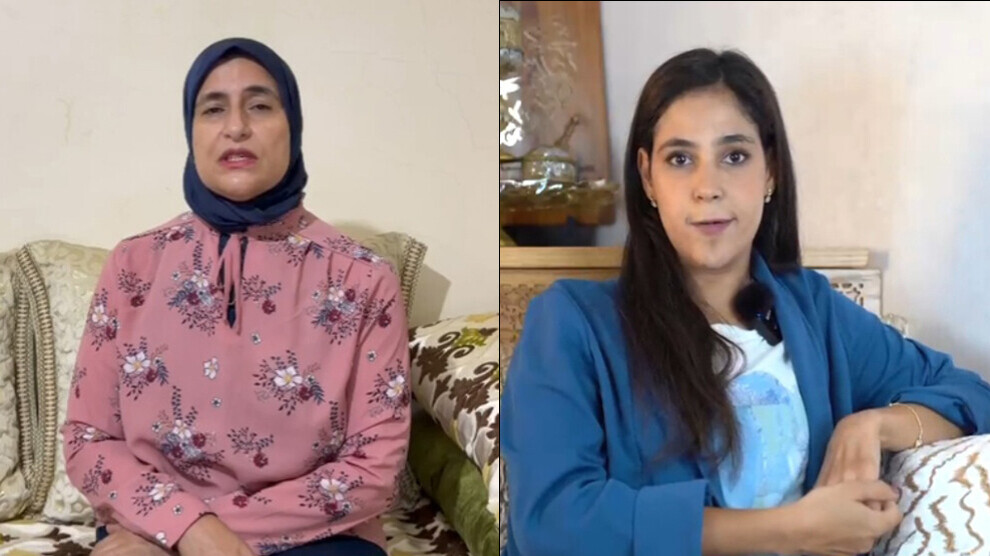
Morocco_With the launch of the Moroccan legislative elections today, Wednesday, 23 September, two women with special needs are competing from two paty positions and two different experiences, but they meet at one desire:moving from the position of demanding rights to the position of participating in the decisions that affect the lives of this group.
Their participation comes in elections in which the new electoral system introduced a financial incentive mechanism for paties to encourage the representation of people with special needs in the House of Representatives, alongside youth Moroccans abroad. Benefiting from this mechanism is also linked to placing male and female candidates from these groups in advanced positions on the lists, giving them greater chances of reaching the legislative institution.
From Rights Advocacy to Political Work
For Wafaa Al-Shataeen, who suffers from a motor disability and lives in the city of Salé, near the capital Rabat, the decision to run was not the product of a passing moment. After an academic path in physical sciences and environmental health, and work at the Ministry of Health and Social Protection, she chose to embark on the political experience with encouragement from her comrades in the Unified Socialist Party, which is running in the elections within the Left Alliance.
She says that her decision is also linked to her desire to move from "following up on conditions and criticizing them to contributing directly to decision-making." She adds that she closely follows the economic and social pressures facing citizens, from the rise in living costs and the decline in purchasing power to the difficulties of accessing a number of basic services. Wafaa Al-Shataeen believes that change is achieved through everyone's efforts, and that settling for following conditions from the position of a spectator is no longer enough.
Regarding the challenges facing people with special needs and their families, she says that the issue for her is not a topic she adopts from the outside, but a lived experience and a responsibility she bears.
From this experience, she engaged in associative and rights work, which allowed her to be close to this group, monitor problems, listen to their issues, and advocate for their rights. But she believes that this path, "despite its importance," remains limited in its ability to change laws and public policies, which pushed her to think about "transferring this advocacy to the political and institutional field," where it becomes possible to "contribute to drafting laws, influence public policies, and follow up on the implementation of programs and decisions."
She confirms that women's presence in elected institutions and decision-making positions should not be limited to benefiting from public policies, but should also include participating in drafting and directing them.
Among her priorities, she places the issues of transport and mobility, overcrowding in educational institutions, pressure on health services, problems of infrastructure and roads, the rehabilitation of some neighborhoods, in addition to the limited spaces allocated for young men and women, culture, and sports, and the difficulty of obtaining job opportunities.
She adds to that the issues of integrating people with special needs. She believes that these issues can be transferred to the legislative institution through holding the relevant government sectors accountable, following up on programs and projects, contributing to legislative initiatives, and advocating to direct public policies and investments toward the needs of the population.
Political Representation Is Not Just Seats
Regarding the proposal related to allocating a quota for people with special needs, she indicates that the Unified Socialist Party's memorandum on the elections included a proposal in this regard, which she specified as 12 seats with gender consideration, alongside material incentives for parties that nominate persons with disabilities at the head of their lists.
She considers that such a mechanism can contribute to correcting the political and representational exclusion that limits their access to decision-making positions, but at the same time she confirms that representation should not stop at allocating seats for this group.
She advocates for the involvement of people with special needs in political work like other citizens, including belonging to parties, participating in their structures, running for office, and assuming responsibilities. She calls for facilitating the conditions of candidacy, ensuring accessibility inside institutions and polling centers, providing information and means of communication in an accessible manner, and confronting stereotypes and exclusion.
Wafaa Al-Shataeen summarizes her vision by saying: "The goal in the end is not only for persons with disabilities to have seats inside parliament, but for them to have an actual and influential presence in decision-making, and to move from the position of those about whom decisions are made to the position of those who contribute to making these decisions."
A Candidacy That Goes Beyond the Image of Symbolic Presence
In the Souss-Massa region, southwest of Morocco, Jamila Ramzi is competing at the head of the regional women's list for the Moroccan Union for Democracy Party. She is a young woman who faces difficulty in speaking, but she continued her academic and professional path and obtained a master's degree in applied economics, before working as a human resources management official at the Regional Directorate of the Youth Sector in Agadir. Alongside her work, she is active in the associative field, especially in the issues of people with special needs and social work.
She sees in her candidacy a message that managing public affairs is the right of those who possess the will, competence, and ability to bear responsibility, and that the participation of women and people with special needs should become a familiar matter, not an exception. "My candidacy is not merely a coincidence or absurdity, but is the result of conviction and specific goals, foremost among them breaking the stereotype about persons with disabilities, and putting an end to ideas that marginalize competencies and place them in the category of recipients instead of decision-makers."
She believes that her presence at the head of the regional women's list in the Souss-Massa region carries a message that managing public affairs is the right of those who possess the will, competence, and courage to change.
For her, merely contributing to changing the prevailing ideas about people with special needs will in itself be part of the success of this experience, alongside encouraging women and youth among them to engage in political life, reach decision-making positions, and contribute from their position to the country's development.
Commenting on the limited economic participation of women with special needs, she proposed, if she reaches parliament, establishing an incentive and binding legal framework for the public and private sectors that "links tax exemptions and financial support to employing women and persons with disabilities at clear rates, alongside creating regional funds to support and finance micro-enterprises and cooperatives belonging to women from this group."
She believes that economic empowerment is the main gateway out of the circle of marginalization, and that the integration of women with special needs should not be limited to support, but should "open before them real opportunities for work, production, and economic independence."
Additional Obstacles
Jamila Ramzi does not separate the issues of people with special needs in general from the situation of women among them. She says that addressing these issues requires a comprehensive approach that links disability to the general context of development, with special attention to women and girls among them because of what she considers "their exposure to double exclusion, linked to gender and disability."
Her vision includes providing accessibility and equal opportunities in education, health, and employment for all, alongside programs targeting women and girls with special needs through direct support, training, and economic accompaniment.
Is the Women's Quota Enough?
Speaking about the women's quota, she considered it a positive step to encourage women's presence in elected councils, but she believes it is not sufficient to ensure fair representation for groups facing additional obstacles, especially women with special needs. She calls for thinking about legislative mechanisms and positive measures that could include allocating shares or scrutinizing nomination criteria, to ensure real and direct representation of people with special needs inside elected institutions, instead of others speaking on their behalf.
She stressed that defending these mechanisms does not mean abandoning the criterion of competence and merit, considering that laws can intervene to correct the spatial and social imbalances that affect opportunities for access to decision-making positions.
2026 Elections... High Women's Presence and a New Tool for People with Special Needs
The participation of Jamila Ramzi and Wafaa Al-Shataeen comes in legislative elections in which 28 parties and alliances and two lists of non-affiliated candidates compete for 395 seats in the House of Representatives, according to official data. The elections recorded 1,850 candidacy lists and 7,288 candidacies at the national level.
The number of women's candidacies reached 2,658, or 36.47 percent of the total candidacies, including 1,783 female candidates in the regional electoral districts allocated exclusively to women and 875 female candidates in the local districts. Female candidates also headed 121 local lists.
As for people with special needs, the electoral framework for these elections introduced a new mechanism to expand the financial incentive directed to parties to include their representation in the House of Representatives. Official data confirm that achieving an actual presence for this group is linked to the role of parties in presenting male and female candidates from it in advanced positions on the lists.