
From the Mountains of Kurdistan to the Cities... Women as Guardians of Nature and Confronters of Capitalist Modernity
As the world approaches International Women's Day and in the face of major climate crises, the role of women emerges as a pivotal force in preserving the balance of nature and transforming harmful behaviors.
Hevi Salah
Sulaymaniyah – The relationship between women and nature in the philosophy of Kurdish freedom possesses deep historical and essential roots, because both have been, throughout history, among the first victims of the patriarchal and authoritarian system.
From this perspective, the destruction of the environment and the plundering of natural resources are part of the same mentality that oppresses women. Therefore, Leader Abdullah Öcalan emphasizes that "without liberating nature from the grip of occupation, true freedom for women and society is impossible."
Kurdish women, through the science of women "Jinology," have made this truth the foundation of their struggle, standing in all fields against "ecocide," because they view the destruction of nature as an attack on the culture, history, and identity of the Kurdish people.
Models such as the village of Jinwar in Rojava and ecological councils demonstrate that women are capable of pioneering an ecological economy in which the relationship between humans and nature is based on complete harmony. This constitutes a practical response to attacks that seek, through burning forests and drying up water sources, to break the will of the people and women struggling for freedom.
80% of Those Affected by Climate Change Are Women
Human history has proven that women have always been at the forefront of those negatively affected by environmental degradation. International statistics indicate that approximately 80% of people displaced due to climate change are women. This has led to the formation of a deep awareness among them of the importance of protecting the land, water, and air, because the responsibility for securing basic needs falls on them in most societies, and any change in nature directly reflects on their lives.
The issue of environmental protection by women is not merely a global slogan, but a daily practice that begins inside homes and extends to centers of political decision-making. Women act as environmental educators in changing children's way of thinking towards nature and teaching them to respect every one of its components.
On the other hand, in the agriculture and industry sectors, women contribute through environmental innovations and reducing harmful waste to alleviating pressure on the land and protecting plant and animal diversity from extinction, which is an essential part of sustainable development strategy.
Women as Guardians of the Environment
The history of environmental activism is full of examples of courageous women like Wangari Maathai, the first African woman to win the Nobel Peace Prize for founding the Green Belt Movement and planting millions of trees in Kenya, which had a significant impact on reviving nature. Also, the young activist Greta Thunberg, who managed to mobilize millions of young people around the world to protect the Earth and draw leaders' attention to the dangers of global warming.
UN studies have shown that companies with women on their boards are more committed to reducing harmful emissions and using clean energy, because women's vision tends more towards protecting public health and providing a sound environment for everyone. Thus, the success of any environmental plan in the world is linked to the extent of involving women as real and active partners, because their marginalization means losing the greatest human energy capable of saving the Earth from environmental disasters and ensuring a dignified life for all.
"The Earth is Like a Mother"
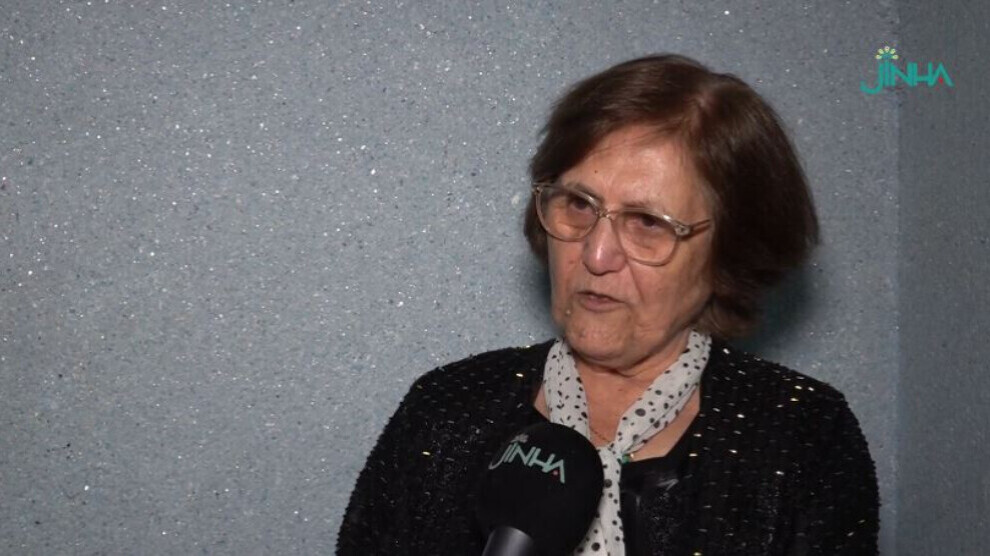
Activist and women's rights defender Sivan Rustom from the Kurdistan Region spoke about the issue of environment and women, stating that the environment and women are inseparable, because woman "is connected by a very strong relationship with nature; just as a mother embraces her child, the earth embraces all humans." Therefore, land, life, and environment are interconnected and inseparable concepts.
As she affirms, "It is very important for women to be more aware of history; going back to the beginnings of humanity, we find that women have a role in protecting the environment and water sources, and in educating their children about knowing nature and preserving it. These are all qualities of women, which means that women and the environment cannot be separated."
She added that at the present time, "the environment has become an international issue," and due to rapid changes, the use of technology, the expansion of societies, the spread of machinery, and the dominance of the capitalist lifestyle, the environment "is subjected to great destruction and manipulation." Therefore, she explains that "it is necessary for every individual to contribute to protecting the environment in the way they see fit, and this is the duty of mothers and women especially, as they should give greater importance to protecting the environment as the source of our existence. It is among women's primary responsibilities to develop joint programs with all parties to protect the environment so that it does not turn into an environment hostile to humans."
"On March 8th, Women Renew Their Unity"
On the occasion of International Women's Struggle Day, Sivan Rustom said that March 8th is a day for women's unity and highlighting their achievements. "Although women constantly work together, on this day they renew their unity. Therefore, it is important for this day to become an occasion to emphasize environmental protection and stress that a clean environment is the source of human life. I call on women to be united, regardless of their differing opinions, in order to protect the environment and attain their rights.